



By Satoshi Sugiyama
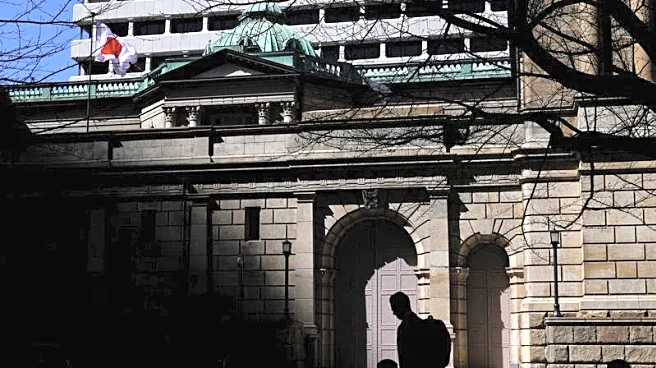
TOKYO, Dec 11 (Reuters) - The Bank of Japan will proceed with a 25-basis-point interest rate hike to 0.75% at its December meeting and raise borrowing costs to at least 1% by the end of September next year, a strong majority of economists said in a Reuters poll published on Thursday.
The BOJ is likely to deliver its first rate rise since January at its December 18-19 meeting, sources told Reuters. Prime Minister Sanae Takaichi's government is expected to tolerate such a decision
with risks of inflation and a weak yen in mind.
In the December 2-9 poll, 90% of economists, or 63 of 70, expected the Japanese central bank to raise short-term interest rates to 0.75% from 0.50% at next week's meeting. That is up sharply from just 53% in the previous Reuters poll, taken last month.
Slightly over two-thirds of respondents, 37 of 54, said the interest rate would reach at least 1.00% by the end of next September.
After its last policy meeting in October, BOJ Governor Kazuo Ueda suggested the initial momentum of next spring's annual labour-management wage negotiations was key to rate hike timing.
"By the time of the December meeting, there should be enough information, such as the Tankan survey, to judge the initial phase of the spring wage negotiations," said Yusuke Koshiyama, senior Japan economy economist at Mizuho Research & Technologies.
The median prediction for the end-2026 rate was 1.00%, unchanged from last month's survey. A minority of economists forecast the interest rate would climb to 1.25% by then.
"The current policy rate is believed to be below the neutral rate, so the BOJ will likely maintain a tightening stance to adjust the degree of monetary accommodation," said Yasunari Tanaka, chief researcher at Mitsubishi Research Institute.
Separately, a little over three-fourths of economists, 23 of 30, did not approve of the government's plan to finance a supplementary budget largely by new debt.
The policy has partially put pressure on long-dated Japanese government bonds, driving the benchmark 10-year bond yield to hit an 18-year-high last week.
In the poll, 68% of economists who answered an extra question, 23 of 34, said they did not think the rate of pay increase in next year's wage negotiations would exceed this year's 5.25%. That was down from 81% in November and 76% in September.
The median of 33 economists who offered their view on the rate was 5.0%, compared with November's 4.9% and September's 4.8%.
Wage increases driven by labour shortages are likely to continue, but companies have more reasons to hesitate to do so, including U.S. President Donald Trump's tariffs and souring Japan–China relations, said Masato Koike, senior economist at Sompo Institute Plus.
"Taking into account that (inflation) is likely to trend weaker going forward, wage hikes on par with those of the past two years are unlikely," he said.
(Other stories from the Reuters global economic poll)
(Reporting by Satoshi Sugiyama; Polling by Susobhan Sarkar and Pranoy Krishna in Bengaluru; Editing by Lincoln Feast.)