




By Ragini Mathur and Avinash P
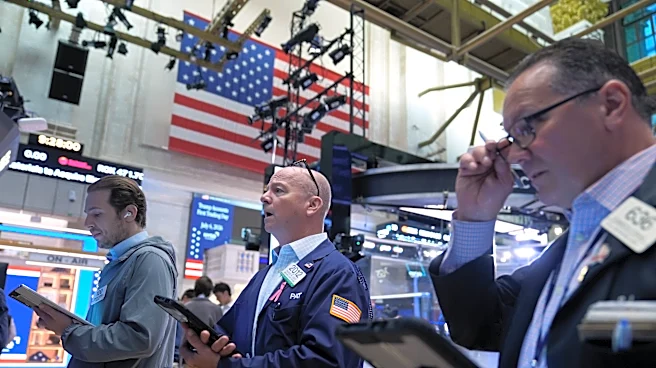
July 24 (Reuters) - Wall Street's major indexes rose on Friday but remained on track for weekly losses, as investors weighed a busy slate of corporate earnings, escalating Middle East tensions and new tariffs announced by the Trump administration.
Intel added to this week's key earnings reports, forecasting quarterly profit and revenue above Wall Street estimates and outlining plans to increase spending over the next two years. The chipmaker's shares fell 3% despite upbeat
results.
The broader semiconductor gauge, the Philadelphia SE Semiconductor index, shed 2.7%.
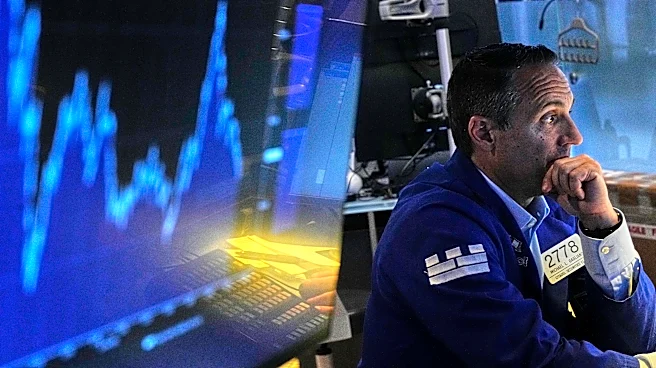
The S&P 500 and Nasdaq were on track to post a second straight weekly loss, while the Dow was headed for a third consecutive week in the red, following Thursday's bruising selloff led by the large-cap technology stocks.
Investor concerns over the growing cost of AI investments have become a central theme for markets after results from Alphabet and Tesla highlighted rising capital spending and cash burn among major technology companies.
That has set a cautious tone ahead of next week's earnings from Microsoft, Amazon and Meta.
"I would say as a whole, the hyperscalers, unfortunately, continue to be viewed as the funders of the boom," said Sameer Samana, head of Global Equities and Real Assets at Wells Fargo Investment Institute.
"It looks like the market is starting to worry a little bit about cash flows."
Real estate was the S&P 500's best-performing sector, rising 2.3%.
Shares of Digital Realty Trust jumped 15% and were on track for their best day since 2009 after the firm raised its full-year forecast for funds from operations.
Meanwhile, the Trump administration imposed new tariffs of 10% and 12.5% on goods from 60 trading partners, citing lax enforcement of forced-labor bans. The move came as a temporary 10% global tariff expired.
"It's going to put a stagflationary impulse into the economy," Samana said.
"Monetary policymakers are going to have to grapple with that, and there are no easy answers to stagflationary shocks."
Geopolitical risks were in focus after U.S. missiles struck targets across Iran on Friday following President Donald Trump's warning of "major military punishment" for Tehran and its Houthi allies in Yemen.
Despite oil prices easing on Friday, a sustained energy shock could rekindle global inflation concerns and prompt central banks to recalibrate monetary policy.
The Federal Reserve is due to meet next week, with markets pricing in a roughly one-in-three chance of a rate hike, up from 12% a week earlier, according to CME's FedWatch tool.
Investors will also watch next week's PCE data, the Fed's preferred inflation gauge, due a day after the policy decision.
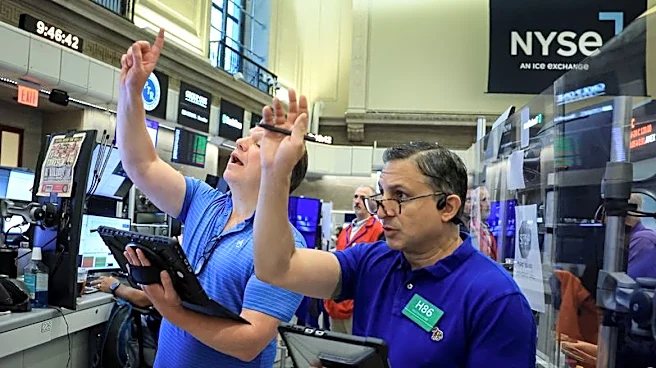
At 11:58 a.m. the Dow Jones Industrial Average rose 358.97 points, or 0.70%, to 52,073.03, the S&P 500 gained 43.50 points, or 0.59%, to 7,451.80 and the Nasdaq Composite gained 30.60 points, or 0.12%, to 25,168.30.
Data showed that activity in the U.S. services sector accelerated in July, aided in part by spending around the FIFA World Cup and the Independence Day holiday, while the pace of growth in the manufacturing sector eased to the slowest since March.
Among others, SLB gained 10% after the oilfield services firm beat expectations for second-quarter profit.
Advancing issues outnumbered decliners by a 2.11-to-1 ratio on the NYSE, and by a 1.11-to-1 ratio on the Nasdaq.
The S&P 500 posted 15 new 52-week highs and four new lows, while the Nasdaq Composite recorded 61 new highs and 147 new lows.
(Reporting by Ragini Mathur and Avinash P in Bengaluru; Editing by Maju Samuel)