
By Saqib Iqbal Ahmed
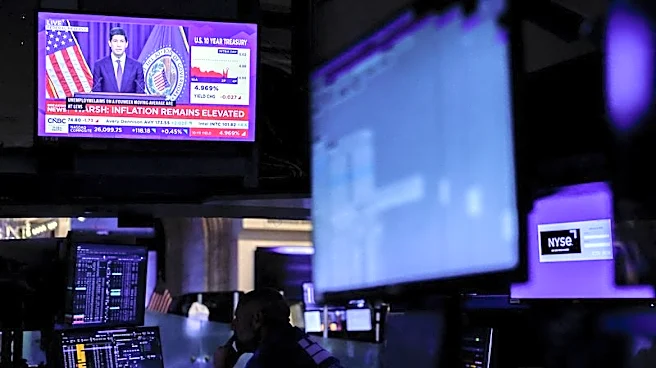
NEW YORK, Sept 17 (Reuters) - The US dollar eased on Thursday, a day after logging its biggest jump in three months after the Federal Reserve hiked rates and signalled further tightening.
The US dollar index, which measures the currency's strength against six peers, was down 0.2% at 100.07 on Thursday, after rising 0.7% in the prior session.
"I think that the dollar moves along with US interest rates right now," said Marc Chandler, chief market strategist at Bannockburn Forex.
With Treasury yields easing after Wednesday's rise, "the dollar corrects a little bit," Chandler said.
Though the Fed may have delivered on the market's hawkish expectations for now, it might still not raise rates as aggressively as the market expects, making the dollar vulnerable to any disappointment.
Markets remain far more hawkish than the Fed. While policymakers project one more rate hike in 2026 and a hold in 2027, investors are pricing in more than one additional increase this year and roughly three more by the end of 2027.
"The pendulum of sentiment has swung very far," Chandler said.
A drop in energy prices helped soften the dollar as reports of additional Saudi crude cargoes through Oman eased supply concerns amid the US-led war on Iran.
The greenback tends to benefit from higher oil prices because the U.S. economy is seen as relatively less exposed to energy shocks.
Still, the dollar index remains about 1.4% higher than a week ago as markets have become increasingly convinced of the Federal Reserve's resolve to tackle price pressures firmly.
On Thursday, the euro rose 0.3% to $1.1494, after reaching $1.1456, its lowest point in seven weeks.
Sterling, meanwhile, dropped slightly against the euro and the dollar after the Bank of England held rates unchanged but warned that prolonged conflict in the Middle East may require tighter policy. The British pound was last down 0.1% to $1.3373.
BOJ NEXT TO WATCH
Attention now turns to the Bank of Japan, which is expected to raise interest rates to a 31-year high on Friday and signal its readiness to keep pushing up borrowing costs. Market participants are looking for hints from BOJ Governor Kazuo Ueda about the timing and pace of any further increase.
Chief Cabinet Secretary Minoru Kihara, when asked about the Fed's move, said Japan will continue to strive to maintain orderly yen moves through close communication with the US.
The yen, which started September strong on a hawkish shift in expectations for Japanese interest rates, joint intervention by Japan and the US, and speculation that Japanese investors are repatriating capital, has floundered in recent sessions as the dollar has firmed. On Thursday, the dollar was 0.4% lower against the Japanese currency at 155.72 yen.
Chidu Narayanan, head of macro strategy for APAC at Wells Fargo, remains skeptical that the BoJ can out-hawk an already aggressive market-implied tightening path.
"The risk is skewed toward a more-dovish-than-priced outcome," he said in a market note.
"Such an outcome would create scope for renewed USD/JPY upside, particularly following the more hawkish-than-expected FOMC meeting overnight."
In cryptocurrencies, bitcoin was little changed on the day at $76,081. Bitcoin tumbled 4% on Tuesday when the U.S. Senate did not advance comprehensive cryptocurrency legislation — a setback to digital asset companies.
(Reporting by Stefano Rebaudo; Editing by Tom Hogue, Thomas Derpinghaus and Alex Richardson; Editing by Kevin Liffey)