







By Siddharth Cavale
NEW YORK, Oct 26 (Reuters) - Oil prices inched higher after falling more than $2 a barrel on Monday, as persistent attacks on key producer Saudi Arabia kept investors wary and prices near six-month highs, even as diplomatic efforts to resolve the conflict in the Middle East resumed.
Brent crude futures rose 49 cents, or 0.4%, to $117.21 at 12:51 p.m. ET (1637 GMT), while US West Texas Intermediate crude futures were down 35 cents, or 0.34%, at $102.92 per barrel.
Both benchmarks
retreated after strong gains on Friday, when Brent settled more than $3 higher to post a weekly gain of 6%, while WTI rose 2.3% for the week.
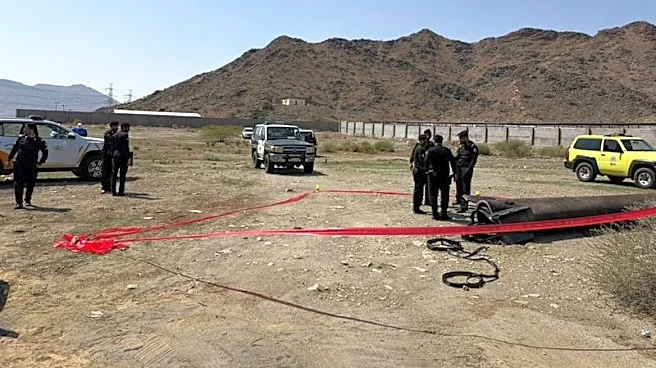
Investor focus remained on escalating tensions in the Middle East after Yemen's Iran-aligned Houthis said they struck pumping stations on Saudi Arabia's East-West crude oil pipeline and Riyadh airport over the weekend.
Saudi Arabia said on Sunday it had intercepted additional missiles and drones, while a Saudi-led coalition on Monday said it destroyed three drones targeting Riyadh and the kingdom's southern regions.
In a move that could draw Egypt more directly into the conflict, the Egyptian parliament authorized President Abdel Fattah al-Sisi to take "all necessary measures" to help Saudi Arabia defend itself.
Earlier losses were driven by renewed diplomatic efforts aimed at containing the conflict. Qatari mediators traveled to Tehran on Sunday in coordination with the United States to seek ways to ease regional tensions, according to an official briefed on the matter.
Saudi Arabia, Turkey and Pakistan were also due to hold talks with Iranian officials in Tehran on Monday as part of efforts to prevent further escalation in the region.
"With the jeopardy doubled by Houthi attacks into Saudi, any Brent price dips back to the lows of last week will find grateful buyers," PVM Oil Associates analyst John Evans said.
"Corrective processes are notoriously difficult to quantify, but this one has nowhere near reached any sort of levels where bulls might abandon hope," he said.
WORST MONTH FOR MARITIME ATTACKS
The effects of the US-Israeli war with Iran that began on February 28 continue to reverberate as companies adjust to the disruptions of commercial shipping through the Strait of Hormuz and Bab el-Mandeb Strait caused by the conflict.
October has been the worst month for attacks on commercial shipping in the Strait of Hormuz and nearby waterways, according to data compiled by the Washington Institute for Near East Policy, a think tank that has tracked maritime security incidents worldwide since 2017.
An oil spill from a strike-damaged tanker off the coast of the United Arab Emirates has widened, satellite images showed, triggering more beach closures and raising environmental concerns.
Elsewhere, Russian refiners are raising diesel production in October after the government granted export quotas following the Kremlin's supply agreement with the United States, two industry people close to the matter said.
Energy ministers from Saudi Arabia and Singapore said state-owned oil company Saudi Aramco would start storing crude oil in Singapore from the second half of 2027, to make Aramco's supply chain in the region more resilient.
The head of the International Energy Agency, Fatih Birol, reiterated supply concerns, saying on Monday at an industry event in Singapore that he did not expect energy markets in 2027 to return to where they were before the Iran war.
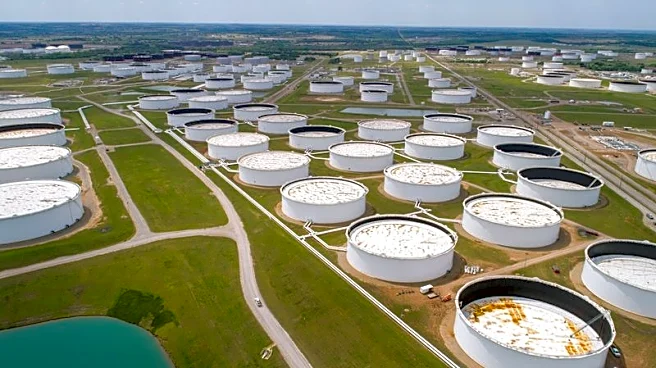
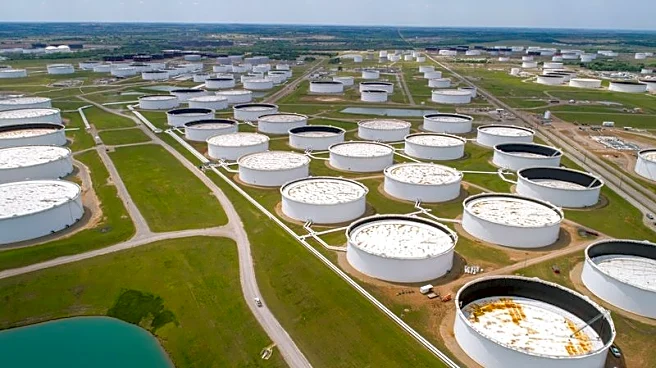
In the US, stocks of crude oil in the Strategic Petroleum Reserve fell to 282.6 million barrels last week, the lowest level since October 1982, the Department of Energy said on Monday.
(Reporting by Siddharth Cavale in New York, Seher Dareen in London, Mohi Narayan in New Delhi and Colleen Howe in Beijing; Editing by Saad Sayeed, Christian Schmollinger, Emelia Sithole-Matarise, Tomasz Janowski, Rod Nickel and Bill Berkrot)