








By Stefano Rebaudo
Oct 23 (Reuters) - The euro headed for a weekly loss against the dollar and the yen as a fresh sell-off in France's government bonds led the country's debt risk premium to levels not seen since the euro area sovereign crisis in 2011 on Thursday.
The greenback also came under pressure during the week as a tech-led market selloff showed the dollar was no longer attracting its usual safe-haven flows, with doubts about the sustainability of the AI investment boom fuelling expectations
of a more dovish Federal Reserve.
The yield on the benchmark US 10-year Treasury note was up 3.5 basis points at 4.99% on Friday after falling 19.5 bps the day before, as concerns about the sustainability of the AI outlook reignited.
Strategists said that while both the euro and the dollar faced selling pressure this week, the single currency was hardest hit.
Meanwhile the Japanese currency jumped on Thursday as investors sought safety amid fragile equity markets and concerns about France's fiscal trajectory and possible new street riots.
The euro was last down 0.15% at $1.1198, set to end the week 0.42% lower.
It fell more sharply against the yen, touching its lowest level since October 2025 at 175.42 yen on Friday, down 0.24% and on track for a weekly decline of 1.18%.
"The yen has continued to trade at stronger levels at the end of this week, encouraged by more risk-off trading conditions," Lee Hardman, senior currency analyst at MUFG, said.
The dollar was flat at 156.73 yen.
Strategists argued the yen's gains were driven by hedge demand rather than repatriation flows, with no evidence that Japanese institutional investors were bringing funds back home.
CENTRAL BANK POLICY MEETINGS IN FOCUS
"My suspicion is that euro/dollar is currently like a deer caught in the headlights, frozen in place as it waits for next week’s central bank meetings," Volkmar Baur, forex strategist at Commerzbank, said.
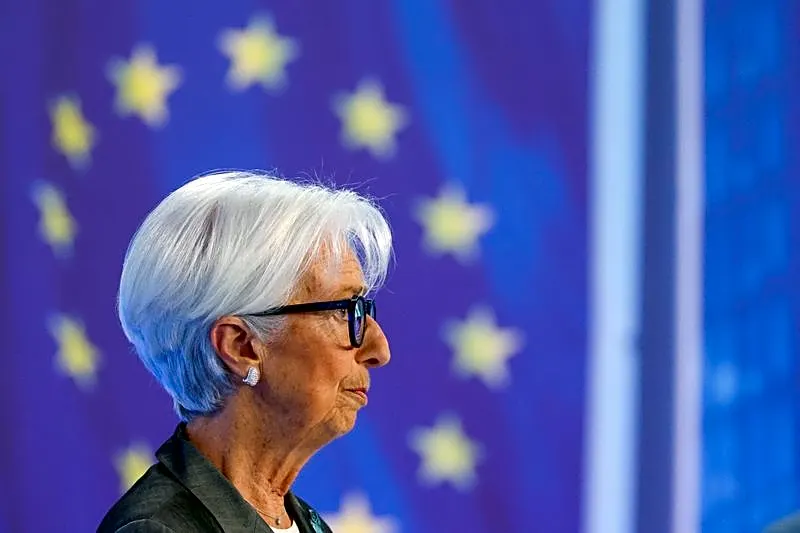
The European Central Bank is expected to stay on hold on Thursday, but investors will scrutinize any hint about the rate outlook after President Christine Lagarde said in late September a moderate policy response to inflation was appropriate.
Data showed on Friday growth across the euro zone's private sector slowed to its weakest pace in four months in October, hurt by a renewed contraction in France.
"The drop brings the PMIs back in line with other growth indicators, in our view, rather than suggesting downside risks from here," Giada Giani, an economist at Citi, said.
"France remains a drag, but the rest of the euro area remains resilient," she added.
The single currency was set to decline 0.49% versus the Swiss franc.
The dollar index, which measures the greenback against a basket of currencies, rose 0.16% to 101.75 after touching its lowest level since the beginning of the month at 101.44 on Thursday. It was on track for a 0.02% weekly rise.
Data on Friday showed Japan's annual core consumer inflation exceeded the central bank's 2% target in September for the first time in nine months, a sign of broadening price pressure that bolsters the case for a near-term rate hike.
The majority of economists polled by Reuters expect a hold from the BoJ on Friday of next week, followed by a quarter-point hike at the following meeting in December.
Beyond the BOJ meeting, investors are also bracing for the Federal Reserve to announce policy decisions next week.
(Reporting by Stefano Rebaudo; Editing by William Maclean and Jan Harvey)