






By Michael Martina and Alexandra Alper
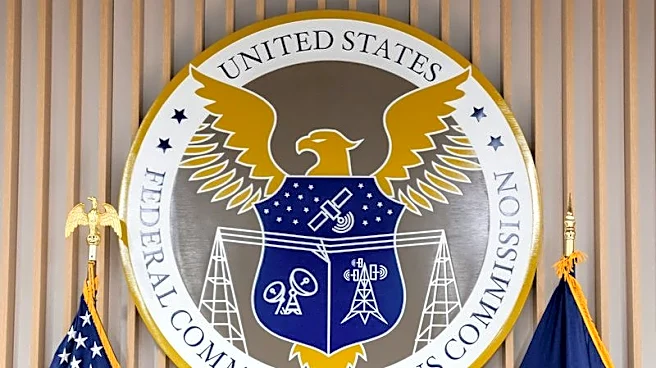
WASHINGTON, Aug 10 (Reuters) - The Federal Communications Commission, once better known for spectrum auctions and licensing television stations, has emerged as the unlikely leader of some of the Trump administration's most aggressive actions against China.
Under Trump ally Brendan Carr, the FCC has made a series of moves over the past nine months to crack down on what the U.S. sees as risks to American supply chains.
The agency has barred imports of new models
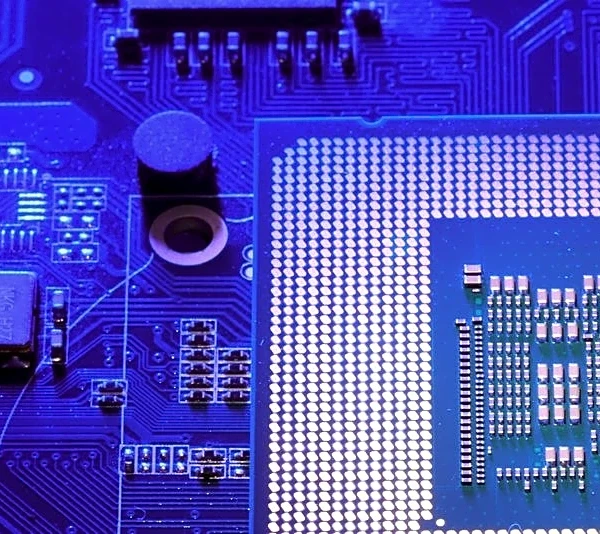
of Chinese drones, routers, inverters and robots and begun the process of blocking all Chinese labs from testing electronic devices such as smartphones, cameras and computers for use in the U.S. It is now drafting a ban on U.S. imports of new models of Chinese data center components, seeking to protect American infrastructure that undergirds the AI boom, Reuters reported.
Those actions, which aim to push Chinese gear out of technology supply chains and spur domestic manufacturing, have the blessing of President Donald Trump's White House, according to U.S. officials, who say the agency has tried to do so without angering Beijing, in part by targeting Chinese technologies without explicitly naming China.
Beijing is now pushing back.
After months of inaction, China announced on Wednesday that in response to the FCC's moves - along with other U.S. trade actions - it was tightening export controls on U.S.-bound drones and technology and sanctioning a U.S. testing and certification firm.
The pushback follows efforts by Chinese officials to engage the FCC, which were rebuffed, according to two sources familiar with the matter. The FCC declined to comment on the Chinese outreach and the Chinese Embassy in Washington did not respond to requests for comment.
Trump plans to meet with Chinese President Xi Jinping in September, when the two are expected to discuss ways to steady a bilateral relationship upset last year by Trump's tariff war. There is often pressure to lower tensions ahead of such summits.
National security experts predict the U.S. push will continue, however.
"Just because the Chinese respond doesn't mean that all of a sudden this is going to stop," said Chris McGuire, a former Biden White House official, noting rising frustration within the administration over what it believes is Chinese non-compliance with prior deals.
China's Ministry of Commerce did not respond to a Reuters request for comment on the FCC. China has opposed the FCC's actions, saying they are discriminatory treatment toward its companies and could upset global supply chains, while vowing countermeasures.
The FCC and the White House declined to comment, but a U.S. official said: "Recent FCC actions are global in scope and not targeted against any specific country. These actions are designed to promote American re-industrialization and ensure our national security."
CENTER OF GRAVITY
The FCC's actions contrast with the Trump administration's broader policy toward China, which experts say recently has sought to avoid upsetting trade relations with the U.S. rival.
Since a tariff war last year that ended in an uneasy détente between Washington and Beijing, Trump has taken steps to ease tensions, loosening export restrictions on advanced AI chips to China and delaying approval of a $14 billion arms sale to Taiwan.
U.S. officials and analysts say that a newly assertive FCC has so far been a way of keeping up pressure on China without derailing relations.
"I don't think it's an exaggeration to say FCC has become the center of gravity for competitive actions towards China in this Trump term," said Eric Sayers of the American Enterprise Institute in Washington.
Carr, who became the agency's chair in January 2025, is best known for his investigations of broadcasters, which Democratic lawmakers have called an attack on press freedom.
He is also a vocal China hawk. During a 2022 to Taiwan as an FCC commissioner, he accused China's ruling Communist Party of "brutal authoritarianism."
Since becoming the agency's chairman, Carr has made it a priority to expand its national security remit, focusing on countering cyber and supply chain vulnerabilities from "foreign adversaries," top among them China.
That work is being done in coordination with the rest of the administration, according to two FCC officials and two U.S. officials who work outside of the FCC.
One of the U.S. officials - like the others who were granted anonymity to discuss internal administration planning - argued that the FCC has become the "tip of the spear" in Washington's economic policy toward China.
LOW-KEY APPROACH
Two of the officials who work in different agencies told Reuters that the FCC had become the vehicle for actions on China technology competition in part because it is a relatively low-profile way to get actions across the line without undermining bilateral ties.
The FCC has done this by not mentioning China in its rules, but instead by banning foreign imports of a targeted technology and then granting exemptions for many non-Chinese companies.
The agency's approach has worked so far for a few additional reasons, said Liz Cannon, a former head of the Commerce Department office charged with policing Chinese tech threats to the U.S. supply chain.
Carr has framed it internally as an effort to bring manufacturing back to the U.S., aligning it with other administration priorities, and its measures have allowed a gradual transition to non-Chinese suppliers easing, opposition from businesses, said Cannon.
David Feith, a former Trump national security council official, noted that Beijing had been aware of the FCC's moves since the drone measure in December, as well as the router measure in March, which was unveiled as the Trump administration prepared for another Trump-Xi summit, a time when it is customary to hold back measures seen as provocative.
"And still the Trump administration ... has decided to keep taking these actions," he said. "That suggests an appreciation for their national-security importance and a willingness to see them through," he added.
(Reporting by Michael Martina and Alexandra Alper, Editing by Don Durfee and Alistair Bell)