
PARIS, Jan 7 (Reuters) - France is working with partners on a plan over how to respond should the United States act on its threat to take over Greenland, a minister said on Wednesday, as Europe sought
to address U.S. President Donald Trump's ambitions in the region.
A U.S. military seizure of Greenland from a longtime ally, Denmark, would send shock waves through the NATO alliance and deepen the divide between Trump and European leaders.
Foreign Minister Jean-Noel Barrot said the subject would be raised at a meeting with the foreign ministers of Germany and Poland later in the day.
"We want to take action, but we want to do so together with our European partners," he said on France Inter radio.
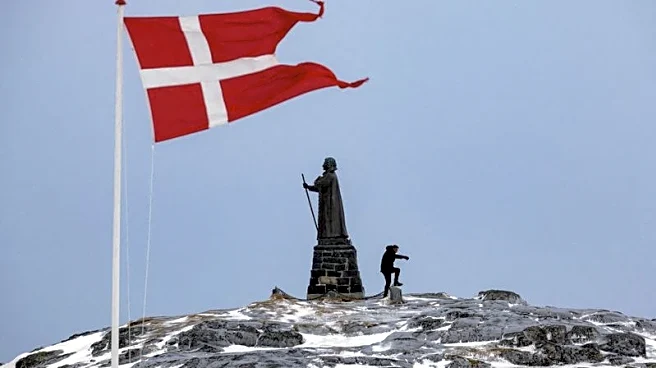
Leaders from major European powers and Canada have rallied behind Greenland this week, saying the Arctic island belongs to its people, following a renewed threat by Trump to take over the territory.
TRUMP RENEWS GREENLAND AMBITIONS
Trump has in recent days repeated that he wants to gain control of Greenland, an idea first voiced in 2019 during his first presidency. He has argued it is key for the U.S. military and that Denmark has not done enough to protect it.
The White House said on Tuesday that Trump was discussing options for acquiring Greenland, including potential use of the U.S. military, in a revival of his ambition to control the strategic island, despite European objections.
Barrot suggested a U.S. military operation had been ruled out by a top U.S. official.
"I myself was on the phone yesterday with U.S. Secretary of State Marco Rubio (...) who confirmed that this was not the approach taken ... he ruled out the possibility of an invasion (of Greenland)," he said.
A U.S. military operation over the weekend that seized the leader of Venezuela had already rekindled concerns that Greenland might face a similar scenario. It has repeatedly said it does not want to be part of the United States.
The world's largest island but with a population of just 57,000 people, Greenland is not an independent member of NATO but is covered by Denmark's membership of the Western alliance.
The island is strategically located between Europe and North America, making it a critical site for the U.S. ballistic missile defence system for decades. Its mineral wealth also aligns with Washington's ambition to reduce reliance on China.
(Reporting by John Irish in Paris; writing by Niklas Pollard; Editing by Ros Russell)