








By David Shepardson
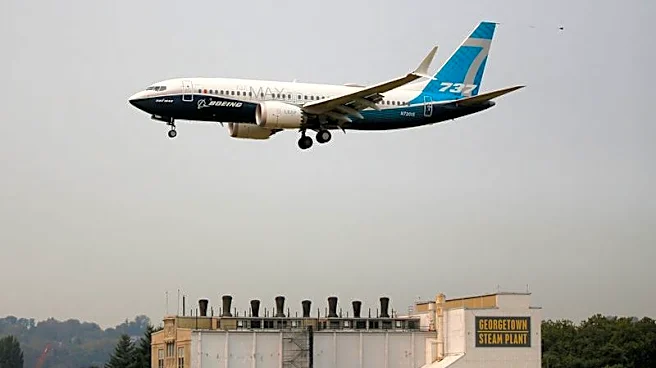
CHANTILLY, Virginia, June 17 (Reuters) - Europe and the U.S. are making progress toward approving two new variants of the Boeing 737 MAX for use, a top European aviation regulator and a senior U.S. aviation official said on Wednesday.
U.S. Federal Aviation Administration Deputy Administrator Chris Rocheleau said the FAA was in the final stages of certifying the smaller MAX 7 and larger MAX 10. European Union Aviation Safety Agency Executive Director Florian Guillermet said at a safety
conference validating the MAX 10 for service is a top priority for the agency.
"We are making very good progress on the final closure of the last actions," Guillermet said at the forum. "I think it's good that we are able to close that in the upcoming period, because we will be able to turn the page and to move on."
He told reporters, "We don't have many hurdles or major milestones. It's just a last part of the process. It's very, very intense" to process all the relevant documents and has just a few weeks to complete it according to the current schedule.
The FAA's Rocheleau told reporters at the event that remaining MAX certification work is largely "dotting i's and crossing t's." He said the FAA is "making sure that there's a comfort level between our two authorities, our two certification offices -- that this is ready to fly."
Rocheleau said he thinks EASA will validate the FAA's certification of the two MAX planes either at the same time or very soon afterward. "We're in a good place," Rocheleau said.
Last month, FAA Administrator Bryan Bedford said he expected the MAX 7 to be certified this summer and the MAX 10 to be approved before the end of the year.
The MAX 7 is a shortened version of the two types already in service, the MAX 8 and 9, which have accumulated tens of thousands of flight hours. Boeing has faced delays in the certification of the 7 and 10 due to an engine de-icing issue.
Relations between EASA and the FAA soured after fatal Boeing 737 MAX crashes in 2018 and 2019 were linked to flawed software and poor oversight, prompting EASA to take a closer look at Boeing designs but both Rocheleau and Guillermet touted much better relations between the two agencies.
Rocheleau said the FAA and EASA are working on a data-sharing agreement to work better on certification and risk management.
(Reporting by David Shepardson; Editing by David Gregorio)