

By Leika Kihara
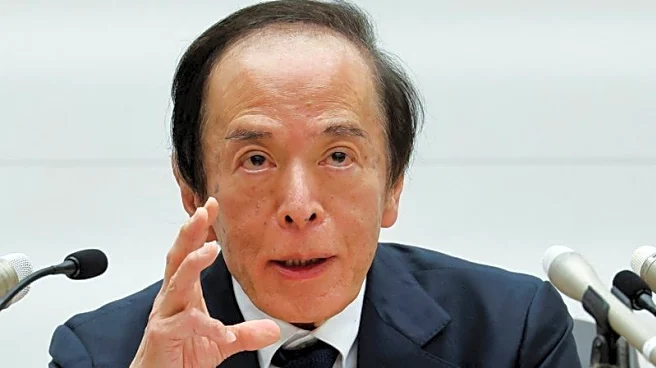
TOKYO, Feb 26 (Reuters) - Bank of Japan Governor Kazuo Ueda said the central bank will scrutinise data at its March and April meetings in deciding whether to raise interest rates, the Yomiuri newspaper reported on Thursday, leaving open the chance of a near-term rate hike.
In the interview conducted on Tuesday, Ueda said the central bank will continue to raise interest rates if Japan makes progress in achieving its economic and price projections.
Under current projections made in January,
the BOJ expects underlying inflation to reach its 2% target during the latter half of fiscal 2026 through fiscal 2027.
While there was no major change to the forecast, the BOJ's target could be achieved earlier than projected if the outcome of this year's spring wage negotiations between firms and unions proves stronger than expected, Ueda told the Yomiuri.
"We will hold a policy meeting in March and April, so we would like to reach a decision by scrutinising data available by then," Ueda said, when asked about growing market views the BOJ could raise rates in April.
Ueda also said the BOJ did not necessarily need to wait until the release of its quarterly Tankan business sentiment survey on April 1 to decide whether to raise interest rates as it conducts various other surveys, according to the Yomiuri.
NOT BEHIND THE CURVE
The remarks highlight the BOJ's readiness to keep raising interest rates and its hope to keep alive market bets of an early hike to fend off unwelcome, renewed yen falls that push up import costs and broader inflation.
But political considerations may affect the BOJ's rate-hike timing given dovish Prime Minister Sanae Takaichi's preference for expansionary fiscal and monetary policy, analysts say.
The BOJ next meets for a policy meeting on March 18-19. Its board then meets on April 27-28, when it also produces fresh quarterly growth and inflation forecasts.
A majority of economists polled by Reuters expect the BOJ to raise rates to 1% by end-June.
Markets pared back bets of an April hike, once seen as a strong possibility, after a report on Tuesday said Takaichi expressed reservations about additional rate hikes during her meeting with Ueda last week.
The yen fell to a two-week low against the dollar on Wednesday after the government nominated two academics who are viewed as strong advocates of economic stimulus to the central bank's board, clouding the outlook for further rate hikes.
In the Yomiuri interview, Ueda said the BOJ was not behind the curve in addressing the risk of too-high inflation, adding that underlying inflation has yet to completely hit 2%.
In gauging the impact of its last rate hike in December, the BOJ will focus on how it affects financial institutions' lending stance, corporate investment appetite and consumption through higher borrowing costs, Ueda was quoted as saying.
The BOJ ended a decade-long, massive stimulus programme in 2024 and raised rates several times including in December, when it took its short-term policy rate to a 30-year high of 0.75%.
With inflation exceeding the BOJ's 2% target for nearly four years, Ueda has signalled the BOJ's readiness to keep raising rates if its economic projections materialise.
(Reporting by Leika Kihara; Editing by Chris Reese, Rod Nickel and Jamie Freed)