



By David Kirton
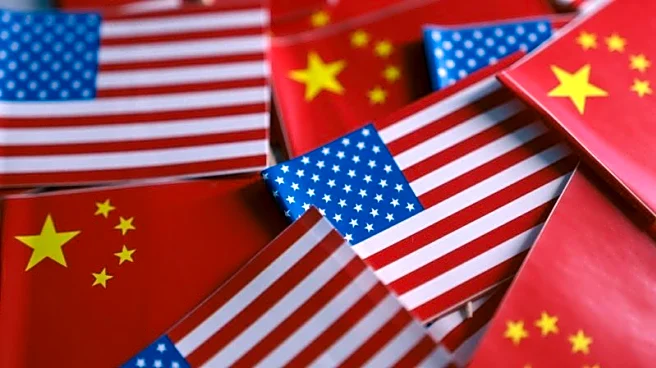
GUANGZHOU, Feb 12 (Reuters) - The Trump administration is promoting artificial intelligence exports and maritime surveillance technology at Asia-Pacific Economic Cooperation (APEC) meetings in southern China this week, as Washington seeks to counter Beijing’s technological and maritime influence.
Casey Mace, the U.S. senior official to APEC, said the Trump administration had launched a $20 million fund to support adoption of American AI technologies by partner economies in the region,
part of a broader effort to strengthen U.S. leadership in emerging technologies.
The initiatives come ahead of President Donald Trump’s expected visit to China in April and China’s hosting of APEC’s annual leaders’ summit in Shenzhen in November, events likely to spotlight intensifying U.S.-China competition over technology and economic influence across the Asia-Pacific.
China is looking to narrow the technological gap with the U.S. in advancing artificial intelligence-related sectors, though the lack of advanced chipmaking tools is hobbling China’s advances.
"China’s AI technology promotes CCP propaganda and censorship, while its vision for AI governance seeks to enable authoritarian repression,” a State Department spokesperson told Reuters, referring to the Chinese Communist Party.
China says it supports global cooperation on AI governance and has previously rejected Western accusations that its technology exports enable censorship.
In July last year, President Trump signed an executive order aiming to “ensure that American AI technologies, standards, and governance models are adopted worldwide.”
The United States is also using APEC to promote American private-sector technologies designed to combat illegal, unreported and unregulated fishing, which Washington says threatens food security and maritime sovereignty in parts of the Pacific.
Ruth Perry, Acting Principal Deputy Assistant Secretary of State for Oceans and International Environmental and Scientific Affairs, said on Tuesday China’s 18-million-strong distant-water fleet posed enforcement challenges for smaller coastal states.
“Many countries are negatively impacted and China is a perpetrator … the size of the fleet can’t be ignored across the Pacific,” Perry told Reuters, noting reports that suggest an unusual level of state coordination among its actions.
Perry said U.S. companies were developing technologies including satellite vessel tracking, artificial intelligence-based analytics, acoustic detection systems and sensor-equipped ocean buoys to help governments monitor fishing activity.
Illegal fishing is frequently linked to other transnational crimes including forced labour, trafficking and smuggling, Perry said.
Perry noted that China's revised Fisheries Law is due to take effect from May. “They’re saying all the right things and we want to see if they’re going to follow through with those actions.”
(Reporting by David KirtonEditing by Alexandra Hudson)