




By Claire Fu, Kevin Yao and Liangping Gao
SINGAPORE/BEIJING, July 30 (Reuters) - China's leaders pledged at a meeting on Thursday to support the slowing economy by accelerating fiscal spending on already-budgeted infrastructure projects in the remainder of the year, rather than by planning major new stimulus measures.
Data earlier this month showed second-quarter economic growth at its slowest in more than three years at 4.3%, missing the lower end of a full-year target of 4.5% to 5.0%. Still, thanks
to a stronger-than-expected start to the year, Beijing can afford not to press hard on the accelerator, analysts say.
"There was no major policy bazooka, broadly in line with our expectation that policy support would remain focused on putting a floor under growth rather than delivering large-scale stimulus," said Tommy Xie, head of Asia macro research at OCBC Bank.
"The policy toolkit still retains flexibility, but the focus in the third quarter will likely be on accelerating the deployment of existing policy resources."
BEIJING FOCUSED ON OVERCAPACITY, NOT STIMULUS
The Politburo, a top decision-making body of the ruling Communist Party, acknowledged "difficulties and challenges facing the economy" at its meeting, the official Xinhua news agency said.
China must "accelerate the pace of fiscal expenditure," a summary of the discussion showed.
Beijing's appetite for stimulus to spur the economy remains limited as it tries to curb industrial overcapacity, while also pressuring indebted local governments to keep spending within their means.
The Politburo signalled it would "continue to comprehensively rectify 'involution' competition," using a term for price wars among manufacturers fighting for market share at the expense of profits. Beijing rejects the notion of industrial overcapacity, which many economists say is the cause of these price wars.
Most analysts agree that accelerating already-budgeted national infrastructure projects can stabilise growth in coming months without widening the fiscal deficit.
"China still has ample fiscal room," said Xu Tianchen, senior economist at the Economist Intelligence Unit.
Jianguang Shen, chief economist at JD.com, says bond issuance and spending have been slower than planned in the first half of the year, leaving room for authorities to accelerate spending in the second half.
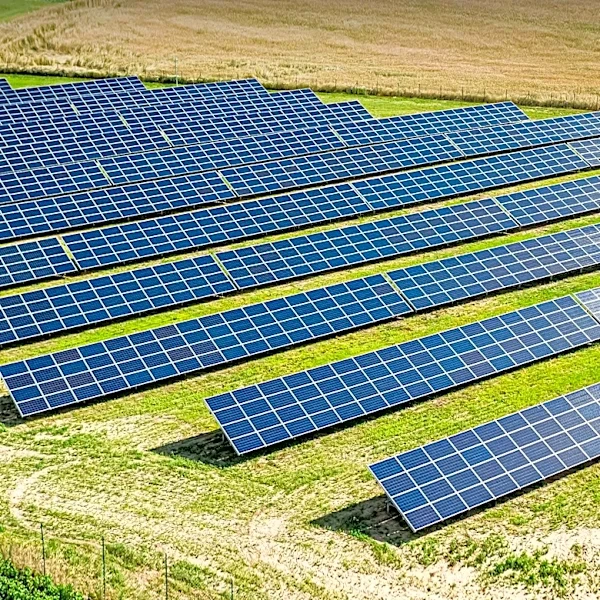
Shen expects the spending to focus on the "six networks" initiative, which the Politburo pledged to "steadily advance," and which refers to projects spanning water networks, logistics, underground pipelines, power grids, telecommunications and computing power centres.
State media has said Beijing plans to spend roughly $1 trillion this year on these projects.
CHINA REITERATES PLEDGES TO BOOST DOMESTIC DEMAND
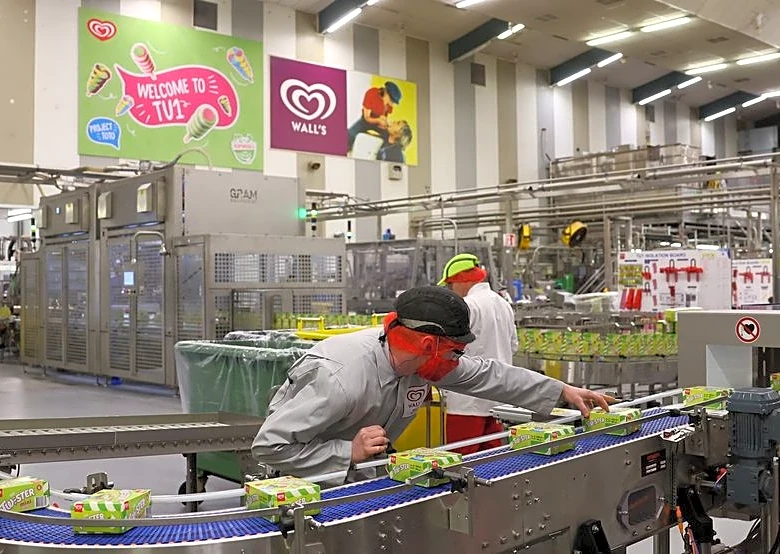
The softer-than-expected expansion in the second quarter came as weak household consumption overshadowed strong manufacturing and exports, intensifying concerns over the long-term sustainability of the country's unbalanced growth model.
As Beijing directs capital into advanced manufacturing and technological research, a feeble job market, sluggish incomes and the prolonged property downturn are weighing on consumers.
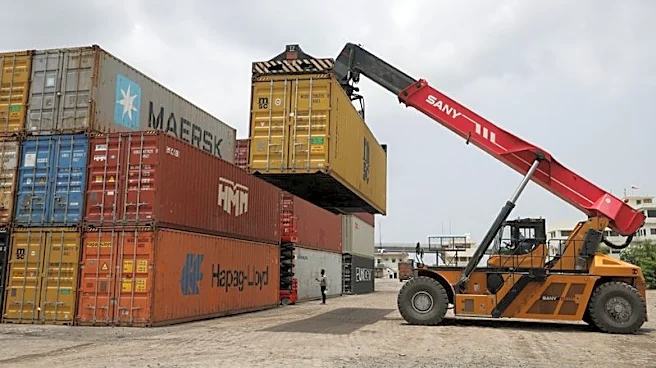
The result is that China increasingly relies on external markets to absorb its products, fuelling concerns among its trading partners, who see risks for their own industry and labour markets.
The boost from exports and China's advances in AI and other technologies have yet to translate into domestic strength.
Tens of millions of people have fallen out of formal employment into the gig economy, a crucial employment buffer as the property crisis wipes out construction jobs, manufacturers lay off workers amid overcapacity and price wars, and faster AI adoption slows white-collar job creation.
Many such workers end up putting in long shifts for low pay and inadequate social security coverage — a precarious state that encourages them to save instead of spend, compounding the problem.
The Politburo promised efforts to boost domestic demand, "increase employment support for key groups, and ensure the rights and interests of flexible workers and new employment forms," Xinhua said, without specifying the steps.
Economists remain sceptical of transformational policies that put more money into consumers' pockets.
“The press release also discussed the importance of boosting domestic demand, but the focus seems to be on providing better supply of goods and services for consumers, rather than boosting income growth,” said Zhiwei Zhang, chief economist at Pinpoint Asset Management.
(Reporting by Claire Fu in Singapore and Kevin Yao, Liangping Gao and Ethan Wang in Beijing; Editing by Clarence Fernandez and Hugh Lawson)