







By Libby George
LONDON, Nov 17 (Reuters) - Developing economies could struggle to benefit from rising defence spending and the AI boom because many lack the infrastructure and financing to compete, the European Bank for Reconstruction and Development said.
The lender's transition report, published on Tuesday, said EBRD countries caught on the back foot could find it difficult to match the capacity needed to compete.
"Countries that have reinvented themselves before perhaps have an edge, because they
have experience in seizing new opportunities," said Beata Javorcik, the EBRD's chief economist, noting that most of them have changed significantly over the past 30 years.
"The bad news is that it's not easy to plug yourself into the AI and defence boom, because these are goods that are complex," she added.
The bank covers some 40 countries in Eastern Europe, Central Asia, the Middle East and Africa.
DEFENCE ON THE RISE
Russia's full-scale invasion of Ukraine in 2022 boosted defence spending.
But apart from Poland and Turkey, most defence exporters are outside EBRD regions. Despite a vibrant defence startup sector, those in emerging Europe struggle to secure scale-up financing.
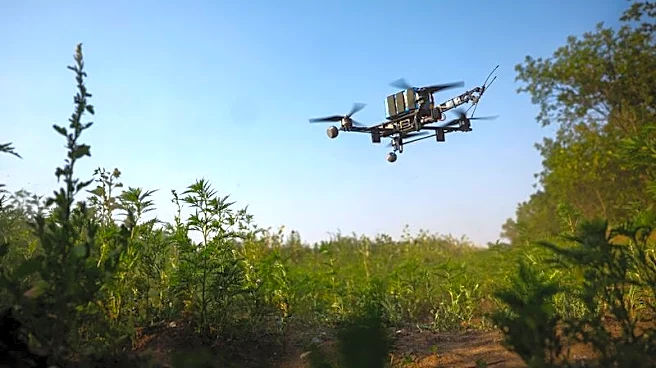
Drones are an exception, with rapid corporate growth in Ukraine, Estonia, Poland and Turkey.
AI IN FOCUS
Most EBRD countries are also behind on artificial intelligence, the report found. Javorcik said they were not active in critical raw materials, chip production or data centres.
In almost half of EBRD countries, the power grid could not support a single data centre. Growth in low-skilled jobs is already lagging, and richer economies are better placed to make productivity gains.
Still, countries can develop and export AI-based applications, which have lower barriers to entry.
"What you want to do is allow the structural transformation of the economy to happen while protecting workers during the transition period," Javorcik said.
(Reporting by Libby George; editing by Karin Strohecker and Paul Simao)