


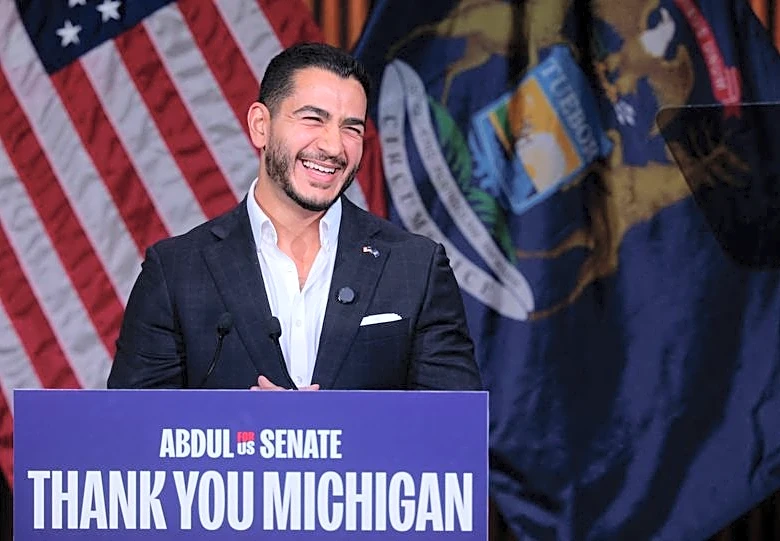
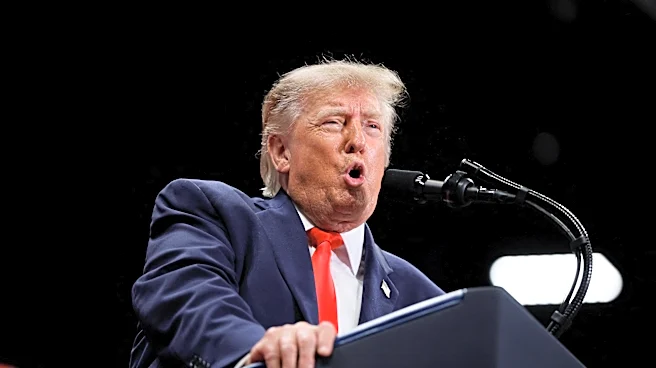
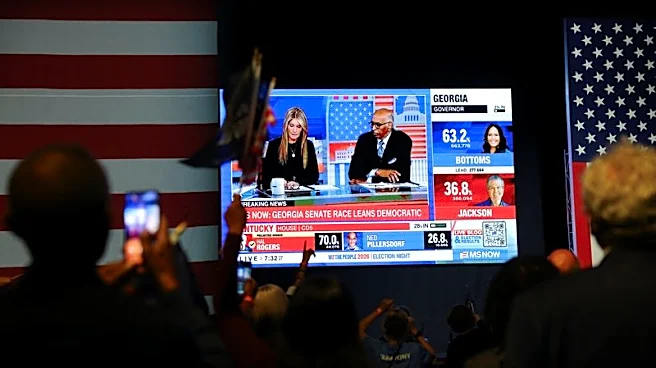

WASHINGTON, Nov 4 (Reuters) - Big victories by Democrats in congressional races and beyond in midterm elections on Tuesday were a rebuke to President Donald Trump and will likely affect US energy and environment policy in many ways.
Here are some of the issues that could be in play in the months ahead as Democrats take control of the Senate and House of Representatives in January.
IRAN WAR
Unified Democrats in Congress could take several actions to slow down the US war with Iran, which has led to soaring
prices for diesel and gasoline. Those measures could include attaching conditions on spending to encourage the US to reach a deal to keep open the Strait of Hormuz waterway between Iran and Oman and holding back confirmations of officials.
"With both chambers now capable of passing resolutions, holding back war funding and delaying confirmations, the administration faces a shorter political runway and greater institutional pressure to find a Hormuz deal," said Claudio Galimberti, chief economist at Rystad Energy, a research group.
PERMITTING BILL
US lawmakers had been hoping to pass sweeping bipartisan legislation known as the permitting bill this year that would sharply reduce deadlines the government has to approve massive fossil and renewable energy projects. The Democratic wins could increase pressure from environmental groups, who say the bill has too many concessions for oil and gas, to push consideration of the bill into next year. TD Cowen cut its outlook for the bill's success from about 40% to about 25%.
POTENTIAL CONGRESSIONAL PROBES
Democratic lawmakers, who will now head congressional committees, could launch probes of Trump administration policies and issues, ranging from the US oil deals with Venezuela to a diesel deal with Russia. Democrats could also probe whether oil and gas companies were rewarded with tax breaks, subsidies and rollbacks of environmental regulations after then-candidate Donald Trump asked them for $1 billion in donations during the 2024 presidential campaign.
Democratic and Republican senators last month called on Trump to reverse course on the diesel issue, saying the administration failed to consult with Congress. The Trump administration could refuse or delay responses to subpoenas, but investigations could slow the administration's energy policy.
TRADE PARTNERS COULD PUSH BACK ON ALASKA LNG, NUCLEAR
The Democratic sweep could embolden Japan and South Korea to delay committing hundreds of billions of dollars in US investments. Projects the Trump administration has said it will support include the proposed Alaska LNG project, worth up to $54.4 billion, to transport natural gas from the northern part of the state to domestic and Asian customers. The administration also has backed nuclear power projects.
"Democrats seem to perceive that the investment commitments were forced on allies," said Heo Yoon, an economics professor at Sogang University in Seoul.
Last month Seoul confirmed that it would invest $22.3 billion in a Texas gas project to power AI data centers and $120 billion to build eight nuclear reactors in the US. But those agreements are not binding.
PRESSURE ON DATA CENTERS
Democrats seized on bipartisan opposition to the rapid buildout of AI data centers and voter anger at Big Tech companies. Across the country, 33 of 34 ballot initiatives aiming to restrict data center construction won the backing of voters. Some victorious Democrats supported pauses or rules on data center construction. There is now an increased likelihood of more oversight and scrutiny of AI risks, more protections for utility ratepayers, and stricter reporting requirements for energy consumption and pollution.
SOLAR, WIND SUBSIDIES
Some industry advocates see a possible path, either this year or in 2027, to extending or reviving tax credits for wind and solar projects that were eliminated or phased out under Trump's 2025 tax and spending law. The effort could also include the extension of a clean energy manufacturing tax credit.
GEORGIA REGULATOR
In Georgia, Democrats won a majority on the five-member Public Service Commission for the first time in 31 years. That development is expected to lead to changes for the regulator overseeing utilities at a time when data center investment has been pouring into Georgia. The commission will be responsible for determining how much new generation, transmission and grid infrastructure is needed and who pays for it. The Democrats campaigned to lower rising electricity bills and tighten oversight of utility investment plans.
TEXAS OIL, GAS REGULATOR GETS FIRST DEMOCRAT SINCE 1990
Democrat Jon Rosenthal, an oil and gas engineer, won the open seat on the three-member Texas Railroad Commission, which regulates the state's oil and gas industry. He is the first Democrat to hold a seat on the commission since 1990. Though the commission will still have a Republican majority, Rosenthal is expected to influence the regulator's response to issues facing Texas, such as data center permitting, grid reliability and reining in the disposal of toxic oil and gas wastewater.
(Reporting by Valerie Volcovici and Nichola Groom; Additional reporting by Jihoon Lee, Heejin Kim and Kyu-seok Shim in Seoul; Writing by Timothy Gardner and Paul Simao)