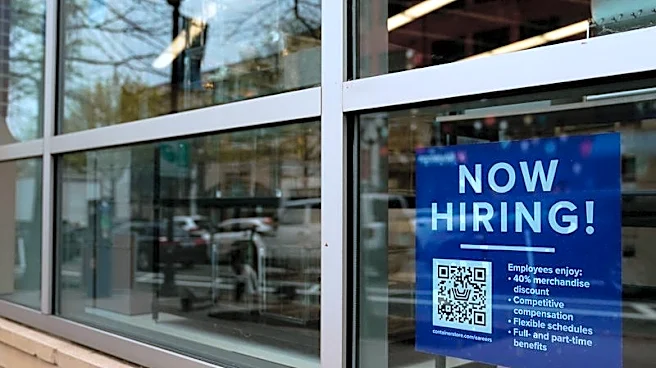





NEW YORK, June 5 (Reuters) - The U.S. economy posted another month of strong employment gains in May, confirming that the labor market was gaining traction after stumbling last year and sending short-term interest rates higher on Friday morning in the face of inflation stemming from the war with Iran.
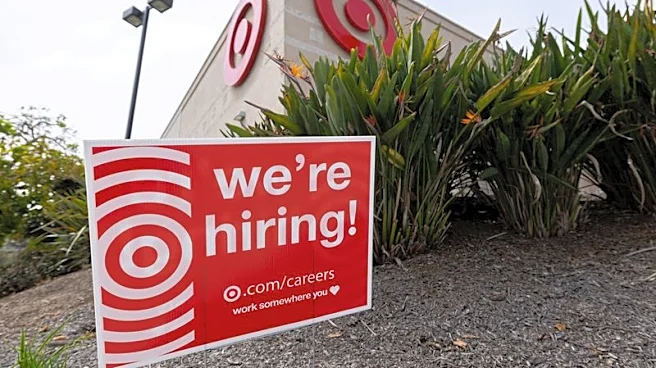
Nonfarm payrolls increased by 172,000 jobs last month after rising by an upwardly revised 179,000 in April, the Bureau of Labor Statistics said in its closely watched employment report on Friday. Economists
polled by Reuters had forecast payrolls increasing by 85,000 jobs after a previously reported 115,000 rise in April.
The jobless rate remained at 4.3% for a third straight month. The improvement in payrolls mostly reflects low layoffs.
MARKET REACTION:
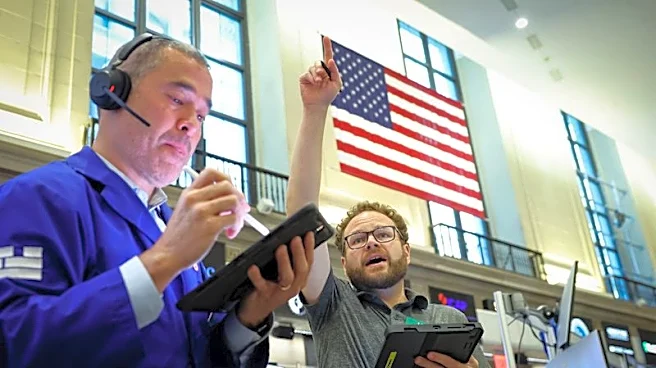
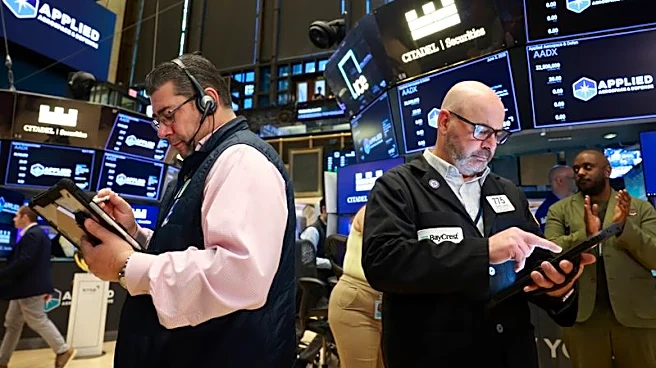
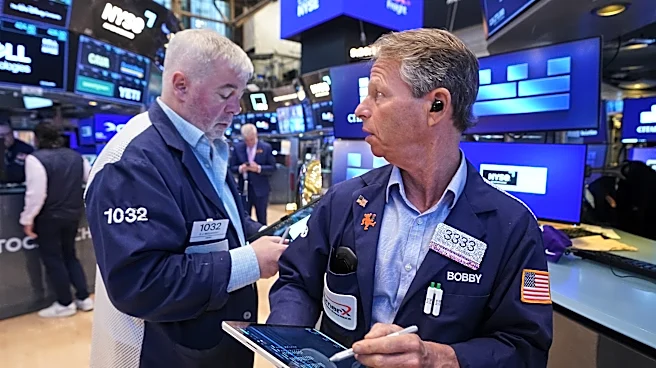
STOCKS: U.S. stock indexes opened mostly lower, with the Nasdaq composite down 1.2% and the S&P 500 off 0.7%.
BONDS: Treasury prices fell, sending yields higher. The yield on the 2-year note, which is most sensitive to Federal Reserve policy expectations, rose 10 basis points to 4.15% while the 10-year yield rose 6 basis points to 4.54%.
RATE EXPECTATIONS: U.S. interest-rate futures jumped on the numbers, showing a 65% chance of Fed tightening in December, compared with just 48% before the jobs report, according to LSEG estimates.
FOREX: The dollar index rose 0.2% to 99.60.
COMMENTS:
JASON PRIDE, CHIEF OF INVESTMENT STRATEGY AND RESEARCH AT GLENMEDE, PHILADELPHIA:
“The Fed's calculus is unchanged, and the binding constraint on rate cuts remains inflation rather than employment. The labor market, while not accelerating, has shown more resilience than the unrevised data implied, which reduces any urgency for the Fed to act on the employment side of its mandate.
“Investors should expect the Fed to hold at its next meeting and focus attention on whether post-ceasefire energy relief begins to pull headline inflation lower.”
BRENT SCHUTTE, CHIEF INVESTMENT OFFICER, NORTHWESTERN MUTUAL WEALTH MANAGEMENT, MILWAUKEE:
“The labor market has strengthened and importantly broadened from its weak and narrow state in 2025, where non-cycle health care and the social assistance segment of the US economy was responsible for all the job growth and more.
“The diffusion index (or % of industries hiring) which spent 9 of the 12 months below 50 in 2025, has checked in above 50 for the past 5 months, rising to 54.4 in May.
“The good news for the consumer is that the labor market is strong and Americans are employed. The concerning news for future spending is that real wages are negative as average hourly earnings have risen 3.4% YOY vs current inflation which is running at 3.8%. The Fed is likely to attempt to wait and see, but their focus is likely to shift to the inflation side of the mandate.”
MARC CHANDLER, CHIEF MARKET STRATEGIST, BANNOCKBURN GLOBAL FOREX, NEW YORK:
"The bar to a Fed change is very high, and I don't think this cuts it. It's Warsh's first meeting, and I can't imagine the Fed raising rates at his first meeting... so I think that might limit how far the dollar gets here.
"I still think there's a good chance of a hike before the end of the year, but we'll have to see."
PETER CARDILLO, CHIEF MARKET ECONOMIST, SPARTAN CAPITAL SECURITIES, NEW YORK:
“It certainly is an upside surprise. The 52,000 government payrolls adds might only be a one-time situation. But if you subtract that, it's still above market expectations.
“Wages are up 0.3%, mostly in line with expectations, and indicates no wage problems in terms of the labor market. Unemployment was unchanged at 4.3% as expected, and the participation rate is unchanged.
“It’s a good report, and it shows that the labor market has certainly survived its latest slowdown, and it's another reason to believe that the Fed's next move will be a hike in interest rates.”
WILL COMPERNOLLE, MACRO STRATEGIST, FHN FINANCIAL, CHICAGO:
“Heading into the Fed meeting now, it's clear that they can focus on inflation risk, but I think there's even going to be a vocal contingency of the FOMC that's going to question how restrictive policy is right now.
“The unemployment rate is heading downward and underlying inflation, even before the war, was elevated and maybe still accelerating. And because we never really know where neutral policy is, I think the case for policy tightening independent of war risk has become very relevant.
“It adds to that case (for interest rate hikes). There was already that sense going into this morning because a lot of the peripheral economic data was pretty strong and the prevailing narrative was that the U.S. economy was going to survive the energy shock, and the AI build-out is happening independently of what rates or the energy market is doing. And so now that you have three months of payroll growth… if there was any concern about the labor market, I think it really has evaporated.”
GARY SCHLOSSBERG, MARKET STRATEGIST, WELLS FARGO INVESTMENT INSTITUTE, SAN FRANCISCO:
"We did get an uptick in yields. It may be more of an interest rate story dominating the futures market and stocks at the moment.
"We're talking about a strong economy. That just adds to inflation risk coming from the Gulf. It makes it difficult for the Fed to even think about rate cuts and might even increase the chances - although we're still not forecasting that yet - of a rate hike by the Fed before the end of the year against the backdrop of inflation, likely to pick up from here. The one restraint on the Fed would have been softening labor market. We just didn't see that. So there less of a restraint on the Fed to raise rates as inflation moves up.
"This is good news for the economy. It's bad news because pressures may be building for higher rates and that creates a headwind not only for the economy, but for the stock market."
(Reporting by Lucia Mutikani, Hannah Lang, Stephen Culp, Karen Brettell, Sinead Carew; editing by Colin Barr)