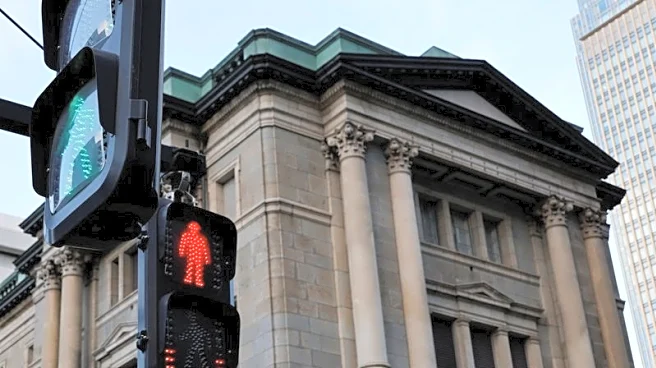

Dec 19 (Reuters) - The Bank of Japan raised interest rates on Friday to levels unseen in three decades, taking another landmark step in ending decades of huge monetary support and near-zero borrowing
costs.
As widely expected, the central bank raised short-term interest rates to 0.75% from 0.5% by a unanimous vote.
COMMENTS
CHRISTOPHER WONG, CURRENCY STRATEGIST, OCBC, SINGAPORE:
"The hike was largely priced in, shifting market attention squarely to Governor Ueda's press conference for signals beyond the immediate decision.
"The yen initially strengthened but quickly surrendered those gains, in part reflecting thin market liquidity that amplified short-term price action rather than a reassessment of fundamentals.
"A sustained recovery in the yen is therefore unlikely to be driven by this move alone. It would require clearer and more assertive forward guidance from the BOJ, complementary fiscal discipline from policymakers, and a supportive external backdrop, most notably a softer U.S. dollar."
MEL SIEW, ASIA CREDIT PORTFOLIO MANAGER, MUZINICH & CO, SINGAPORE:
"Today’s rate rise was well signalled by Governor Ueda’s speech at the start of December and largely expected by markets. Having been a major funding currency for a sustained period of time, we expect the Bank of Japan to remain gradualist in its approach to normalising monetary policy and to clearly signal any future changes."
"We think Japanese corporates will increasing look to the offshore U.S. Dollar credit market for funding over their domestic bond market. Pressure on credit spreads from increased issuance will be offset by solid economic growth and strong corporate credit fundamentals, as well as by continued investor appetite for Japanese corporate credit."
SHOKI OMORI, CHIEF DESK STRATEGIST, MIZUHO SECURITIES, TOKYO:
"Markets finally got through the monetary policy meeting and are feeling a sense of relief at the as-expected result.
"I do not see a major impact on rates. On the other hand, given that USD/JPY investors were feeling cautious going into the meeting, the yen was strengthening, but after the result came out, it resumed weakening. USD/JPY could fall if the dollar weakens depending on the state of the U.S. economy. But from the yen side, carry traders will push the yen lower and USD/JPY is likely to rise further.
"JGB markets will revert to being driven by supply/demand factors, with investors focused more on bond issuance rather than macro fundamentals."
MASAHIKO LOO, SENIOR FIXED INCOME STRATEGIST, STATE STREET INVESTMENT MANAGEMENT, TOKYO:
"The market may interpret the hike as dovish, causing short-term JPY volatility. Longer-term target of 135–140 remains intact, supported by Fed easing and Japanese investors raising hedging ratios from historically low levels.
"Positioning favours a stronger Nikkei, steeper JGB curve, and weaker yen under Sanaenomics. With the BOJ terminal rate priced at 1.5%, most JGB weakness is already in the market.
"Focus now shifts to (BOJ Governor Kazuo) Ueda's press conference tone and forward guidance — likely neutral, signalling gradual normalisation into 2026–27 without leaning too dovish or hawkish. Ueda faces a delicate balancing act."
(Reporting by Reuters Asia markets team; Editing by Subhranshu Sahu)