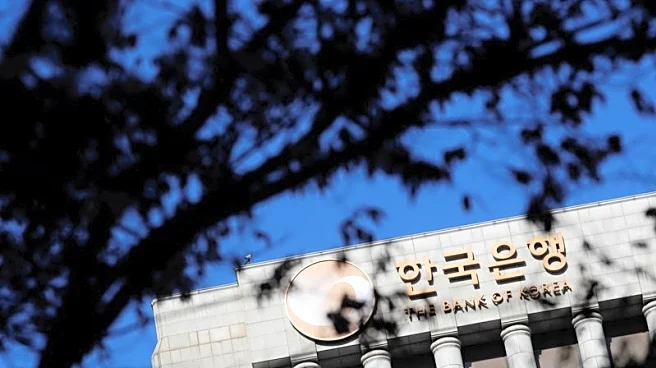

SEOUL, Dec 16 (Reuters) - South Korea's central bank said on Tuesday it would be an "overstatement" to blame ample liquidity conditions in the domestic market for a weaker won currency and price upswings
in the residential property market.
"Looking at exchange rates, it appears that factors such as increased overseas securities investment by residents and the tendency of export companies to hold foreign currency are having a greater impact than liquidity conditions," the Bank of Korea said in a report.
The BOK also said an accumulation of liquidity from the past has been flowing into the local property market and boosting prices, rather than fresh money supply.
Tuesday's report comes as the bank kept interest rates unchanged for a fourth straight meeting in late November as a tumbling won reduced the scope for further easing, amid rising financial stability risks from persistent housing price gains in Seoul.
According to the BOK, domestic liquidity conditions do not warrant the alarm raised by some commentators who consider that excessive liquidity is to blame for a weaker won and asset price inflation.
The BOK has been taking measures to curb the decline in the won, which is currently hovering at a 16-year low, by extending a currency swap agreement with the National Pension Service for another year, a measure aimed at stabilising the dollar-won rate by easing selling pressure on the currency.
(Reporting by Cynthia KimEditing by Ed Davies)