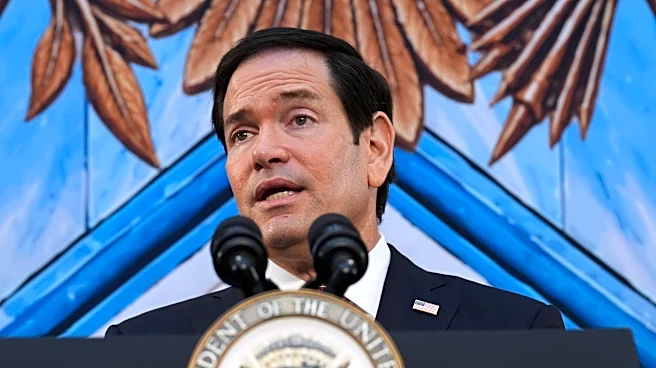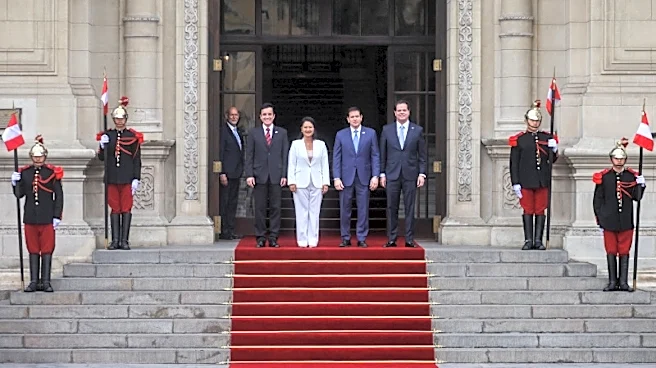


LIMA, Sept 10 (Reuters) - Peru will join the U.S.-led "Shield of the Americas" coalition against drug cartels, President Keiko Fujimori said on Thursday during U.S. Secretary of State Marco Rubio's visit, deepening cooperation and tightening security ties with Washington early in her presidency.
Speaking at a joint news conference, Fujimori said Peru's participation in the coalition would speed intelligence-sharing and bolster joint action against criminal groups operating across borders.
Rubio welcomed
Lima's decision, saying the initiative was meant to "shield the region" from organizations that threaten the sovereignty of countries across the hemisphere. He reiterated that the region was a priority for Washington.
"U.S. getting involved in the region is not a favor. It is essential to our own security, to our own prosperity, to our own well-being in America. And this administration is committed to this," he said, adding there would be more similar initiatives.
The top U.S. diplomat's trip to Peru, the last stop of a three-country swing to Latin America that also included Ecuador and Colombia, is the highest-level U.S. visit to the country since President Donald Trump returned to office in 2025.
The visit, which focused on counternarcotics, migration and trade, comes as Washington seeks closer security and commercial ties with conservative governments in Latin America while pushing back against China's influence in mining and infrastructure.
Peru is the world's third-largest copper producer.
The two countries have already moved to deepen defense ties. In January, the United States designated Peru a major non-NATO ally, and the State Department approved a possible $1.5 billion foreign military sale for design and construction work at Callao Naval Base, Peru's main naval hub.
"We appreciate this opportunity (to join the initiative), because for us, having previously had to tackle terrorism, (we) know how difficult it is to confront criminality today," Fujimori said. She was apparently referring to the period of political violence driven by the Maoist Shining Path insurgency that her father, former President Alberto Fujimori, cracked down on during his decade in power from 1990 to 2000.
Peru's Foreign Ministry had flagged in recent months that Lima might join the Shield of the Americas as part of a broader push to strengthen border security and coordination against transnational crime.
Officials also discussed U.S. support for Peru's preparations for a possible emergency related to the El Niño weather phenomenon, Fujimori said.
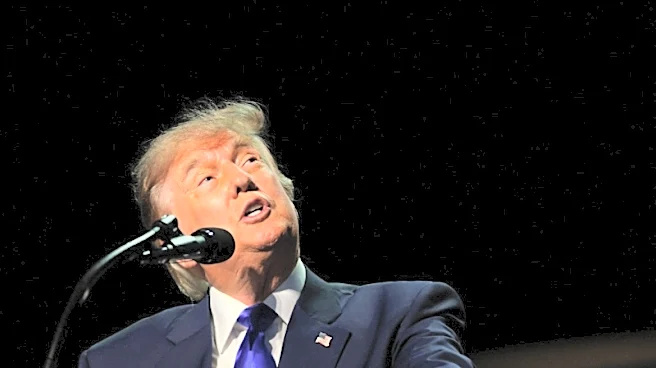
Rubio's trip coincided with the Republican midterm convention in Dallas, where Trump hopes to energize core supporters and help the party hold onto its congressional majorities.
'NOT ANYONE'S BACKYARD'
Peruvian government sources said the country was also seeking relief from U.S. tariffs after Trump raised duties in late July to 12.5% from 10% on imports from 60 trading partners, including Peru, citing failures to stop imports involving forced labor.
While Peru has traded largely tariff-free under a 2009 agreement, the new duties have hit Peru's agricultural exports, specifically blueberries, grapes and avocados.
As Lima negotiates the removal of those duties, China continues to outpace the United States in trade with Peru.
Peru's trade with China rose 35% in the first half of the year, surpassing a 20% increase in trade with the U.S., according to official data. The figures put bilateral trade with China on track to surpass the more than $50 billion recorded in 2025, compared with roughly $19 billion in trade with the United States that year.
China's embassy in Peru defended its trade and political ties this week ahead of Rubio's visit. Beijing operates copper mines and has expanded its footprint in Peru's energy and infrastructure sectors.
"The Western Hemisphere is not anyone's 'backyard'," the Chinese embassy in Lima said late on Tuesday on X.
(Reporting by Marco Aquino, Kylie Madry and Humeyra Pamuk; Editing by Lucinda Elliott and Rod Nickel)