






By Jana Choukeir
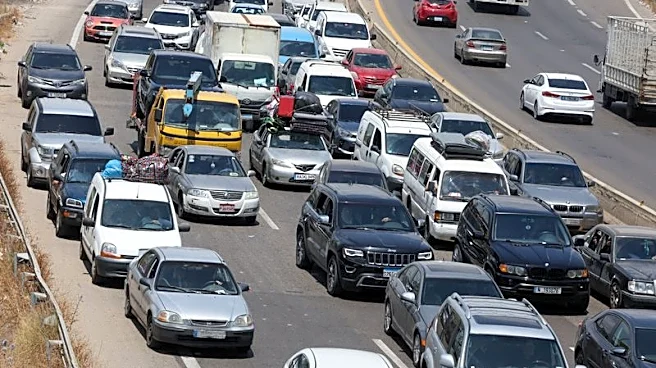
BEIRUT, June 30 (Reuters) - Some 400,000 Lebanese uprooted by war have returned to southern Lebanon, with more expected to follow in the coming week, a government minister said on Tuesday, encouraged by a lull in the four-month-long conflict between Israel and Hezbollah.
Yet many remain unable to go back. Since March, around 1 million people have been forced to flee their homes, and large numbers are still in shelters or temporary housing because their homes are destroyed or uninhabitable,
said Hanine El Sayed.
Roughly 40% of those displaced have now returned to their towns and villages. The number of people staying in collective shelters has fallen sharply, to about 13,000 from 37,000, she said.
While some shelters will remain open for families who cannot return, aid programmes — including emergency cash support — will continue. The number of shelters has dropped from 692 at the height of the crisis to 479, with additional centres opened in Nabatieh for those wanting to stay near their home areas.
El Sayed said the headline figures conceal a gap between those able to return and those still displaced.
"These are families that are able to return to something, at least the basic minimum," she told Reuters. "The fact that the others have not returned means they have a much harder situation."
Authorities expect further returns in the coming days and hope within about a week to better gauge how many families cannot go back at all.
"In about a week's time ... we would really know the size of the problem - how many absolutely cannot return because their homes have been totally damaged," she said.
CHALLENGES OF GOING HOME
For many, returning home does not mean a return to normal life. Families are often finding damaged houses, scarce electricity and water, and destroyed businesses and livelihoods, as the government works to restore basic services and expand cash assistance, rental support and employment programmes.
Yet despite these hardships, many are choosing to return.
"Many of the people of the south are very attached to their land and they want to rightfully make a claim back to it," El Sayed said.
The government estimates Lebanon will need billions of dollars to rebuild damaged homes and infrastructure, funding that it does not currently have, El Sayed said.
Nearly 90,000 housing units have been totally or partially destroyed in the latest conflict, adding to widespread damage from earlier fighting.
(Reporting by Jana Choukeir, editing by John Davison and Ros Russell)