
By Cynthia Kim and Jihoon Lee
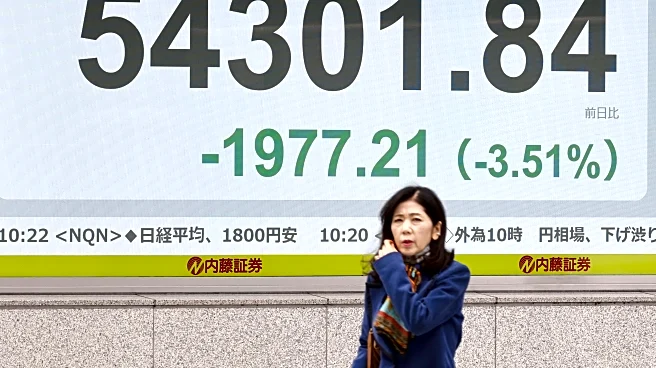
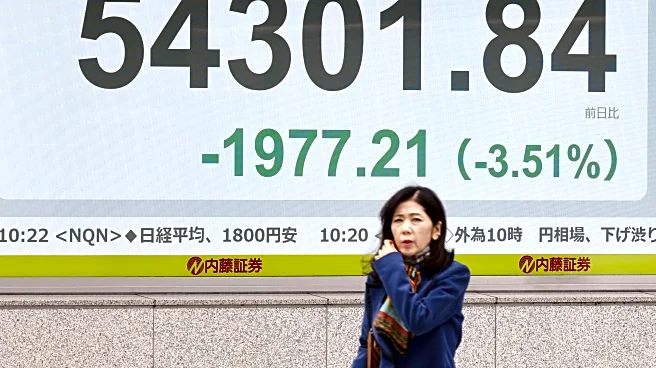
SEONGNAM, South Korea, March 4 (Reuters) - As South Korea's benchmark KOSPI stock index dived more than 12% to its worst-ever sell-off on Wednesday, a district known as the Korean Silicon Valley was eerily quiet when it would normally be bustling for the lunchtime rush.
Workers were instead hunkered over smartphone screens, feverishly checking trading portfolios as they watched the world's hottest market - which had doubled over the past year - go into freefall.
"I heard
some of my colleagues gasping 'What the hell?' as the KOSPI's losses widened past 8% in the morning," said Jessica Chung, who was one of many tapping intently on phone screens in the Pangyo area of Seongnam, a high-tech hub just south of Seoul.
"I went to the bathroom to find a quiet corner to trade and, guess what, people were queuing outside," she said, describing the atmosphere as a collective sense of dread.
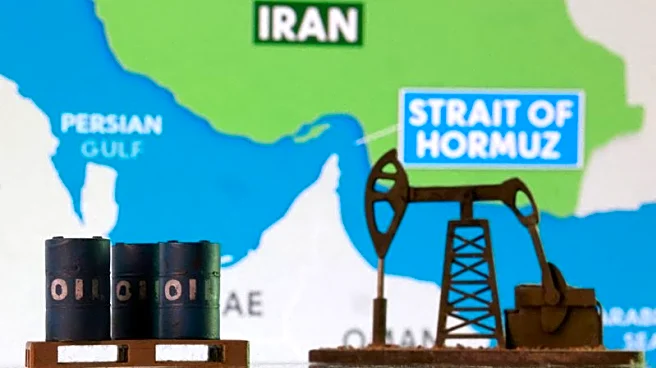
The widening war in the Middle East and resulting spike in oil prices have triggered a rethink about the AI boom that has driven the KOSPI to a succession of record peaks in recent months, because South Korea is almost completely reliant on imports for its energy needs.
Chipmakers Samsung Electronics and SK Hynix - the poster children of a rally that had accelerated this year - have plunged some 20% each this holiday-shortened week. The KOSPI is down a combined 18.4% after Tuesday's 7.2% tumble, wiping out a total of 817.6 trillion won ($553.82 billion) in market value.
On Wednesday, of the KOSPI's total 925 traded issues, all but 14 fell.
And while the KOSPI's historic drop was triggering the first circuit breakers since August 2024, the local currency was also reeling.
The won briefly weakened past the psychologically key 1,500 mark against the U.S. dollar overnight for the first time in 17 years.
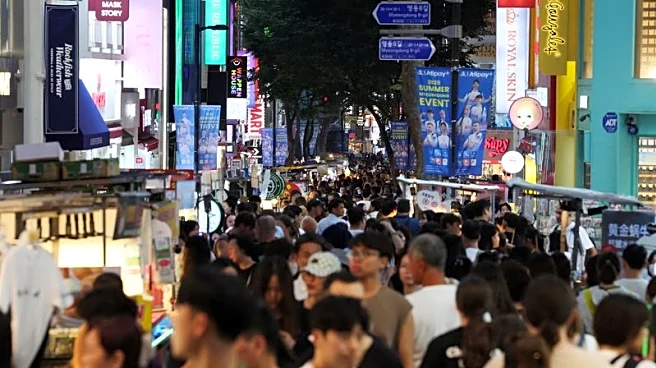
In a nation of close to 52 million people, South Korea has an estimated 14 million retail traders - known locally as "ants" - who make up about a third of daily stock trading.
But analysts said they weren't the primary catalyst for the cascading sell-off.
"We are definitely seeing foreign outflows driving the move, particularly in the large-cap tech names that had led the rally year-to-date," said Tareck Horchani, head of Prime Brokerage Dealing at Maybank Securities in Singapore.
"Korea had been one of the strongest markets globally," he said. "So positioning was crowded."
The rising risk of a drawn-out conflict has particular significance for South Korea, the world's fourth-largest oil importer, which gets around 70% of its oil from the Middle East.
However, there were bright spots: Daesung Energy, an LNG provider, jumped by the daily limit of 30% after Iran announced a blockade of the Strait of Hormuz.
Even so, not all stocks acted as expected. "Everything is red for me today, but Hanwha Aerospace is the biggest shocker," Chung said, referring to the defence giant's dramatic 8% drop on Wednesday following a 20% jump a day earlier on valuation concerns.
($1 = 1,477.3000 won)
(Reporting by Cynthia Kim and Jihoon Lee; Additional reporting by Rae Wee and Tom Westbrook in Singapore; Editing by Ed Davies and Kevin Buckland)