






By Chuck Mikolajczak
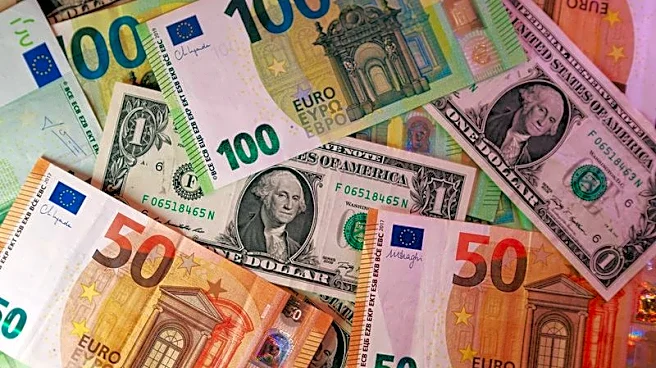
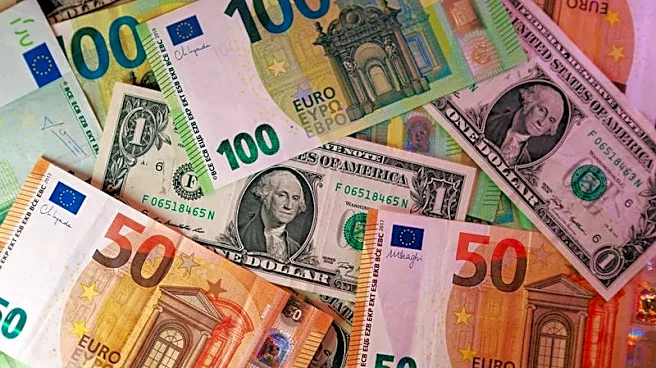
NEW YORK, Oct 6 (Reuters) - The euro rebounded on Tuesday and was poised for its strongest move higher in seven weeks after falling to a 17-month low on the prior day, as a pullback in French government bond yields eased fears about strain in euro zone debt markets.
The euro zone's currency jumped 0.35%, on track for its biggest daily gain since August 19, at $1.126. The currency had slid to its lowest since May 2025 on Monday at $1.116, following a drop of more than 1% in the
prior week, its fourth straight weekly decline.
The dollar index, which measures the greenback against a basket of currencies, fell 0.32% to 101.83 and was on pace for its biggest daily drop since September 3.
Bond markets around the world have seen yields climb in recent weeks due to expectations of sharp central bank rate hikes as energy prices have jumped because of the Iran war and stoked inflation, as well as concerns about government finances.
French debt has seen pressure mount as politicians struggle to curb the budget deficit ahead of a divisive election in 2027. The calling of a snap election in Spain added to the recent pressure on the euro.
ENERGY PRICES EASE BOND PRESSURE
An early drop in energy prices helped French bonds rally on Tuesday, with the key 10-year yield down 11.4 basis points at 4.7506%.
Crude prices had fallen as rising Middle Eastern crude exports and a G7 emergency stockpile release eased supply concern as Saudi-backed Yemeni government forces staged a lightning advance on Monday to retake the coast around the Bab el-Mandeb Strait up to the city of Mocha, the government said, but prices had since rebounded to erase declines.
"Saudi-backed Yemen forces have recaptured some strategic territory from the Houthis, this has seen oil prices drop sharply," said Marc Chandler, chief market strategist at Bannockburn Capital Markets in New York. "In turn, this has helped drag yields down, including in France, and in Italy, where the spreads had really widened lately and so this is giving the euro a bit of a bounce."
Far-right French presidential candidate Marine Le Pen, who leads the polls, on Tuesday increased her plans to reduce spending to €140 billion ($158 billion) from €125 billion in savings originally planned if she wins power in 2027.
The fall in the dollar helped buoy other currencies, with sterling up 0.42% and on pace for its biggest daily gain since August 19, to $1.3275, after climbing to a one-week high of $1.3283.
JAPAN SIGNALS RATE RISE READINESS
The yen was an exception, with the dollar up 0.11% to 158.08 against the Japanese currency.
The Bank of Japan may signal this month that underlying inflation has roughly hit its 2% target, three people familiar with its thinking said, highlighting its readiness to raise interest rates again in the coming months.
Bank of Japan Governor Kazuo Ueda said it was becoming more important to anchor underlying inflation around the central bank's 2% target, signaling a preparedness to keep raising interest rates to blunt the risk of too-high inflation.
The US dollar's recent strength has come even as expectations for a Federal Reserve rate hike at the central bank's policy meeting later this month have retreated in the wake of weaker-than-expected US jobs data and comments from some Fed officials. However, markets are still anticipating more rate hikes later in the year and next year.
The gains for the dollar in September were partly due to the greater exposure of US equities to technology and AI, said Goldman Sachs analysts in a note, along with the recent outperformance of US growth. But the firm is cautious on the prospects for near-term dollar strength, citing stretched positioning in several major pairs and the recent Fed communication emphasizing a patient approach to policy tightening.
In contrast to the recent call for patience from some Fed officials, Kansas City Fed President Jeff Schmid said on Tuesday that the central bank still needs to raise its policy rate further to lower inflation, even if higher long-term yields are weighing on activity in some parts of the economy.
The chance of a hike of at least 25 basis points in October stands at about 19%, from about 51% a week ago, according to CME FedWatch, but markets are pricing in an 86% chance for a hike at the December meeting.
(Reporting by Chuck Mikolajczak; additional reporting by Harry Robertson in London and Rae Wee in Singapore; Editing by Shri Navaratnam, Xevi Fontdegloria, Will Dunham and Nick Zieminski)