






By Howard Schneider
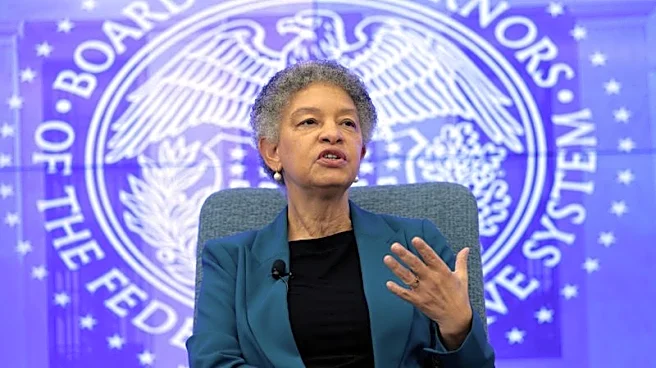
JACKSON HOLE, Wyoming, Aug 27 (Reuters) - The latest U.S. inflation report was "mixed," with the headline rate stronger than expected but driven higher by a patchwork of forces that on their own shouldn't push the U.S. central bank towards raising interest rates, Boston Federal Reserve President Susan Collins said on Thursday.
She cited the rise in portfolio management fees, driven by stock values as opposed to supply and demand conditions, as one example that left her still with
an outlook in which inflation is likely to fall on its own. Collins, however, noted that she is ready to raise rates if it does not.
"The overall number was maybe a bit higher than I might have expected," Collins said in an interview with Reuters on the sidelines of the Fed's annual economic symposium in Jackson Hole, Wyoming. But once the data was "unpacked," she said, "there's some promising signs in there," including the fact that monthly inflation for goods and services where prices are set by market forces was around the Fed's 2% target.
"My modal scenario does continue to have that gradual disinflation," under a current policy interest rate that is seen as slightly restrictive, Collins said.
She noted that Boston Fed research pointed to other reasons price pressures may ease, including from improved productivity and indications that inflation linked to the Trump administration's import tariffs may have almost run its course.
Overall, "it's mixed," Collins said. "A very broad-based elevation, across market prices, would have been more concerning."
The Personal Consumption Expenditures Price Index rose at a 3.7% annual rate in July, well above the Fed's target, prompting some of Collins' colleagues to say it was time for rates to rise.
Fed Chairman Kevin Warsh may address the issue on Friday in his keynote speech to the conference.
Collins said she had been watching the recent rise in bond yields, which have a direct bearing on the outlook for economic activity.
She said she did not think they showed any evidence, so far, that inflation expectations were beginning to rise.
Estimates of the inflation compensation demanded by investors or seen in the pricing of inflation-protected securities are "consistent with price stability," Collins said.
Of the broader move higher, she said it was "challenging" to specify all the factors that might be behind it.
Asked about Treasury Secretary Scott Bessent's recent bond market intervention, and the implications for the Fed, she said she had no comment on his actions in particular, but that the central bank would "assess how things are evolving and address that matter as is appropriate. ... That is hard to get ahead of."
(Reporting by Howard Schneider; Editing by Paul Simao)