
By Patricia Zengerle and Simon Lewis
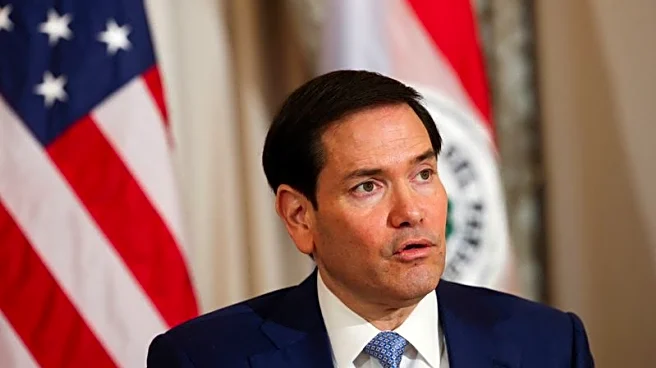
WASHINGTON, Jan 28 (Reuters) - U.S. Secretary of State Marco Rubio is due to testify in the Senate about President Donald Trump's Venezuela policy on Wednesday, after
scrambling to keep his former colleagues from passing a resolution to rein in the administration's war powers.
Rubio, a former Florida senator and member of the Senate Foreign Relations Committee, is likely to face a far less friendly reception than he did a year ago, when the Senate approved him unanimously to serve as the nation's top diplomat.
It will be the first time Rubio has publicly faced lawmakers' questions over the January 3 raid to seize Venezuelan President Nicolas Maduro. Two weeks ago, Trump's fellow Republicans narrowly blocked a resolution that would have barred Trump from further military action in Venezuela without Congress' authorization, with Vice President JD Vance forced to break a tie.
Rubio is set to tout the success of the military operation and insist there was no war with Venezuela and no U.S. occupation there, according to prepared remarks submitted to the committee.
"We will closely monitor the performance of the interim authorities as they cooperate with our stage-based plan to restore stability to Venezuela," Rubio said in the remarks. "Make no mistake, as the President has stated, we are prepared to use force to ensure maximum cooperation if other methods fail."
Several members of Congress, some Republicans as well as Democrats, have expressed frustration with the lack of communication from Trump officials about major operations, including the capture of Maduro and the elimination of many foreign aid programs supported by Congress.
Committee Chairman Jim Risch, a Republican senator from Idaho, was expected to praise Rubio for explaining to him the administration's plans for Venezuela, despite "confusion over how it will be done."
"Today is the opportunity to publicly explain the administration’s plan for the future of Venezuela," Risch will say, according to a copy of his opening remarks shared with reporters. "After our lengthy engagements in the Middle East in years past, many Americans are concerned about so-called 'forever wars'. I know this Administration is laser-focused on avoiding these experiences."
The war powers resolution had appeared to be on track to pass the Senate after five Republicans joined Democrats in voting to advance it, in rare Republican opposition to Trump.
But Trump railed at the five, saying they should never again be elected to public office. He and Rubio made repeated calls encouraging senators to change their votes by insisting there were no U.S. troops in Venezuela, and with promises including Rubio's agreement to come before the Senate committee. Two of them, Josh Hawley of Missouri and Todd Young of Indiana, flipped their positions.
The close vote reflected concern in Congress about Trump's foreign policy and growing support for the argument that Congress, not the president, should take back the power to send U.S. troops to war, as spelled out in the Constitution.
'20 QUESTIONS'
Members of Congress, including some of Trump's fellow Republicans, said Rubio had insisted the administration did not plan regime change in Venezuela just days before U.S. troops removed Maduro, and that oil company executives were told about the operation before lawmakers.
Democratic Senator Chris Coons of Delaware, a senior committee member, said he had "maybe 20 questions" he would like to ask on a range of issues, including Venezuela.
Coons said the administration never presented evidence tying alleged drug trafficking to the United States or to justify acting without consulting Congress.
"No evidence was proffered to explain or justify the Article Two urgent national security concern that would justify an action by the president of the United States without timely consultation with Congress, something the secretary from his 15 years of service in the Senate knows full well should have happened," Coons said on a recent call with reporters.
Trump this month said the U.S. will run Venezuela for years, told Iranians protesting against their government that "help is on the way," and threatened military action to take Greenland, a territory of NATO ally Denmark.
(Reporting by Patricia Zengerle and Simon Lewis; Editing by Chris Reese)