
By Nate Raymond
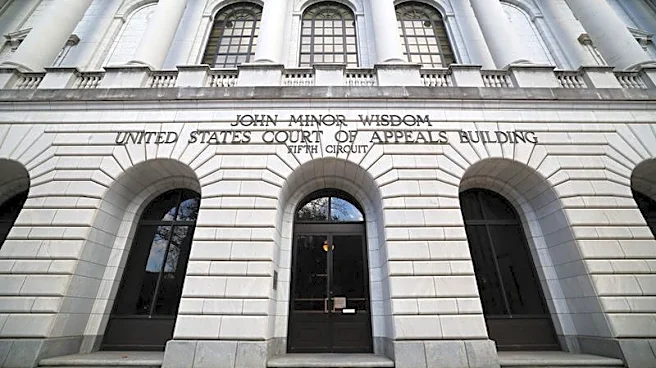
April 24 (Reuters) - A federal appeals court on Friday cleared the way for Texas authorities to enforce a Republican-backed state law that would let them arrest and prosecute people suspected
of illegally crossing the U.S.-Mexico border.
A 10-7 panel of the New Orleans-based 5th U.S. Circuit Court of Appeals overturned a 2024 injunction that had blocked enforcement of the law, which former Democratic President Joe Biden's administration had gone to court to challenge.
Republican President Donald Trump's administration dropped the federal government's case, but the Texas law known as SB4 continued to be challenged by immigrant-rights groups Las Americas Immigrant Advocacy Center and American Gateways and the city of El Paso.
That law, which Texas Governor Greg Abbott signed in December 2023, would make it a state crime to illegally enter or re-enter Texas from a foreign country and would empower state judges to order that violators leave the United States, with prison sentences up to 20 years for those who refuse to comply.
After a judge in February 2024 issued a preliminary injunction blocking the law, the case arrived at the U.S. Supreme Court, which briefly allowed the law to take effect before the 5th Circuit within hours halted it pending further review.
A 2-1 panel of the 5th Circuit in July 2025 upheld the injunction, saying the state law would interfere with the federal government's ability to enforce U.S. immigration laws.
But the full appeals court, among the most conservative in the nation, agreed to reconsider the case at the urging of Republican Texas Attorney General Ken Paxton.
U.S. Circuit Judge Jerry Smith in Friday's ruling said that just because the legal advocacy groups voluntarily opted to increase representation of immigrants adversely affected by the law did not mean they had standing to challenge it.
"When enterprising plaintiffs repackage a generalized grievance as an 'injury,' courts should rightly exercise caution," Smith wrote in an opinion joined by all but two of the court's Republican-appointed judges.
Paxton in a statement hailed the ruling. "Texas's right to arrest illegals, protect our citizens, and enforce immigration law is fundamental," he said.
The plaintiffs' lawyers did not immediately respond to requests for comment.
Seven judges dissented, including U.S. Circuit Judge Priscilla Richman, an appointee of Republican President George W. Bush who said that under a controlling 2012 precedent of the U.S. Supreme Court, Texas' law was trumped by federal law.
"Texas cannot enact its own immigration regime," she wrote.
(Reporting by Nate Raymond in Boston; Editing by Matthew Lewis)