




By Siddharth Cavale
Nov 15 (Reuters) - The asphalt tanker vessel that struck a docked paddlewheel cruise boat in the Mississippi River at New Orleans last week experienced a steering problem in which its rudder was stuck in one position, US transportation safety officials said on Sunday.
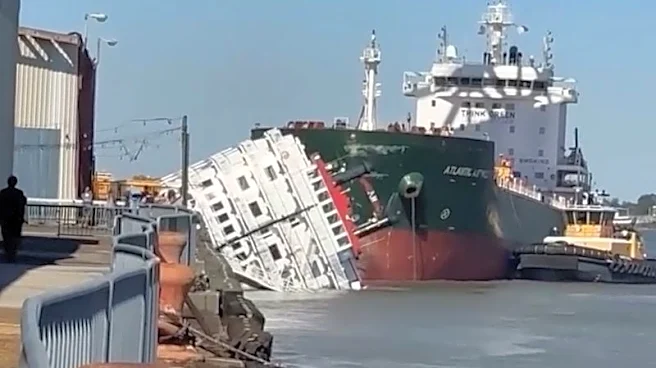
The American Cruise Lines paddlewheeler American Heritage, with 190 people aboard, capsized at the dock. No one was killed in the collision on Friday.
The Atlantic Asphalt tanker was headed upriver when it experienced
a "steering casualty" in which its rudder stayed in a starboard position and the vessel veered toward the river's east bank, National Transportation Safety Board senior marine accident investigator Bart Barnum told a news conference in New Orleans.
NTSB officials said they do not know what caused the steering problem. The tanker's voyage-data recorder was recovered on Saturday.
Investigators downloaded more than nine hours of data and began analyzing information that includes bridge audio, rudder angle, propulsion performance and vessel speed, Barnum said.
Recorder data showed the asphalt tanker was traveling upriver on Friday near the Crescent City Connection Bridge at about 12:26 p.m. local time (1826 GMT), two minutes before the collision, when it experienced the steering issue, Barnum said.
The cruise ship capsized in about 22 minutes, NTSB officials said on Sunday. As the American Heritage toppled over into the river after the impact, harbor personnel, firefighters and onlookers scrambled to pull passengers to safety.
Audio captured by the recorder included the vessel's whistle, radio warnings and requests for assistance, as well as commands to deploy anchors and other emergency ship-handling orders, he added.
Issues under investigation include whether the tanker's anchors were deployed and, if so, at what depth, as well as interviews with crew members and passengers, officials said. Interviews with the crew of the Atlantic Asphalt are scheduled over the next week, NTSB officials said.
The agency will release a preliminary report in about 30 days, the agency said.
(Reporting by Siddharth Cavale in New York; Editing by Sergio Non, Will Dunham and Andrea Ricci)