





By Maria Martinez
April 8 (Reuters) - German industrial orders climbed in February from a month earlier but fell far short of expectations, underscoring less-than-robust business conditions for the country's manufacturers even before the start of the Iran war.
Orders rose 0.9% on a seasonally and calendar-adjusted basis, official data showed on Wednesday. That compares with expectations of a 2.0% increase in a Reuters poll, and follows a sharp slide of 11.1% in January.
"The core order figure continues
to show little more than a sideways trend," said Ralph Solveen, senior economist at Commerzbank.
Analysts noted that it was still unclear how much damage the Iran war and surging fuel costs would inflict on industry. But they said the economy would benefit from public spending over the course of the year, citing a 500 billion euro ($585 billion)infrastructure fund, approved by the German government last year, as a key example.
DOMESTIC ORDERS SLUMP
Excluding large-scale contracts that are often unpredictable, new orders climbed 3.5% in February from a month earlier.
The less volatile three-month on three-month comparison showed that new orders, including big ones, were 2.0% higher in December-February compared with the previous three months.
The first quarter is likely to show a decline of around 5% in new orders after a 9.9% surge in the fourth quarter, with large-scale orders accounting for much of the volatility, said Claus Vistesen, chief euro zone economist at Pantheon Macroeconomics.
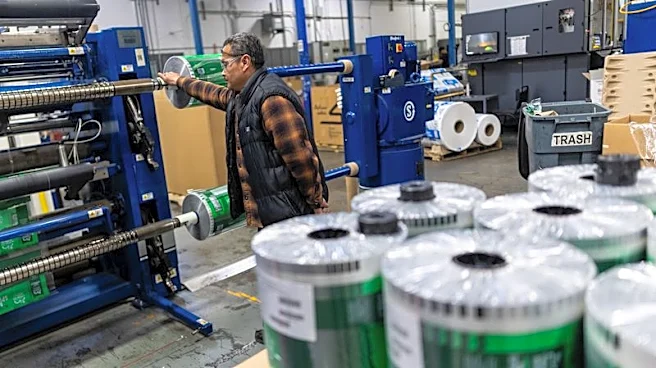
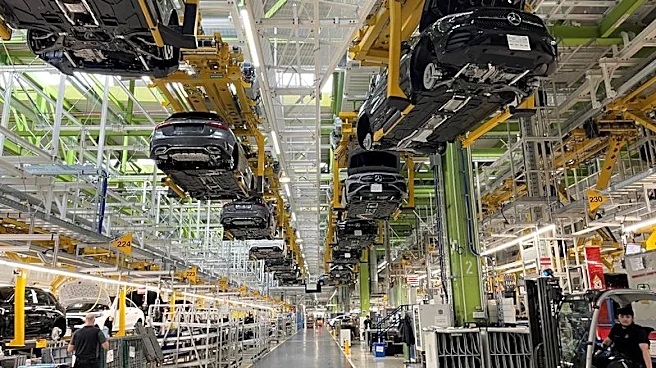
February's rise in new orders owed much to strong gains for the auto, textiles and basic metals sectors. But orders declined for other transport equipment such as aircraft, ships and trains.
Foreign orders were up 4.7%, with orders from the euro zone increasing 6.7% and orders from outside the euro zone rising 3.5%.
By contrast, domestic orders fell 4.4%.
"Sluggish domestic demand and structural problems in Germany as a business location are weighing on activity," said Jupp Zenzen, economic expert at the German chamber of commerce DIHK.
($1 = 0.8560 euros)
(Reporting by Maria Martinez; Additional reporting by Anastasiia Kozlova and Amir Orusov; Editing by Linda Pasquini and Edwina Gibbs)