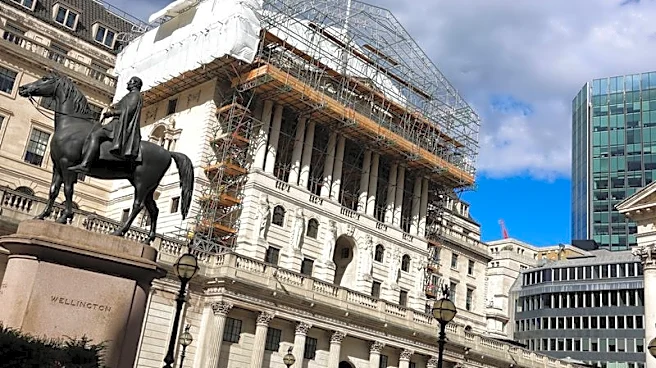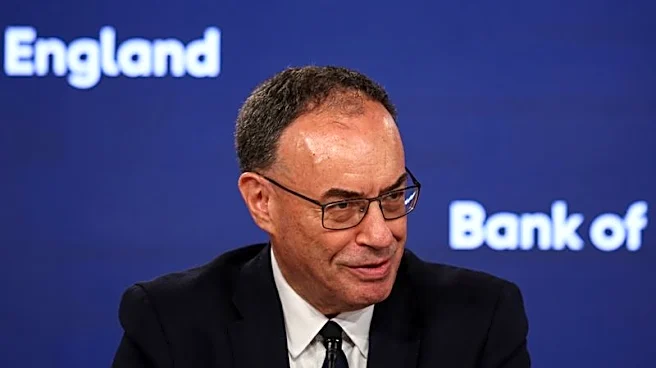



Sept 25 (Reuters) - Bank of England Governor Andrew Bailey said on Friday that persistently high energy prices would make it harder for the central bank to leave interest rates on hold, underlining a recent shift in tone towards higher borrowing costs.
The warning comes at a difficult time for Prime Minister Andy Burnham and his finance minister John Healey, who are trying to curb cost-of-living pressures while striking a positive tone about the economy before the budget on October 28.
The BoE, unlike
the US Federal Reserve and the European Central Bank, has not raised rates since the start of the Iran war.
But last week a number of BoE policymakers — Bailey included — signalled they were increasingly worried about the surge in energy costs unleashed by the war and which has shown little sign of fading.
Bailey's comments on Friday reiterated that message.
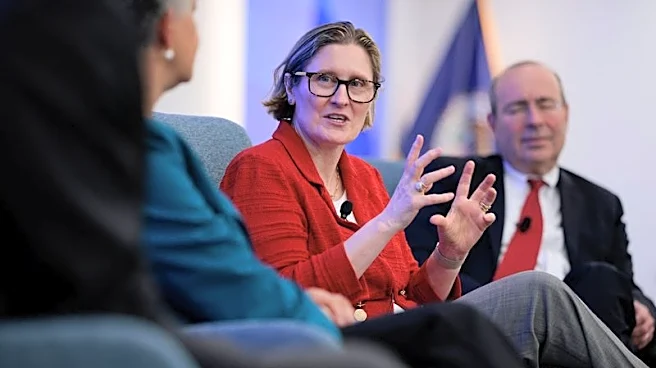
"It's going to get harder to maintain that stance the longer we have high energy prices," he told the Monetary Economics Conference hosted by the University of Oxford.
Bailey added that the BoE could not afford to wait for the full evidence on how high energy prices were feeding into inflation expectations.
SHIFT IN TONE ON MPC
While he described the evidence so far as "quite subdued", he repeated his view that it was "early days" to judge the impact on broader pricing from energy costs.
Bailey was part of a 6-3 majority on the Monetary Policy Committee which voted to keep rates on hold at 3.75% last week, but there was a clear shift in tone as he and three deputy governors raised the prospect of a rate hike.
Two of them, Sarah Breeden and Clare Lombardelli, on Thursday again suggested they were getting closer to voting for an increase in borrowing costs, as the jump in energy costs raised the risk of inflation getting stuck above target.
The BoE said last week that inflation would "now reach slightly over 4% in early 2027", more than double its 2% target. Inflation has exceeded the 2% target in all but three months over the past five years.
Last week Bailey said the outlook was too unpredictable to say whether markets were right to price in almost four interest rate hikes over the next year, adding that the Monetary Policy Committee had not discussed that.
Investors on Friday priced in a roughly 80% chance of the BoE hiking rates in November with a little over four quarter-point increases built into the market curve over the next year.
Bailey said monetary and financial conditions had tightened in Britain's economy as a result of the BoE keeping interest rates on hold in recent months, relative to expectations before the US-Israeli war with Iran that there would be two interest rate cuts in 2026.
(Writing by Andy Bruce; Editing by William Schomberg and Emelia Sithole-Matarise)