



By Anton Bridge
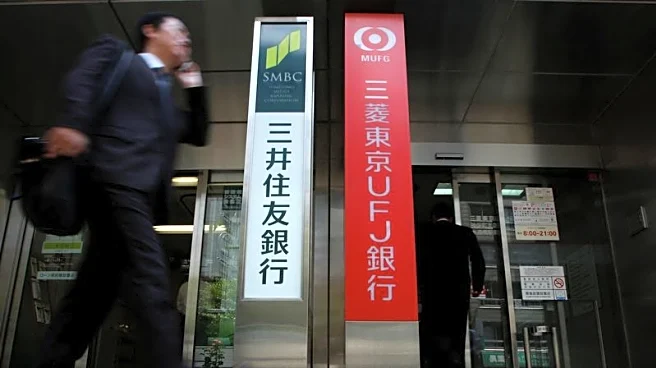
TOKYO, Feb 6 (Reuters) - Japan's two largest banks say they are set to increase their holdings of Japanese government bonds as rising interest rates promise higher returns, even though unrealised losses on existing bond portfolios have grown.
The banks - Mitsubishi UFJ Financial Group and Sumitomo Mitsui Financial Group - have steadily cut their holdings of JGBs over the past decade as the central bank's embrace of ultra-low rates meant paltry returns on offer.
That trend now seems likely
to reverse course.
A sharp climb in JGB yields since November - triggered by Prime Minister Sanae Takaichi's spending plans - hit the value of bonds. But some measure of calm has returned to the market in the past couple of weeks.
The past four debt auctions have seen resilient demand, and 30-year JGB yields have fallen 32 basis points since their record high of 3.88% on January 20.
"With long-term interest rates showing signs of peaking, I think we'll cautiously rebuild our JGB position," Takayuki Hara, managing director and head of MUFG's CFO office, told a press briefing on Wednesday.
GRADUAL INCREASES IN JGB PURCHASES SEEN
MUFG, Japan's biggest lender, had unrealised losses of 200 billion yen ($1.3 billion) on its bond portfolio at the end of the year, up from 40 billion yen at the end of March. It noted that it had sold off longer-duration bonds between September and December, avoiding greater losses.
Rising yields reduce the market value of bonds bought when yields were lower, resulting in unrealised losses.
Second-ranked SMFG has a similar outlook to MUFG.
"Rising interest rates mean we have recorded some valuation losses on yen-denominated bonds, but we plan to gradually increase our JGB positions, taking into account the market outlook," a bank spokesperson said at its earnings briefing last week.
SMFG's unrealised losses on JGBs more than doubled to 98 billion yen over nine months to the end of December.
Over recent years, MUFG, SMFG and the No. 3 player, Mizuho Financial Group, have stuck to short-duration bonds. Mizuho's average remaining period was just 1.8 years for JGBs held at the end of December.
JGB PURCHASES MAY HELP EARNINGS MOMENTUM
Some investors and analysts believe Japan's megabanks might not begin substantive purchases of longer-duration bonds immediately due to the prospect of further BOJ rate hikes as well as market concerns about Japan's huge debt burden.
With polls showing Takaichi on track to win a majority at Sunday's general election, the impetus for the expansionary fiscal policies she favours may grow, potentially pushing yields up further.
"I think the JGB curve will rise, and the 10-year rate could reach 2.5%," said Toshinobu Chiba, fund manager at Simplex Asset Management, adding that level could mark an entry point for the banks to start buying more bonds.
The 10-year rate currently stands at 2.195%.
The Bank of Japan raised rates for the first time in 17 years in March 2024, and there have been three more increases since, with the main policy rate now at 0.75%.
That's helped all of the megabanks forecast record profits for this financial year. The Topix banking index has also surged, doubling in value since the March 2024 rate hike and far outpacing the Topix's 33% gain.
Now, the prospect of higher yields on growing longer-duration JGB positions should lift bank earnings in the years to come, analysts say.
Goldman Sachs analyst Makoto Kuroda last week lifted her forecasts for the 2028 financial year for all three banks to reflect the BOJ's latest December rate hike, the jump in JGB yields and a weaker yen.
Net profit estimates for MUFG, SMFG and Mizuho were increased by 20%, 11% and 21% respectively.
($1 = 157.0300 yen)
(Reporting by Anton Bridge; Additional reporting by Rocky Swift; Editing by Edwina Gibbs)