
By Chris Prentice
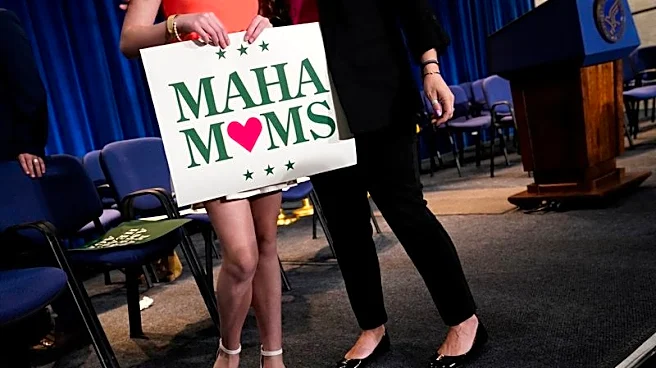
NEW YORK, May 6 (Reuters) - Even for the "Make America Healthy Again" voters who helped usher President Donald Trump back to the White House for a second term, affordability will be top
of mind when they vote in November's midterm elections, a new poll found.
Lowering costs is the top health priority for voters across parties who identified as MAHA supporters, with at least half saying that will have a "major impact" on their decision to vote and who they will support, according to a poll from KFF, a nonpartisan health research organization.
Affordability is proving to be an Achilles' heel for a president who campaigned on the issue. Trump's approval rating has sunk to a new low as the war on Iran fuels cost-of-living concerns, Reuters previously reported. Gasoline prices have surged due to the war and U.S. restaurant sales have dropped.
Those concerns are expected to hurt Republicans' prospects of maintaining control of Congress this year.
In the KFF poll, 61% of all respondents said health costs will have a "major impact" on who they vote for in November, putting the issue ahead of concerns about food safety and vaccine policy.
"This poll really shows that the issues the MAHA movement has elevated resonate broadly with the American public, but even for voters who support MAHA, healthcare costs are the dominant priority by a wide margin," said Audrey Kearney, senior survey analyst at KFF.
The survey was conducted April 14-19 online and by telephone among a nationally representative sample of 1,343 U.S. adults. About 500 of those identified themselves as supporters of the MAHA movement, KFF said.
KFF found that 42% of MAHA voters said they would choose lowering costs when asked to pick their most important health issue for the federal government. That compared with 21% who prioritized restricting chemical additives in food and 10% for reevaluating vaccine safety.
The poll had a margin of error of plus or minus 3 percentage points.
MAHA TENSIONS
Trump had said he would let his Health Secretary Robert F. Kennedy Jr. "go wild" on health policy, and the secretary's actions to cut the number of recommended childhood vaccines and change dietary guidelines have pleased MAHA activists.
But the administration has also disappointed many in the movement with some of its actions, such as a February order to protect domestic output of a widely-used weedkiller, and the April nomination of a former official involved in the U.S. COVID response to lead the Centers for Disease Control and Prevention.
"He shook Bobby Kennedy's hand and said he'd let him go wild. And nothing has been done to reduce our children's exposure to toxic pesticides," Zen Honeycutt, who founded Moms Across America, told Reuters.
In fact, the KFF poll found majorities of the public agree there is not enough regulation of chemical additives in food or of pesticides in agriculture.
The Trump administration scored low approval ratings on two top MAHA priorities. The KFF poll found 38% of respondents approved of the handling of vaccine policy and 46% approved the handling of food policy.
Kennedy's approval has remained relatively steady from polls conducted in September and January, with about four in ten voters approving of his job as health secretary, KFF said.
Honeycutt said she remains supportive of Kennedy and is holding out hope the administration will move in a different direction on pesticides.
"This administration has done more for health than any other administration ever in recorded history," Honeycutt said. "It was brilliant of Trump to bring Kennedy on board."
The health secretary has more recently sought quick wins ahead of the midterms after the White House pressed him to back off from vaccine actions that have drawn swift rebukes from major medical groups.
(Reporting by Chris PrenticeEditing by Bill Berkrot)