



By Chuck Mikolajczak
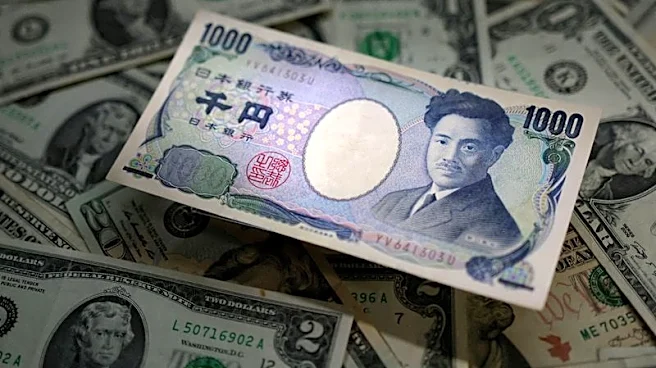
NEW YORK, Sept 21 (Reuters) - The Japanese yen retreated on Monday and was set for its fifth decline in six sessions as investors were attuned to any signs of a possible currency intervention, while the dollar gained as the market assessed the path of US rate hikes.
Investors were on guard for any potential indications that Tokyo was stepping into the market as Japanese markets were closed for a three-day holiday, leading to lower liquidity, which could provide an outsized move.
The yen weakened 0.38% against the greenback to 157.48 per dollar.
The Bank of Japan raised interest rates on Friday to their highest level in 31 years at 1.25%, but two dissenting votes and a lack of explicitly hawkish guidance left investors reluctant to buy the currency.
On the heels of the rate decision, the yen fell sharply before a slight rebound as the Nikkei newspaper reported that Japanese officials had conducted rate checks, often seen as a forerunner to currency intervention.
"With Japan on holiday, people think about what happened in late April, early May when they were on holiday, they intervened. I don't think that intervention at 157, 157 and a half is very likely," said Marc Chandler, chief market strategist at Bannockburn Capital Markets in New York.
"But the markets are a bit nervous. We've been up to the mid-158, and so I think we're range-bound, as long as the US rates are firm. I know oil is down, but it's still relatively high and the US is still the least ugly in the ugly contest."
Apart from the BOJ, the Federal Reserve and the European Central Bank also raised rates this month. Both warned further tightening might be needed to combat inflation tied in part to the almost seven-month-long war in the Middle East.
GREENBACK STRENGTHENS AMID RATE OUTLOOK
The dollar index, which measures the greenback against a basket of currencies including the yen and the euro, rose 0.13% to 100.40, after rising 1.1% last week, its biggest weekly gain since early June.
Traders are pricing in a 55.4% chance for a rate hike of at least 25 basis points at the Federal Reserve's October meeting, according to CME FedWatch, up from 43.5% a week earlier.
Chicago Fed President Austan Goolsbee said on Monday that US inflation may have moved beyond the tariff and energy price shocks of the last 18 months and is now being driven by strong demand as well, potentially requiring a faster pace of Federal Reserve interest rate hikes.
Echoing the need for more aggressive policy, St. Louis Fed President Alberto Musalem said the Fed will likely need to hike interest rates further to lower inflation resulting from strong demand as well as a commodity price shock that has moved beyond oil.
The euro was down 0.14% at $1.1467 after the far-right Alternative for Germany took first place in state elections in northeastern Germany on Sunday, with Chancellor Friedrich Merz's conservative party suffering its worst regional election defeat in postwar Germany, leaving him clinging to power.
Sterling weakened 0.18% to $1.3369.
The yen had firmed to its strongest level in seven months below the 153 level in early September as traders anticipated a faster pace of BOJ hikes and early signs of repatriation by Japanese investors, but the currency has since retreated.
The dollar edged down 0.03% to 6.693 versus the offshore Chinese yuan ahead of a summit in Washington this week between US President Donald Trump and China's President Xi Jinping.
US Treasury Secretary Scott Bessent said on Monday that senior US and Chinese officials will meet again to discuss artificial intelligence dangers and communications protocols in about two months in Shenzhen, China.
(Reporting by Chuck Mikolajczak, additional reporting by Ankur Banerjee in Singapore and Harry Robertson in London; Editing by Sonali Paul, Barbara Lewis, Susan Fenton and Cynthia Osterman)