





By Takahiko Wada and Makiko Yamazaki
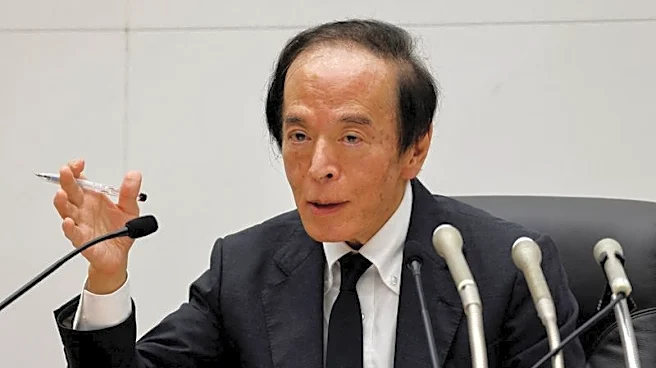
SAPPORO, Japan, Sept 2 (Reuters) - The Bank of Japan should conduct interest rate hikes nimbly to counter intensifying inflationary pressures, rather than adhere to a fixed semiannual pace anticipated by markets, hawkish board member Hajime Takata said on Wednesday.
Speaking at a news conference in Sapporo, Takata said 2026 marks a significant turning point where the BOJ will be required to respond more flexibly to economic and price developments, rather than remain
bound by a set pace or magnitude of rate hikes.
Takata, the sole dissenter to the BOJ's decision in July to keep short-term interest rates steady, said that the world faced a markedly different economic environment from that of recent years.
He noted that the global economy was recovering with support from fiscal measures and AI-led investment and that Japan was also dealing with inflation pressures linked to the Middle East conflict.
Takata declined to comment on what pace or magnitude of rate hikes would be appropriate.
"Such decisions should be made on a meeting-by-meeting basis in response to evolving economic and price conditions," he said.
Sources have told Reuters the BOJ is set to raise the rate as soon as at its two-day policy meeting through September 18, and is considering hiking more aggressively thereafter than the current pace of roughly two times a year.
Asked about Japan's benchmark 10-year bond yield hitting 3% this week, Takata declined to comment on specific levels.
But he said the development largely reflected a broader global rise in interest rates amid stronger growth, AI-driven investment and persistent inflation pressures.
In a speech delivered to business leaders earlier on Wednesday, Takata cautioned that divergences between Japanese and overseas monetary policies could trigger volatility in financial markets, particularly foreign exchange markets.
It's "necessary for the BOJ to shift from the current stance of encouraging a rise in underlying inflation and to demonstrate to the market its determination to prevent upward deviations in prices, while giving consideration to the impact through foreign exchange markets," he said.
(Reporting by Takahiko Wada and Makiko Yamazaki; Editing by Jacqueline Wong and Edwina Gibbs)