
By Rahul Trivedi
BENGALURU, Jan 20 (Reuters) - South Korea's economy barely grew in the final quarter of 2025 as weakening domestic demand and private investment weighed on activity, while exports remained
a bright spot despite U.S. tariffs, a Reuters poll of economists showed.
Asia's fourth-largest economy was expected to expand by a seasonally adjusted 0.1% in the October–December period, slowing sharply from 1.3% - its fastest growth in more than a year - in the third quarter, according to the median forecast of 21 economists.
Some economists, however, expect an outright contraction, although many say unfavourable base effects from the third quarter may be skewing the headline figures.
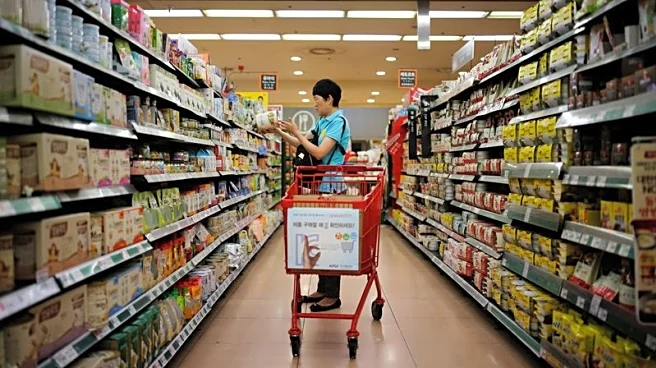
"The quarterly outcome is likely to reflect persistent weakness in domestic demand - particularly construction investment and discretionary consumption - offset by steady export performance led by semiconductors and autos," said Park Chong Hoon, an economist at Standard Chartered.
But on a year-on-year basis, gross domestic product was forecast to grow 1.9%, little changed from 1.8% in the previous quarter, based on the median estimate from 25 economists polled January 14-19.
That partly reflected export growth, with official trade data showing exports rose 13.4% in December to $69.58 billion, marking a seventh consecutive month of growth despite a 15% tariff on all goods exported to the United States.
Most economists in the poll said the pickup in household consumption seen in July-September, when the government approved a 31.8-trillion-won supplementary budget, including cash handouts to support consumption, had largely already been factored into third-quarter growth.
"The bulk of the effect of the cash handouts and the supplementary budget should already be embedded in third-quarter GDP, so Q4 will likely see a bit less positive impact relative to Q3," said Jeeho Yoon, senior economist at BNP Paribas.
The soft growth in the fourth quarter also coincided with signs monetary policy support was waning. Last week, the Bank of Korea (BOK) signalled the end of its easing cycle after keeping its benchmark interest rate unchanged, prioritising financial stability as the won hovered near 16-year lows.
Yoon said the case for further easing had weakened.
"It's very hard for BOK to cut rates at this juncture, given that the won is weakening and also house prices in the Seoul area are still accelerating at a pace quite rapid compared to historical levels," he added.
(Reporting by Rahul Trivedi; Polling by Vijayalakshmi Srinivasan and Veronica Khongwir in BANGALORE and Jihoon Lee in SEOUL; editing by Mark Heinrich)