
By Elwely Elwelly
DUBAI, Dec 30 (Reuters) - Iran's government said on Tuesday it would seek dialogue with protest leaders after demonstrations in Tehran and other cities over a plunge in the currency's
value that has accelerated inflation, with the central bank chief resigning.
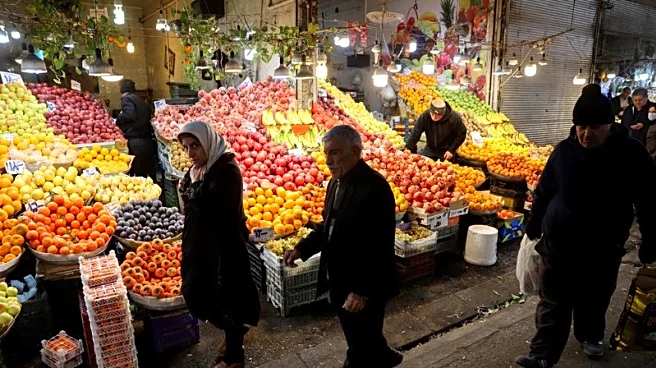
Protests, which included shopkeepers in Tehran's Grand Bazaar, were held on Sunday and Monday according to Iranian state media, the latest demonstrations in the Islamic Republic where bouts of unrest have repeatedly erupted in recent years.
President Masoud Pezeshkian said in a social media post late on Monday that he had asked the interior minister to listen to "legitimate demands" of protesters. Government spokeswoman Fatemeh Mohajerani said a dialogue mechanism would be set up and include talks with protest leaders.
"We officially recognise the protests ... We hear their voices and we know that this originates from natural pressure arising from the pressure on people's livelihoods," she said on Tuesday in comments carried by state media.
The Iranian rial has been falling as the economy has suffered from the impact of Western sanctions, sinking to a record low on Monday at around 1,390,000 to the U.S. dollar, according to websites monitoring open market rates.
"We have fundamental measures on the agenda to reform the monetary and banking system and maintain the purchasing power of the people," Pezeshkian posted on X.
Iranian media have said the government's recent economic liberalisation policies have put pressure on the open-rate rial market, where ordinary Iranians buy foreign currency.
In 2022, Iran was buffeted by protests across the country over price hikes, including for bread, a major staple.
Over the same period and into 2023, the country's clerical rulers faced the boldest unrest in years touched off by the death of a young Iranian Kurdish woman, Mahsa Amini, in the custody of the morality police, who enforce strict dress codes.
Iranian security services suppressed previous rounds of protests with violent crackdowns and widespread arrests rather than dialogue.
Iran remains under intense international pressure, with U.S. President Donald Trump saying on Monday that he might back another round of Israeli airstrikes if Tehran resumed work on ballistic missiles or any nuclear weapons programme.
The U.S. and Israel carried out 12 days of airstrikes on Iran's military and its nuclear installations in June aimed at stopping what they believe were efforts to develop the means to build an atomic weapon.
Iran says its nuclear energy programme is entirely peaceful and that it has not tried to build a nuclear bomb.
(Reporting by Elwely Elwelly; writing by Angus McDowall; editing by Mark Heinrich)