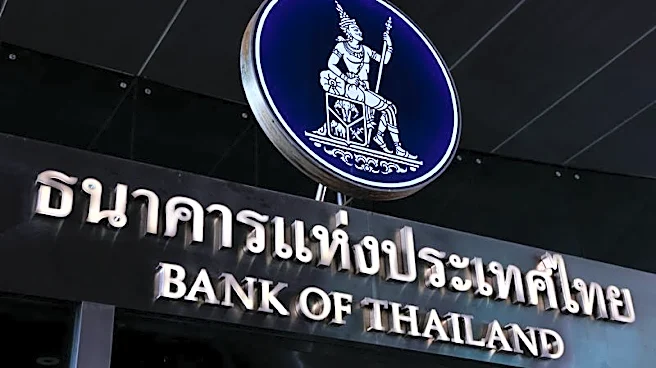








BANGKOK, April 22 (Reuters) - Thailand's government has room to borrow up to 500 billion baht ($15.55 billion) by October without raising the public debt ceiling, its finance minister said on Wednesday.
• Thailand's capital and bond markets, as well as excess liquidity, were sufficient to support government borrowing, Minister Ekniti Nitithanprapas said.
• "If we do not borrow, it would be more dangerous for the economy because GDP would contract," he told reporters.
• The government will borrow by
issuing bonds sold domestically and partly to the public, he said, adding that the funds would be used to help support vulnerable groups and the green energy transition.
• Ekniti had said on Monday that the government was reviewing whether it needed to issue the planned 500-billion-baht emergency borrowing decree.
• Thailand's public debt-to-GDP ratio is currently at about 66%, leaving 4 percentage points of fiscal space under the current 70% ceiling, amounting to around 800 billion baht, Ekniti has said.
• The government plans to launch a consumer subsidy scheme in June, he said, adding that the size of the scheme was still being decided.
• Ekniti also said headline inflation was expected at 2.9% this year and 2.5% in 2027, with GDP growth seen at 1.4% in 2026 and 2.2% in 2027. The projections were used in preparing the 2027 fiscal budget, which starts in October, he added.
• The government on Wednesday agreed to stick to its previously approved 2027 fiscal budget plan, projecting a 0.2% rise in spending to 3.788 trillion baht ($118 billion) and an 8.4% drop in the deficit to 788 billion baht, compared with the current fiscal year.
• The current value-added tax rate of 7% will be retained for another year, Ekniti said.
• The World Bank, the International Monetary Fund, and credit rating agencies agree that the way the borrowed funds are used matters more than whether Thailand borrows or not, Ekniti has said.
• Credit ratings agency Moody's revised Thailand's outlook to "stable" from "negative" on Tuesday, citing reduced downside risks after U.S. tariffs on Thai exports were lowered to levels in line with regional peers.
($1 = 32.1500 baht)
(Reporting by Orathai Sriring and Kitiphong Thaichareon; Writing by Martin Petty; Editing by David Stanway)