







July 28 (Reuters) - The U.S. Food and Drug Administration, Centers for Disease Control and Prevention and dozens of states are investigating a surge in cases of cyclosporiasis intestinal illness. Michigan has now reported more than 9,000 cases and is searching for links beyond the initial cases tied to lettuce.
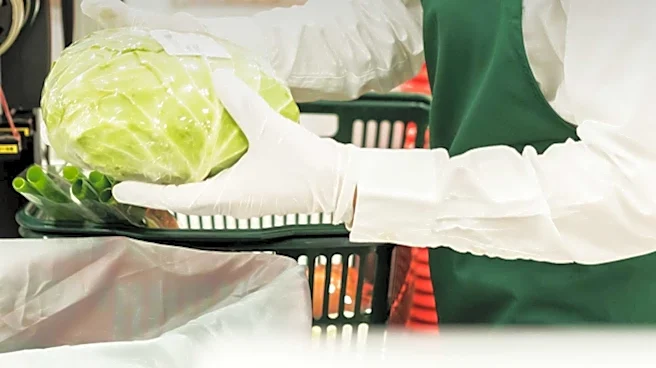
The outbreak, one of the largest U.S. cyclosporiasis outbreaks in recent years, has been linked to shredded iceberg lettuce served at Yum Brands' Taco Bell restaurants in nine states. Investigations
are continuing into other sources.
Here is what we know of the intestinal illness and the outbreak so far:
WHAT IS IT?
Cyclosporiasis is an intestinal infection that can be contracted by consuming food — typically raw fruits and vegetables — or water contaminated with feces that transmit the cyclospora parasite, according to the CDC.
Symptoms can range from mild to severe, with children, older adults and people with weakened immune systems facing a higher risk of serious illness.
While cyclosporiasis is not fatal, untreated infections can persist for weeks and may lead to hospitalization, particularly because of dehydration.
The United States has seen previous cyclospora outbreaks linked to fresh produce, including a 2020 multistate outbreak associated with bagged salads that sickened nearly 700 people in 13 states.
The U.S. Centers for Disease Control and Prevention considers May 1 to August 31 the annual cyclosporiasis season.
The CDC has reported 1,947 laboratory-confirmed cases of cyclosporiasis and 98 of those patients had been hospitalized, starting with cases on June 22. It expects thousands more because it can take six weeks to determine if a sick person is part of the outbreak.
WHAT DO WE KNOW ABOUT THE CONTAMINATED PRODUCE?
The U.S. Food and Drug Administration's traceback investigation has found a link between thousands of cases and iceberg lettuce sold in Taco Bell restaurants in nine states including Indiana, Kentucky, Michigan, Ohio, West Virginia, Illinois, Kansas, Oklahoma, and Pennsylvania.
The agency initially reported on July 18 that a sample of shredded iceberg lettuce supplied by Taylor Farms had tested positive for the parasite, but withdrew the finding a day later after a laboratory review determined the result was a false positive.
The FDA investigations still point clearly to Taylor Farms, which recalled its lettuce from central Mexico and shut down its processing plant there. The recall included Marketside-branded product from Walmart and dozens of products distributed through Sysco and other companies, according to the FDA.
Taylor Farms said in a July 24 statement that the recall was voluntary and that it has "best-in-class" cyclospora prevention protocols. It is no longer sourcing any iceberg lettuce from the region, it said.
WHAT CAN PEOPLE DO TO PROTECT THEMSELVES?
The FDA said cooking produce to at least 158 degrees Farenheit (70 degrees Celsius) is the most effective way to kill cyclospora, as the parasite is resistant to routine chemical disinfection.
The agency also advises consumers to discard the outer leaves of leafy vegetables and thoroughly rinse fruits and vegetables before peeling or eating them.
Cyclospora typically spreads through contaminated food or water and is not commonly transmitted from person to person.
Past outbreaks were linked to bagged salad mixes and kits, fresh cilantro and basil, raspberries, snow peas and green onions.
For people who have cyclosporiasis, the CDC recommends treatment with trimethoprim-sulfamethoxazole, an antibiotic commonly sold as Bactrim, taken twice daily for seven to 10 days. People living with HIV may require longer treatment, according to the agency.
WHAT SURVEILLANCE IS BEING DONE?
Cyclospora is a nationally notifiable pathogen and most states collect robust data and share that routinely with the CDC in its disease surveillance system, said Gwen Biggerstaff, deputy director of the CDC’s Division of Foodborne, Waterborne and Environmental Diseases.
Healthcare providers are legally required to report cases of cyclosporiasis to public health departments in 47 states.
The Foodborne Diseases Active Surveillance Network, or FoodNet, is a collaboration among the CDC, the U.S. Department of Agriculture, the FDA and 10 state health departments. Last July, it stopped tracking six of eight pathogens, including cyclospora, due to funding cuts.
The goal of FoodNet is to look at trends over time and the network does not replace national surveillance, Biggerstaff said. Participating states continue to report cyclospora on a national basis and the data is the same for this outbreak as with previous ones, she said.
(Reporting by Siddhi Mahatole, Padmanabhan Ananthan, Mariam Sunny and Sneha S K in Bengaluru and Tom Polansek in Chicago; Editing by Caroline Humer, Matthew Lewis, Jamie Freed and Deepa Babington)