
By Jamie McGeever
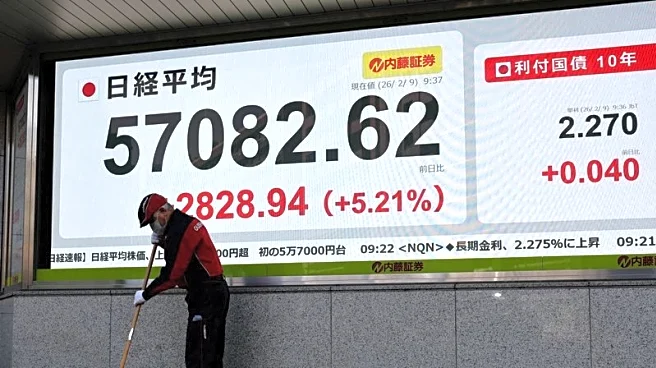
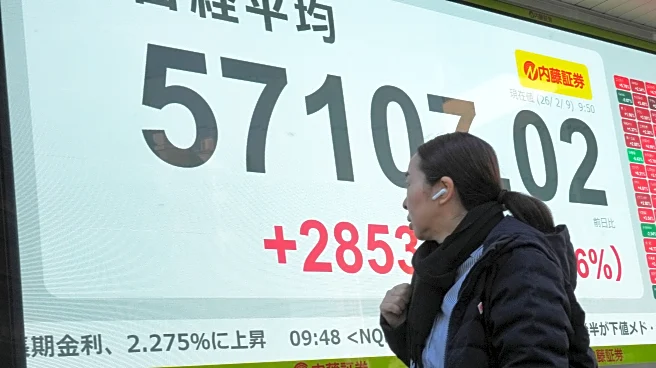
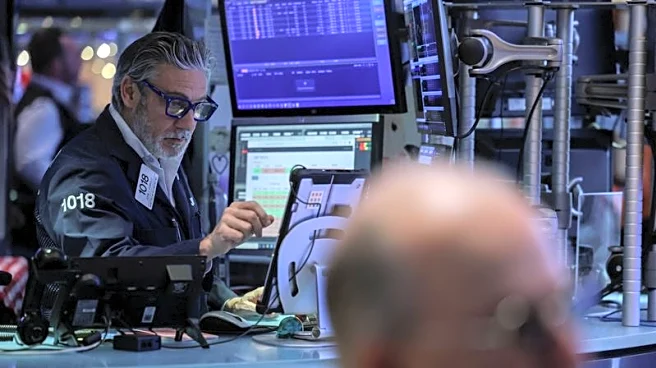
ORLANDO, Florida, Dec 16 (Reuters) - Wall Street mostly fell on Tuesday - the Nasdaq bucked the trend and rose - while the dollar and Treasury yields slid after figures showed the U.S.
unemployment rate in November rose to 4.6%, the highest in more than four years.
More on that below. In my column today, I look at China's pledge to prioritize boosting domestic demand next year. One can't argue with the aim, but investors are skeptical Beijing will deliver the fiscal stimulus needed to make a real difference.
If you have more time to read, here are a few articles I recommend to help you make sense of what happened in markets today.
1. US job growth rebounds in November; unemployment ratedistorted by shutdown 2. US Treasuries rebuilding risk premia: Mike Dolan 3. Business leaders agree AI is the future. They just wishit worked right now. 4. Wall Street banks prepare for round-the-clock stocktrading, reluctantly 5. Ford's EV retreat highlights industry dilemma: Build forthe US or the world?Today's Key Market Moves
* STOCKS: Apart from the Nasdaq, a global sea of red:Europe -0.5%, China and Japan benchmarks down 1-2%, Brazil -2%. * SECTORS/SHARES: Only three U.S. sectors rise, led bytech +0.3%. Energy -3%, healthcare -1.3%. Comcast +5.4%, UnitedAirlines +4.4%; iRobot -35%, Phillips 66 and Humana -6%. * FX: Dollar index at 11-week low. Brazil real -1% * BONDS: U.S. Treasury yields down as much as 4 bps, yieldcurve flirts with steepest in 4 years but bull flattens. * COMMODITIES/METALS: Oil hits a near 5-year low, platinumleaps another 4% to new high.Today's Talking Points
* U.S. job market softening, but how badly?
Tuesday's U.S. employment figures painted a pretty clear picture - the labor market continues to soften. But due to the government shutdown, data collection issues, and fog around immigration, it is unclear exactly how these numbers should be interpreted.
Dovish policymakers have numbers to justify further easing, Fed hawks can reasonably argue persistent uncertainty around the data warrants holding off. Traders aren't fully pricing another rate cut until June. Will that be brought forward if unemployment gets closer to 5% in the coming months?
* Not so eco-friendly autos
The U.S. and European auto industries are turning less green. On Tuesday, the European Commission proposed dropping the EU's effective ban on new combustion-engine cars from 2035, which comes a day after Ford took a $19.5 billion writedown and axed several EV models.
Europe's move follows intense pressure by the continent's carmakers struggling to compete against Tesla and Chinese electric vehicle makers, while Ford's announcement was in response to the Trump administration's policies and weakening EV demand. The big winners in all this? China's auto industry.
* Markets mull Ukraine peace potential
There have been several false dawns over the past four years, but a peace deal between Russia and Ukraine could be close at hand. Certainly, investors are beginning to price in what one might look like from a markets perspective.
European defense stocks slumped on Tuesday - Rheinmetall fell 4.5%, and the broader index fell 2%, dragging U.S. defense stocks down 0.8%. More importantly for the wider economy, oil is tumbling - down 3% on Tuesday to a 4-year low, and now down 22% from a year ago. That's a bit of welcome disinflationary relief.
China data dives, but Beijing balks at fiscal splurge
Chinese authorities last week pledged to prioritize domestic consumption in 2026, but these promises are already being met with skepticism that the massive fiscal support needed will actually be forthcoming – even as more dour economic data rolls in.
The world's second-largest economy could very well grow by roughly 5% next year, in line with the government's recent targets, but that will probably be thanks to booming exports and a trade surplus exceeding $1 trillion - not domestic consumption.
At last week's Central Economic Work Conference (CEWC), a key gathering of Communist Party leaders to set the 2026 policy agenda, officials said they will take action to spur spending and fight deflation. However, they also indicated that there will be no "aggressive" fiscal easing next year, with authorities prepared to rely on existing support and "incremental" measures, noted economists at Societe Generale.
"Our concern is that policymakers are too complacent," SocGen economists wrote on Monday.
Barclays had a similar take. The bank's economists expect policy support next year to be "measured and reactive" rather than forceful and proactive. Authorities signaled this by dropping the word "unfavorable" from their description of the global environment, Barclays argued, and by committing to maintain only a "necessary" budget deficit.
Beijing is, therefore, likely to stick to an overall budget deficit target next year of around this year's record 4% of GDP. That's high for China, but likely to be insufficient. The International Monetary Fund last week said China will need to spend 5% of GDP to bring an end to the property crisis within three years – and that's before tackling other factors weighing on consumption.
HEADING IN THE WRONG DIRECTION
In some ways, Beijing's reluctance to slam on the fiscal accelerator is understandable. Authorities front-loaded stimulus this year - year-on-year fiscal spending growth rose to around 10% in July, the highest in nearly three years - so officials may wish to wait and see how that splurge plays out.
Yet the domestic consumption numbers aren't improving, they're worsening. Chinese business investment and retail sales in November were significantly weaker than expected, according to figures published on Monday.
Fixed asset investment is down 2.6% year-to-date and on track for the steepest annual contraction on record, while persistently soft consumption and a seemingly endless slide in property prices threaten to cement a deflationary feedback loop next year, economists warn.
With every passing month of lackluster domestic activity, the need for bold stimulus – far more than measures taken earlier this year – becomes all the more pressing. And with Chinese bond yields hovering around their lowest levels on record, Beijing can borrow to help address this issue.
That makes the smoke signals from last week's CEWC all the more confusing.
EXTERNAL STRENGTH MASKS DOMESTIC FRAGILITY
The latest wave of sub-par economic figures and renewed gloom around China's domestic economy comes as its external performance goes from strength to strength, to the increasing irritation of global trading rivals frustrated with China dumping goods on their markets.
This year's Sino-U.S. trade war has caused a slump in the shipment of goods to the U.S., but China has more than made up for that by ramping up exports to Europe, Australia, and fast-growing countries in Southeast Asia.
China's total trade surplus is now more than $1 trillion, and some estimates put its manufactured goods surplus at $2 trillion. What's more, these surpluses are heavily concentrated at the high end of the value chain in sectors such as computers, cell phones, chips, electric batteries, and autos.
Channeling investment into these and other strategically important industries isn't doing much to stimulate domestic spending. Yet Beijing might be fine with this, as booming exports are offsetting domestic weakness while also expanding China's footprint in key global sectors.
The huge trade surplus is also helping lift the yuan to its highest level against the dollar in over a year, which Beijing can point to when accused of keeping the exchange rate artificially low. Critics will argue, with reason, that the yuan is still significantly undervalued given the size of the surplus, but the nominal exchange rate affords Beijing some breathing room with the U.S. and other trade rivals.
The latest economic indicators suggest Beijing has less breathing room at home, however. Bigger and bolder fiscal steps would give it some, but authorities seem reluctant to take them.
What could move markets tomorrow?
* Japan machinery orders (October) * Japan trade (November) * Thailand interest rate decision * Indonesia interest rate decision * Germany Ifo business sentiment index (December) * Euro zone inflation (November, final) * UK inflation (November) * U.S. Treasury auctions $13 billion of 20-year bonds * U.S. Federal Reserve officials scheduled to speak includeGovernor Christopher Waller, New York Fed President JohnWilliams, and Atlanta Fed President Raphael BosticWant to receive Trading Day in your inbox every weekday morning? Sign up for my newsletter here.
Opinions expressed are those of the author. They do not reflect the views of Reuters News, which, under the Trust Principles, is committed to integrity, independence, and freedom from bias.
(By Jamie McGeever;)