




By Akash Sriram, Joey Roulette and Sayantani Ghosh
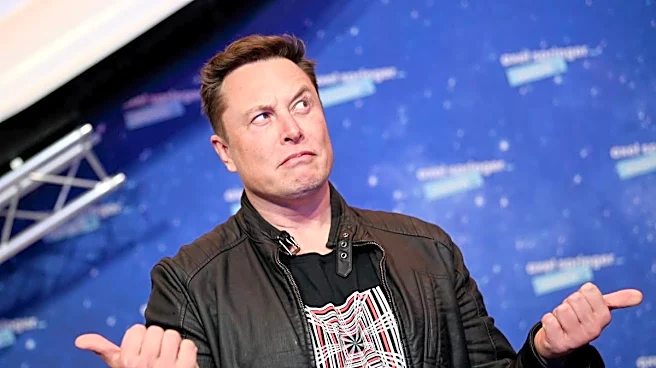
Aug 4 (Reuters) - SpaceX said on Tuesday that quarterly revenue nearly doubled and operating losses narrowed sharply in its first earnings report since going public, buoyed by strong growth in its Starlink satellite-internet and AI businesses.
The company, led by Elon Musk, reported April-June revenue of $7.8 billion, compared with $4.1 billion a year earlier, beating expectations of $6.93 billion, according to LSEG data. Starlink revenue, which accounted
for over half of total revenue, rose 66%, and revenue from SpaceX's AI business — which Musk has pitched as the company's future growth driver — surged about 250%.
"We're building AI compute capacity at scale faster than anyone else, we believe, and we're significantly improving our AI models," Musk said on a post-earnings call.
AI operating losses narrowed, as did total operating losses, to $143 million from $970 million. Operating income at Starlink swelled 79%.
Capital expenditures ballooned to more than $18 billion from $2.83 billion a year earlier, and Chief Financial Officer Bret Johnsen said he expected capex would be similar for the next couple of quarters.
SpaceX shares fell 6.3% in after-hours trading. The stock rose 9.4% in regular trade ahead of the publication of results.
The company's stock has declined 8% since its record-breaking initial public offering in June that valued the company at about $1.75 trillion. The stock could face additional pressure from the expiry of SpaceX's post-IPO lock-up period starting on Thursday, which may unleash a wave of insider and early-investor shares on the market.
STARLINK, CONNECTIVITY DRIVE SPACEX
Starlink and SpaceX's broader connectivity operations remain the company's primary financial engine, underpinning Musk's push to build an AI-first business that extends beyond renting compute capacity to developing frontier models, consumer and enterprise software, and, eventually, data centers in space. But critics have argued that the strategy of using Starlink's profits to bankroll the AI business and Starship launch operations until they can stand on their own is unsustainable.
"That's a tremendous upside surprise today alone, the fact that AI is already monetizing itself. They're not relying on Starlink to fund operations there. I think that's a huge part of the story," said Brian Mulberry, chief market strategist at Zacks Investment Management.
The company's satellite-internet unit has continued to expand its global subscriber base, aided by launches of additional satellites and a growing range of consumer, enterprise, aviation, maritime and government services.
But average revenue per subscriber slumped 22% from a year earlier as SpaceX entered more international markets and rolled out lower-priced plans even as subscribers doubled to 12 million.
SpaceX's AI business, which includes xAI, Grok, social media platform X, and a rapidly expanding data center operation, has been its biggest area of investment. The business is generating revenue from compute contracts with Anthropic, Alphabet's Google and Reflection AI, though a portion of its recurring revenue has yet to be recognized.
SpaceX sharply increased capital spending on AI, pouring in $15.83 billion in the second quarter ended June 30, from $749 million a year earlier.
SPACE REVENUE JUMPS
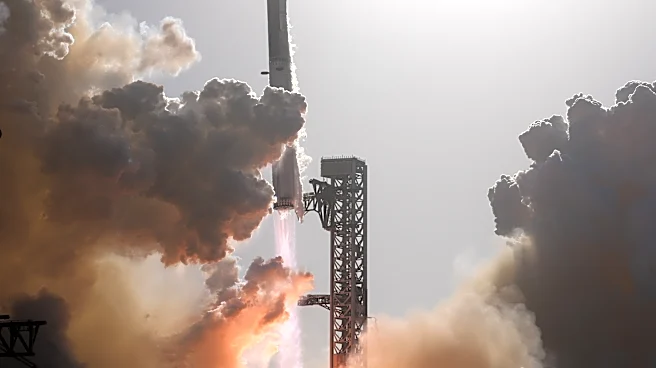
Starship, SpaceX's next-generation reusable rocket system, is yet to enter commercial service but is expected to enable deployment of higher-bandwidth Starlink satellites and orbital AI-computing infrastructure.
Space revenue grew 29% year over year.
The company's ability to turn Starship into a reliably reusable vehicle is central to its longer-term strategy. Investors have closely watched for updates on testing progress, launch cadence, reusability milestones and the vehicle's satellite-deployment capabilities.
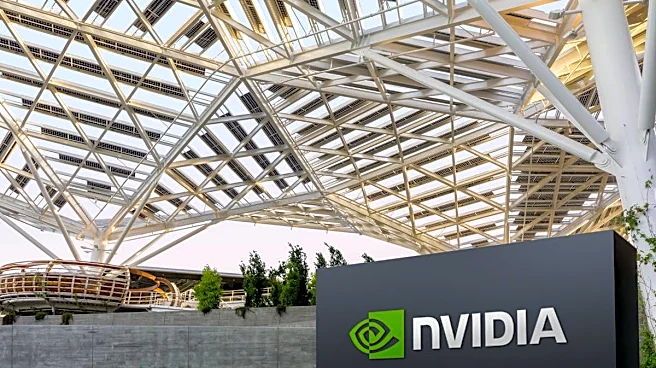
Separately, SpaceX said it had partnered with Nvidia to use its chips in the Starmind AI1 orbital compute satellites.
The space segment, which includes commercial launches, government missions and development of Starship, remains a significant source of costs and uncertainty.
While launch activity for Falcon — SpaceX's partially reusable workhorse rocket — has remained robust, revenue can vary with the mix of internal Starlink deployments, commercial customer missions and government contracts.
In recent years, SpaceX has increasingly prioritized launches for its own satellite network over third-party payloads, while continuing to absorb significant costs tied to Starship's development.
Investors will also be keen to hear Musk's comments on a scheduled conference call about a potential merger between SpaceX and Tesla after a Wall Street Journal report last week that executives at his electric-vehicle company had been told to prepare for a separation of its China business ahead of a potential deal.
Musk dismissed the report as "fake news," but he had previously declined to rule out the possibility, citing growing overlap between the companies.
(Reporting by Akash Sriram in Bengaluru; Editing by Sriraj Kalluvila, Peter Henderson and Rod Nickel)