



By Sarah Kinosian, Gram Slattery and Matt Spetalnick
July 31 - An unofficial adviser to the Trump administration who has played a leading role in shaping U.S. Venezuela policy and multimillion-dollar deals to exploit the OPEC state's vast oil resources has told Reuters he is no longer overseeing the portfolio.
In a role likened by current and former government officials and business sources in the U.S. and Venezuela to that of a viceroy, Miami-based businessman Mauricio Claver-Carone reported to Secretary
of State Marco Rubio, who has spearheaded Venezuela policy.
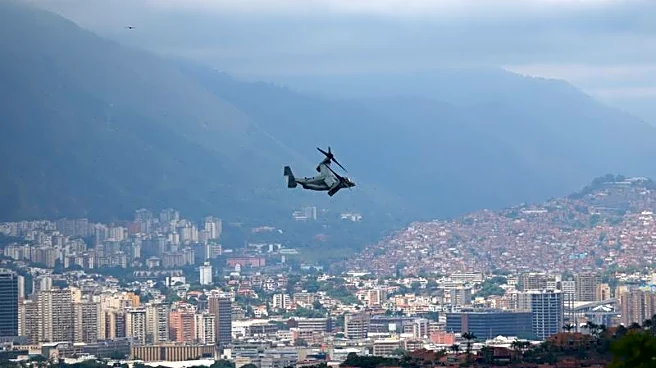
Though he held no formal government position, he emerged as one of the Trump administration's most influential players on Venezuela since the January 3 U.S. raid that captured President Nicolas Maduro.
He said his departure was voluntary, though multiple sources familiar with the matter say he was forced out in recent weeks.
During his tenure, Claver-Carone wielded heavy influence over decisions that could eventually be worth billions of dollars, from debt restructuring to oil deals.
Maduro was replaced by former Vice President Delcy Rodriguez, who has worked closely with Claver-Carone and proved more compliant to U.S. demands to open the country up to U.S. business.
Behind-the-scenes talks by Claver-Carone, who served briefly as Trump's special envoy on Latin America early in his second term, were a large part of the Trump administration's approach to post-Maduro Venezuela. The U.S. has taken a domineering role in determining the future of the country's energy sector while refraining from pushing for substantial political reforms or democratic elections anytime soon.
Claver-Carone was key to U.S. firm Centerview Partners clinching a contract - worth more than $150 million with no competitive bidding process - to restructure Venezuela’s some $200 billion of debt. He also helped arrange talks between the Venezuelan government and opposition leaders scheduled for August 1 and weighed in on oil deals, including some cases in which companies were awarded potentially lucrative business, eight sources said.
"Just like in the first term and my service last year as Special Envoy, I was honored to provide advice and experience as a private citizen on Venezuela and to fill gaps early on … to ensure President Trump’s policy was successful,” Claver-Carone said.
“I’m retired on Venezuela.”
Asked for comment, the State Department said he was not being removed from any formal role.
"Mr. Claver-Carone is an expert with contacts throughout our region and is a private citizen who does not currently have an official role in the Trump Administration," a spokesperson said. "Any insinuation that he is being forced out of any formal role is inaccurate."
While Claver-Carone's supporters portrayed him as a deft operator capable of advancing the administration's agenda in a geopolitically complex environment, some Trump allies had questioned if he was an appropriate figure to oversee a freewheeling push by U.S. companies to snap up Venezuelan assets as he was a nominally private citizen who controlled a private equity fund.
Claver-Carone said neither he nor his fund has any financial stake in Venezuela.
His heavy-handed involvement with business deals in Caracas has ruffled feathers within the State Department and among some investors, multiple sources told Reuters.
Among those who had bristled at Claver-Carone's influence was Trump supporter, former ambassador and previous special envoy to Venezuela Richard Grenell, who spoke to Trump about Claver-Carone’s influence in business dealings in Caracas in early July, according to several sources familiar with the matter.
Grenell did not respond to requests for comment. An administration official denied that Claver-Carone had "ruffled feathers at the White House."
Some Trump allies and those close to the situation privately argued Claver-Carone was too close to some Venezuelan political operators.
One of those was Alejandro Betancourt, one of Venezuela's best-known businessmen, who amassed a fortune through contracts linked to Venezuela’s oil and electrical sectors during late Venezuelan President Hugo Chavez's rule, while facing years of scrutiny and investigations related to corruption and money laundering in various jurisdictions, including the United States, which he has denied.
Claver-Carone acknowledged that he and others in the U.S. government had used Betancourt as an intermediary with Rodriguez's government, noting the businessman had been helpful because he understood the oil business in both countries and could bridge the gap between the parties.
Neither Betancourt nor his attorney responded to requests for comment. The State Department did not directly address Claver-Carone's relationship with the businessman.
Claver-Carone, a Cuban American from south Florida with a history of opposition to the Communist government in Havana and a longtime ally of Rubio, served as the president of the Inter-American Development Bank in the first Trump administration before being ousted over misconduct.
In the first Trump administration he was one of the architects of U.S. policy towards Venezuela, including pushing for sanctions against the country in 2019, while also helping to craft a rollback of rapprochement with Cuba orchestrated by Trump’s predecessor, Barack Obama. He served briefly as a Special Envoy for Latin America in Trump’s second administration before opening his own private equity fund.
It remains to be seen how dramatic a change in how the U.S. handles business in Venezuela will be signaled by the shakeup.
Caleb Orr, the Assistant Secretary of State for Economic, Energy, and Business Affairs, who seven sources said had been working in lockstep with Claver-Carone, will remain a key decision-maker on the team, according to an internal State Department chart, seen by Reuters.
(Reporting by Sarah Kinosian, Gram Slattery and Matt Spetalnick; Editing by Libby George, Alexandra Ulmer and Alistair Bell)