






By Victoria Waldersee and Miguel Vidal
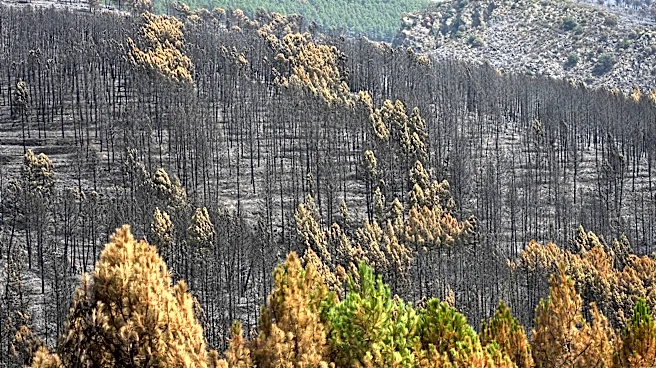
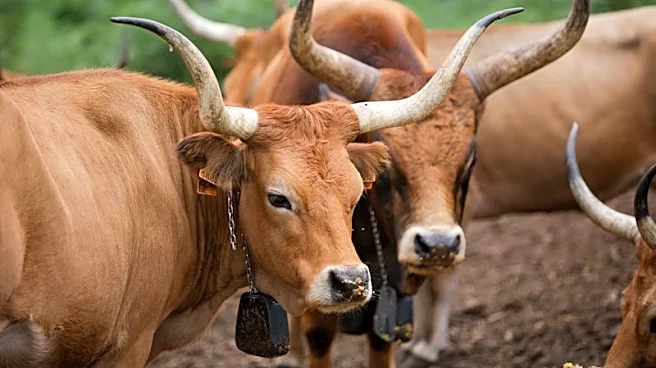
VINCIOS, Spain, July 23 (Reuters) - A goat-like cow is making a comeback in Spain's northwestern Galicia region, as communities reintroduce native livestock to rebalance ecosystems and reduce wildfires in an area that was at the epicentre of the country's worst year for fires in 2025.
Mass plantation of highly flammable pine and eucalyptus trees for industrial uses drove away native breeds like the "Cachena", the Iberian peninsula's smallest breed of cow, with
much of the terrain left untended and overgrown as rural populations migrated to cities.
The Cachena are known locally as "goat-cows" as they eat almost anything and are able to negotiate mountainous terrain that larger cows can't.
A fire in 2017 that tore through the parish of Vincios prompted community associations who collectively manage the land to opt for a centuries-old wildfire prevention technique — breeding native livestock including goats, sheep, and the nimble long-horned Cachena cows, which help clear flammable undergrowth by grazing on the land.
Their efforts, together with those of other associations across Galicia, have boosted the population of native livestock from just over 1,800 in the late 1990s to more than 30,000 by early 2026, according to regional association BOAGA — including roughly 8,000 Cachena cows, up from 400.
The regional government granted incentives to farmers to keep young female cows rather than selling them, and a local zoological centre provided bulls at low cost to facilitate breeding.
"The native livestock keeps scrubland at an appropriate height so it does not become dangerous," said Jose Taboada, coordinator of the Vincios land collective.
He gestured towards a portion of land scrubbed clean of flammable shrubs like brambles, gorse and broom, which contain oils that burn intensely and can carry fires from the ground into the tree canopy.
ROAMING FREE WITH GPS COLLARS
The cows keep the vegetation under control without eradicating it altogether, Taboada explained, adding that the animals wore GPS collars, eliminating the need for fences and allowing them to roam freely.
"They are perfectly adapted to terrain like ours," Taboada said.
Vincios is one of roughly 3,000 communities in Galicia that, as collectives, manage around 700,000 hectares, a quarter of the region's land, in a practice dating back to medieval times and formally legalised in 1989.
The region is one of the most affected in Spain by wildfires, with nearly 119,000 hectares (294,000 acres) of land burned last year, an area roughly double the size of Madrid.
Scientists link increasingly severe wildfire seasons across southern Europe to climate change. Spain, the third-most forested country in Europe, has registered average temperatures 5.6 degrees Celsius (41.9 degrees Fahrenheit) above 1961-1990 levels in July so far, according to the Reuters Climate Monitor.
Landowners and collectives in other Spanish regions like Andalusia, Catalonia, and Castile-La Mancha have also opted for breeding livestock to prevent fires.
The technique is backed by scientific studies, but should be used in conjunction with other strategies like mechanical thinning and pruning of biomass and controlled burning of land carried out by specialised personnel, said forestry engineer and professor Jose Vicente Oliver.
"Livestock farmers need to earn a living by producing meat, or milk. But our common-land communities care about land stewardship," Taboada said. "This area has always burned... the livestock allow us to keep the woodland open, managed, and under control."
(Reporting by Miguel Vidal, Victoria WalderseeWriting by Victoria WalderseeEditing by Charlie Devereux and Sharon Singleton)