

By Gertrude Chavez-Dreyfuss
NEW YORK, Feb 3 (Reuters) - Investors are ramping up bets on higher long‑dated Treasury yields and a steeper yield curve as incoming Federal Reserve Chair Kevin Warsh is expected to press for interest rate cuts while shrinking the U.S. central bank's balance sheet.
Warsh's preference for a materially smaller Fed balance sheet, currently around $6.59 trillion, implies a withdrawal of meaningful government demand for Treasuries, a move which tightens financial conditions because
the central bank is not providing liquidity to the market.
Reduced Fed bond reinvestments and purchases expand the amount of Treasury supply in the market, which tends to lift long‑dated yields - steepening the curve.
"The main outcome of shrinking the balance sheet would be to have a yield curve that is more normally positively sloped as it was historically before all the intervention following the financial crisis," said Eric Kuby, chief investment officer at North Star Investment Management Corp in Chicago.
The yield curve - the gap between short‑ and long‑term rates and a key barometer of economic expectations - often steepens when investors grow more concerned about inflation and widening fiscal deficits. Higher long-term yields feed directly into borrowing costs across the economy: mortgages, corporate bonds, leveraged loans, and equity financing all become more expensive.
At the same time, short-end yields are expected to remain subdued under Warsh, accentuating the steepness of the curve. Despite his reputation as a hawk when he was a Fed governor from 2006 to 2011, Warsh has recently leaned more dovish, aligning with President Donald Trump's expectations for near‑term rate cuts.
The Treasury curve was already steepening - with rates on the long end at higher levels than those on the short end - even before Trump nominated Warsh to succeed Fed Chair Jerome Powell this spring.
That steepening was driven by inflation anxiety and fears that higher fiscal deficits would lead to more debt issuance and a spike in yields.
The Treasury 2/10-year yield curve flattened a bit on Tuesday. It hit 72.70 basis points (bps) a day earlier, its steepest level since April 9, a week after "Liberation Day" when Trump announced tariffs on products from U.S. trading partners around the world.
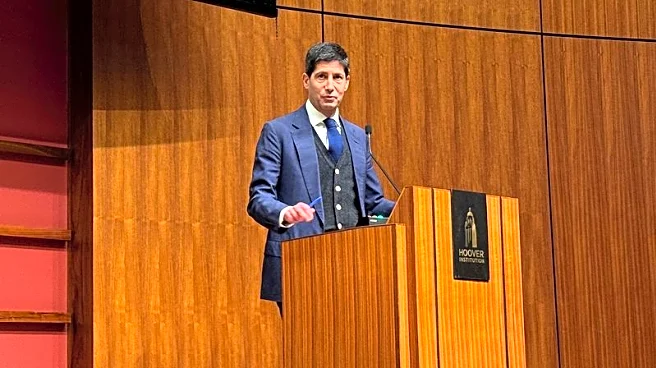
Warsh, currently a visiting fellow at Stanford University's Hoover Institution, has said that productivity gains fueled by artificial intelligence in general have a disinflationary impact, allowing the Fed to ease monetary policy.
U.S. rate futures show traders still expect roughly two quarter‑percentage-point rate cuts this year, with the first happening at the June 16-17 meeting, reflecting confidence a Warsh‑led Fed will focus on normalizing borrowing costs.
Powell's term as Fed chief ends in mid-May, and Warsh must still be confirmed by the U.S. Senate.
Analysts, however, highlight the tension between reducing the Fed's balance sheet and delivering the lower long‑term rates sought by the Trump administration. If the balance sheet contracts and long-term rates remain elevated, term premia - the added yield investors demand to take on duration risk - could remain sticky or rise further, possibly complicating efforts to ease financial conditions through traditional rate cuts.
"It's a tough policy to administer. You have one policy that you're using in a dovish fashion like cutting rates, and then you have another policy that you're using that leads to higher rates, like shrinking the balance sheet," said Jim Barnes, director of fixed income at Bryn Mawr Trust in Berwyn, Pennsylvania.
"They're going in opposite directions. You want to cut rates and shrink the balance sheet at the same time. But how do you put that into action? And that's where it becomes problematic."
TECHNICAL ISSUES, RATES VOLATILITY
Lou Crandall, chief economist at money market research firm Wrightson-ICAP in New York, said any plan to reduce the Fed's assets will involve a number of complex technical issues - especially with respect to bank liquidity regulations - and take time.
Market players also anticipate higher interest rate volatility, with some viewing Warsh as a contentious Fed chief given his past criticism of the central bank, said Oscar Munoz, chief U.S. macro strategist at TD Securities in New York, adding that this situation could alienate some members of the central bank's policy-setting committee.
"We also find the former governor harder to pin down given his notable 180-(degree) shift in policy priorities after espousing a very hawkish stance since being part of the Fed during the GFC (Global Financial Crisis)," Munoz added.
Bond market participants, however, expect Warsh to revert to his hawkish instincts at some point, further driving interest rate volatility higher.
Felix-Antoine Vezina-Poirier, associate strategist at BCA in Montreal, said while Warsh has pointed to AI-driven productivity gains as a reason "not to worry about future inflation," higher productivity implies a higher neutral fed funds rate.
The MOVE index, a measure of rate volatility, has been declining over the last few months and has yet to price in Warsh's upcoming stint as Fed chief. The index was last at 59.30, down from 84.32 in mid-November.
"Only time will tell how Warsh works as chairman. He was an inflation hawk during his time on the Board of Governors," said Benjamin Connard, portfolio manager at Carnegie Investment Counsel in Stamford, Connecticut.
"He's changed his tune recently, and a cynic may say only to secure the nomination. ... Rates are set by the majority, so Warsh alone cannot cut them. For a long-term investor, as long as there is continued confidence in the Fed as a whole, this nomination should not change your perspective."
(Reporting by Gertrude Chavez-Dreyfuss; Additional reporting by Suzanne McGee and Laura Matthews; Editing by Megan Davies and Paul Simao)