








By Nate Raymond
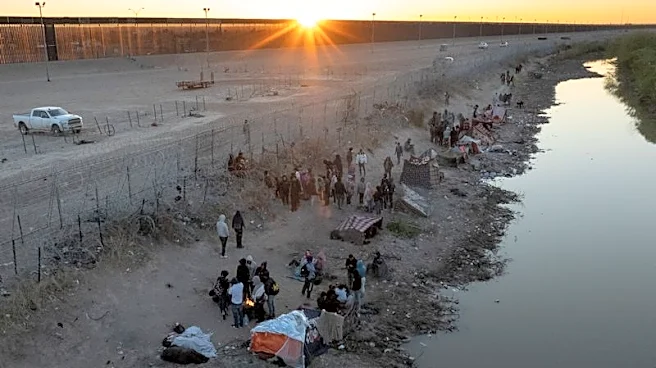
May 29 (Reuters) - A federal appeals court on Friday cleared the way for Texas authorities to enforce key parts of a law that would allow state officials to arrest and deport people suspected of having illegally crossed the U.S.-Mexico border.
A 2-1 panel of the New Orleans-based 5th U.S. Circuit Court of Appeals in an order put on hold an injunction a federal judge had issued on May 14 in a class-action lawsuit filed by civil rights advocates on behalf of thousands of people who could
be subject to the law's provisions.
Austin-based U.S. District Judge David Ezra had issued the injunction after concluding the state law improperly challenged the federal government's long-held power to control immigration, naturalization and deportations.
Republican Texas Attorney General Ken Paxton, who is running for a seat in the U.S. Senate, quickly appealed, leading to Friday's order.
The groups representing the plaintiffs -- the American Civil Liberties Union, its Texas affiliate and the Texas Civil Rights Project -- in a joint statement called Friday's ruling disappointing and said they "will continue to fight against this abhorrent and blatantly illegal law."
Paxton's office did not respond to a request for comment.
The lawsuit had been filed to prevent parts of the 2023 law from taking effect, after the appeals court in April overturned an earlier injunction issued during Democratic President Joe Biden's administration that had prevented the Republican-backed measure known as SB 4 from being enforced.
Republican President Donald Trump's administration had dropped a case the Biden administration brought challenging the law. Immigrant-rights groups that had also sued pressed on, but the 5th Circuit on a 10-7 vote concluded the organizations lacked legal standing to pursue their case.
The new ACLU-backed lawsuit sought to address that issue by instead suing on behalf of non-citizens who could be subject to four key provisions of the law.
Those provisions include ones that make it a state crime for someone to reenter the U.S. after deportation, even if they have federal permission to do so or have since obtained a green card, and that give magistrate judges in Texas the power to issue deportation orders.
(Reporting by Nate Raymond in Boston; Editing by Jacqueline Wong)