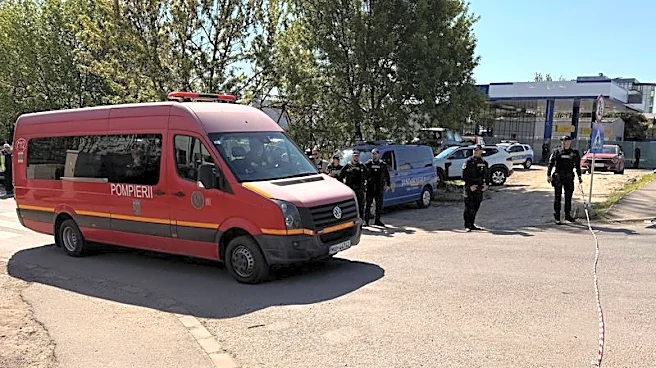

BUCHAREST, April 25 (Reuters) - Romania recovered drone fragments in the southeastern city of Galati after an overnight Russian attack on neighbouring Ukraine, with an electricity pole and a household annex damaged, its defence ministry said in a statement.
There were no casualties, the ministry said.
Romania's emergency response agency later said it was evacuating the area where it had recovered drone fragments as the fragments could contain an explosive charge. The fragments will be disposed of in a secure
location.
Romania, a member of both NATO and the European Union, shares a 650-km (400-mile) land border with Ukraine and has seen Russian drones repeatedly breach its airspace as Moscow attacks Ukraine ports on the other side of the Danube river.
While drone fragments have routinely fallen on Romania, Saturday marked the first time property had been damaged.
"The defence ministry firmly condemns the irresponsible actions of the Russian Federation and emphasizes that these represent a new challenge to regional security and stability in the Black Sea area," the ministry's statement said.
"Such incidents demonstrate the Russian Federation's lack of respect for the norms of international law and endanger not only the safety of Romanian citizens, but also the collective security of NATO."
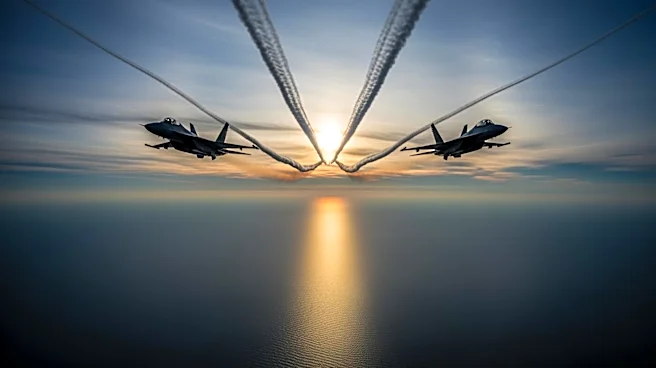
Two Eurofighter Typhoon fighter jets - part of a British air-policing mission in Romania - were scrambled to monitor the attack from the air, which is standard procedure. Residents of neighbouring Tulcea county were also warned to take cover.
Tensions have mounted along Europe's eastern flank in recent months after suspected Russian drones breached the airspace of several NATO states.
Romanian law allows it to shoot down drones during peacetime if lives or property are at risk, but it has not yet done so.
Defence Minister Radu Miruta on Friday said a U.S.-made, AI-powered counter-drone system would be integrated into national air defence systems in a matter of days after final tests.
The Merops system, developed by Project Eagle - a U.S.-based company backed by former Google CEO Eric Schmidt - would be able to counter drone threats along the Danube river, Miruta said.
Poland is already using the system on NATO's eastern flank.
(Reporting by Luiza Ilie; Editing by Tom Hogue and Susan Fenton)