




SINGAPORE/LONDON, Aug 20 (Reuters) - The U.S. Treasury's surprise bond buyback plans went some way to arresting a worldwide rise in long-term borrowing costs, though lingering worries about inflation and ballooning government debt saw longer-dated U.S. yields rise again on Thursday, while the dollar fell.
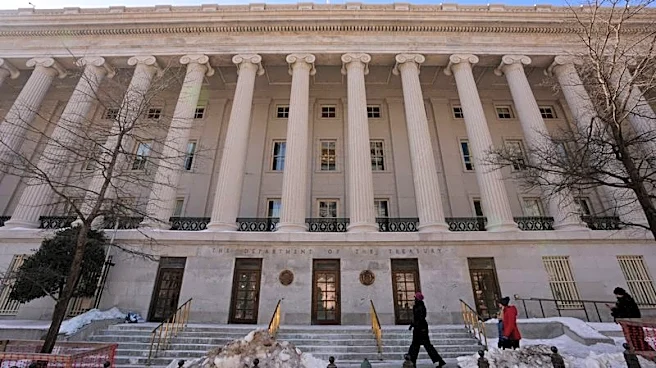
The Treasury on Wednesday responded to U.S. long-bond yields hitting the highest level since 2007 by doubling long-end buybacks to at least $4 billion per operation.
Though the amount is negligible
in a market worth $32 trillion, analysts said the move showed the administration's sensitivity to rising long-term rates and inclination to intervene in markets. Elevated borrowing costs have been driving mortgage rates higher and commanding front-page attention.
Investors also said the decision raised questions as to whether the Fed or the Treasury is now the bigger influence on general credit conditions. It comes on the heels of the U.S. Treasury buying yen in the currency markets just weeks ago.
STEPS TO CONTROL THE LONG END
"The buyback operations are limited in size to really influence the supply-demand dynamics," said Mohit Kumar, chief European economist at Jefferies.
"We view yesterday's announcement as a signal that (Treasury Secretary Scott) Bessent is conscious of the long-end yields and is ready to take steps to control the long end," he said.
"Mortgage rates are tied to the long end of the curve and the Trump administration cannot afford much higher yields."
The U.S. 30-year yield fell nine basis points (bps) overnight but rose again on Thursday. It was last up three bps at 5.23%, edging back towards Tuesday's 19-year high of 5.34%.
JPMorgan analysts said in a note that the Treasury's announcement does little to address the underlying issues pushing bonds higher, which they said include unsustainable fiscal deficits and rising inflation expectations.
AT THE MARGIN
The U.S. dollar dropped almost 1% on Wednesday in its biggest one-day fall since March and was down slightly on Thursday after the Treasury's announcement knocked U.S. yields, a major driver of the currency.
Long-end yields in Japan fell sharply, though the impact in Europe was much less pronounced, with Germany's 30-year yield down only slightly from Wednesday's 15-year high.
The U.S. 10-year Treasury yield rose two bps on Thursday to 4.67%, eroding some of Wednesday's five-bp fall.
"It gives, at the margin, a bit more comfort that long bonds aren't going to have a disorderly selloff," ING's Global Head of Markets Chris Turner said of the announcement. "That overall is going to help the investment environment, switching back to a risk-on, slightly dollar-off environment."
GLOBAL SELLOFF
Worldwide long-term borrowing costs have hit multi-decade highs as governments pile on record debt amid successive crises from COVID-19 to the Iran war, and to fund welfare as populations age and also to boost defence spending.
Rising long-term borrowing costs inflate government interest bills and reverberate across financial markets, where they serve as a benchmark for everything from corporate bonds to equities and real estate.
Germany's finance ministry told Reuters that Russian aggression was driving up funding needs for massive defence investment, pushing borrowing costs higher.
Surging Japanese yields have lifted borrowing costs to three-decade highs, pressuring government finances and the cost of paying for an ambitious spend-to-grow agenda.
U.S. debt, meanwhile, has ripped past $40 trillion, more than doubling since 2017 when Donald Trump was first sworn in as U.S. president, as it borrows to pay for expensive pandemic responses and a long-running tax and spending imbalance.
Analysts said those underlying imbalances would continue to weigh on the market.
"I would not describe the increase in U.S. Treasury yields as being a function of or exacerbated by irrational market conditions," said Eric Robertsen, global head of research and chief strategist at Standard Chartered.
"The only conclusion we can draw is that yields reached a level that they don't like, and I think that suggests a willingness to try and control or intervene against natural supply and demand."
(Reporting by Rae Wee in Singapore, Caroline Valetkevitch in New York, and Harry Robertson and Samuel Indyk in London; Writing by Tom Westbrook and Harry Robertson; Editing by Shri Navaratnam, Elisa Martinuzzi and David Holmes)