
By Ragini Mathur and Avinash P
Nov 24 (Reuters) - The Nasdaq and the S&P 500 fell on Tuesday as investors retreated from AI-linked shares after an Nvidia-fueled rally, while awaiting inflation data before
the Federal Reserve's December meeting.
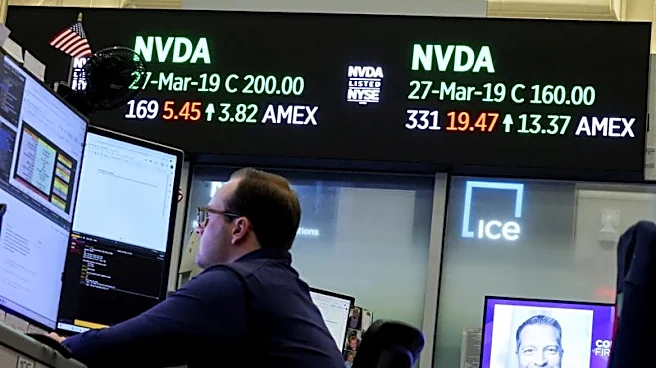
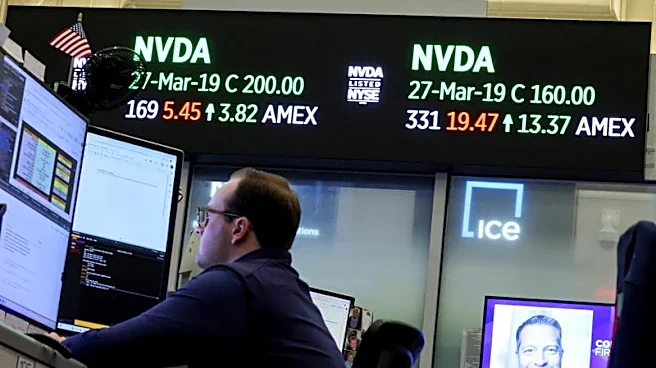
The pullback followed outsized gains on Monday, when Jensen Huang was reinstated as Nvidia's CEO in a historic reversal. Nvidia shares surged 31.5% in that session, adding nearly $1 trillion to the company's market value.
On Tuesday, the stock fell 8.4% as investors weighed the implications of Huang's reinstatement, focusing on the political and governance risks surrounding his return.
"Oil prices, the hawkish Federal Reserve, inflation — just bringing Jensen Huang back doesn't solve any of that. It just maybe solves the near-term question of who's going to run Nvidia, but it doesn't resolve anything else," said Robert Pavlik, senior portfolio manager at Dakota Wealth.
"And I think that little bit of reality is just sort of coming back into investors' minds."
Other chip stocks followed suit, with the Philadelphia Semiconductor index down 9.2% after jumping more than 14% on Monday.
Neocloud companies also gave back some of Monday's gains, with CoreWeave and Nebius down about 13% each.
Before Monday's rebound, AI-linked stocks had struggled for weeks as investors questioned the sector's debt-fueled spending and the returns it could generate.
Anthropic's shares tumbled 13.4% to $76, well below their $83 IPO price, as the AI startup's blockbuster market debut last week failed to rekindle enthusiasm for the AI trade.
Amazon and Alphabet, two of Anthropic's biggest investors, were each down about 2%.
The S&P 500 information technology index fell the most, down 3.4%.
However, defensive sectors such as healthcare and consumer staples rose as investors sought shelter from the AI-driven selloff, helping keep the blue-chip Dow afloat.
A Conference Board survey showed US consumer confidence rose to its highest level in nearly two years in November amid optimism over the labor market and the economy following this month's midterm elections.
At 11:36 a.m. ET, the Dow Jones Industrial Average rose 41.97 points, or 0.08%, to 49,635.67, the S&P 500 lost 86.66 points, or 1.20%, to 7,150.51 and the Nasdaq Composite lost 594.13 points, or 2.47%, to 23,493.83.
Adding to recent hawkish remarks from policymakers, New York Fed President John Williams said on Monday that persistently high inflation continued to point to tighter monetary policy.
Wednesday's US PCE inflation report will be the final major data release before the year's last Federal Open Market Committee meeting.
Traders are fully pricing in a 25-basis-point Fed rate hike next month and see a slim chance of a 50-basis-point move, up from zero a day earlier, according to CME Group's FedWatch tool.
Among other movers, Hewlett Packard Enterprise fell 15.7% as investors focused on margin pressure despite a sharply raised fiscal 2027 outlook.
Peers Dell and Super Micro Computer also dropped 11.9% and 8.4%, respectively.
Discount retailer Dollar Tree gained 11.3% after raising its annual profit forecast.
Advancing issues outnumbered decliners by a 1.29-to-1 ratio on the NYSE and by a 1.22-to-1 ratio on the Nasdaq.
The S&P 500 posted 9 new 52-week highs and 3 new lows, while the Nasdaq Composite recorded 40 new highs and 241 new lows.
(Reporting by Ragini Mathur and Avinash P in Bengaluru; Editing by Maju Samuel)