
NEW YORK, May 8 (Reuters) - U.S. employment increased more than expected in April while the unemployment rate held steady at 4.3%, pointing to labor market resilience and reinforcing expectations that
the Federal Reserve would leave interest rates unchanged for some time.
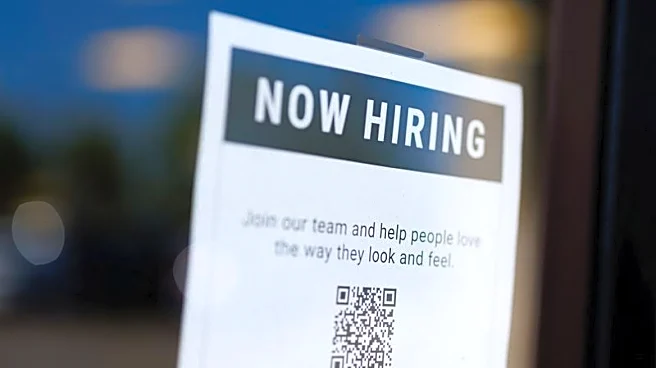
Nonfarm payrolls increased by 115,000 jobs last month after an upwardly revised 185,000 advance in March, the Labor Department's Bureau of Labor Statistics said on Friday. Economists polled by Reuters had forecast payrolls rising by 62,000 jobs after a previously reported 178,000 rebound in March.
The report bolstered financial market views that the Fed would leave interest rates unchanged into 2027. The U.S. central bank last week left its benchmark overnight interest rate in the 3.50%-3.75% range, citing inflation worries.
MARKET REACTION:
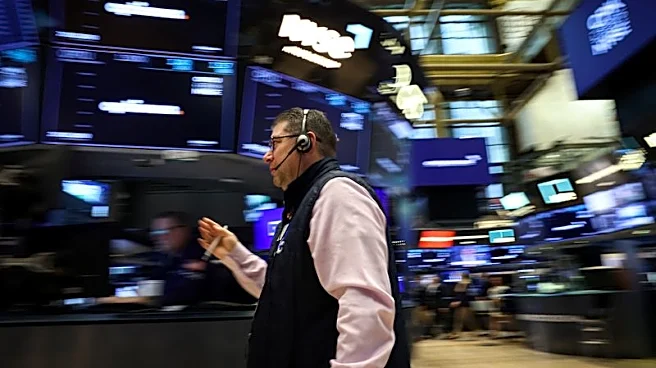
STOCKS: U.S. stock indexes rose following the report. Futures tracking the Nasdaq composite rose 0.8%, while those tracking the S&P 500 rose 0.5%.
BONDS: U.S. Treasury yields fell. The yields on benchmark U.S. 2-year notes dropped 3 basis points to 3.89% and on 10-year notes fell 2 basis points to 4.37%.
FOREX: The dollar index fell 0.3% to 97.94.
COMMENTS:
BRIAN JACOBSEN, CHIEF ECONOMIST, ANNEX WEALTH MANAGEMENT, MENOMONEE FALLS, WISCONSIN:
"Two months in a row of job gains during the months where energy price spikes were most acute reveals a latent demand by businesses to grow and hire."
MOLLY BROOKS, US RATES STRATEGIST, TD SECURITIES, NEW YORK;
“The market reaction was as we expected, a pretty modest in reaction to a higher headline payrolls. We thought going into it that anything more on the dovish side, either an increase to the unemployment rate or a closer to zero or negative payrolls headline number, would probably have a greater reaction.
“The report made it so that the Fed's mandates are not in tension with each other and we're going to be continuing to focus on the inflation mandate in the near term, as that's the one that's more at risk from being further from target.”
ADAM SARHAN, CHIEF EXECUTIVE, 50 PARK INVESTMENTS, NEW YORK:
“The jobs report came in slightly stronger than expected. That's very much of a goldilocks type of jobs report because it's not too hot and not too cold. It's not too strong where it's going to trigger more inflation and be a problem for the Fed, but it's strong enough to allay concerns of stagflation and slower economic growth. Everything comes down to the Fed.
"The market can now check the box for unemployment staying low for the Fed... the unemployment rate held steady. The market can breathe a collective sigh of relief that unemployment is not going higher."
ALEX SHAHIDI, CO-CIO, EVOKE ADVISORS, LOS ANGELES, CALIFORNIA:
“April’s jobs report came in better than expected, but the more important takeaway is what that level of hiring now represents. Payroll growth of just 115,000 may have raised recession concerns not that long ago, yet today it’s more than enough to keep the unemployment rate steady at 4.3%. That reinforces the view of a labor market that is cooling but still fundamentally stable. For the Fed, this kind of outcome likely argues for continued patience rather than a change in policy direction, particularly with inflation still running above target.”
SAM STOVALL, CHIEF INVESTMENT STRATEGIST AT CFRA RESEARCH, NEW YORK:
"I think it's good because it confirms that we have a solid labor market that would offer some confidence to consumers so that they can continue their resilient spending patterns, and at the same time, with the unemployment rate at 4.3%, does not sort of force the Fed to reconsider their statement that they are not ready to tighten interest rates. So, it is a good number confirming that the economy in general and the consumer remain healthy.
"The longer that we have elevated oil prices, the greater the risk that it could damage consumer confidence and spending. So right now, it does not appear to be adversely affecting economic growth or consumer confidence, but the longer that it persists, the greater the risk."
(Reporting by Lucia Mutikani, Chuck Mikolajczak, Karen Brettell, Karen Valetkevich, Laura Matthews, Utkarsh Hathi; editing by Colin Barr)