




By Joey Roulette
WASHINGTON, Aug 5 (Reuters) - A SpaceX rocket piece floating in space since last year smashed into the moon at high speed early Wednesday morning, joining the ranks of meteoroids, wayward spacecraft and other pieces of space junk that have bombarded the lunar surface for ages, astronomers confirmed.
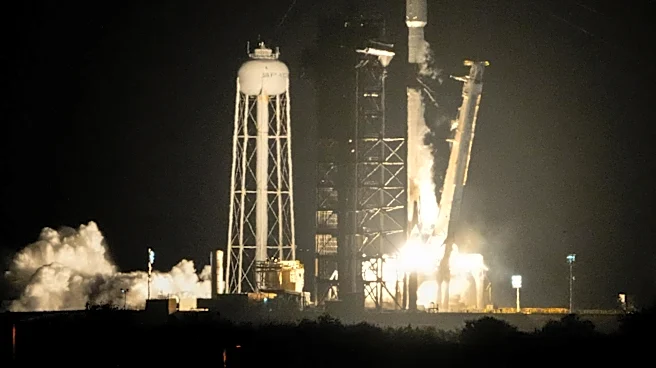
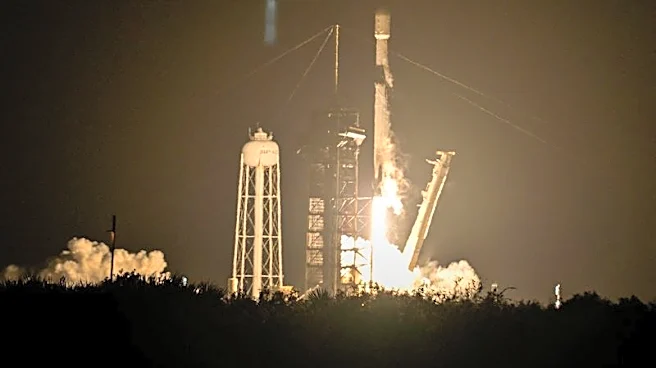
The school-bus-size object is the second stage of a SpaceX Falcon 9 rocket that had launched a lunar lander from Firefly Aerospace toward the moon in January 2025. Its predicted collision
with the moon became a spectacle for astronomers and space enthusiasts eager to watch how it would unfold.
Weighing 4 metric tons (4,000 kg), the rocket body slammed into the moon around 2:35 a.m. ET (0635 GMT), travelling at 5,400 miles per hour (8,690 kph). None of the few spacecraft orbiting the moon were positioned to capture close-up images of the impact.
But at the Paranal Observatory in Chile, the European Southern Observatory's Very Large Telescope detected glimmers of light associated with the impact.
"We can confirm that the telescope detected spectral lines of sodium and lithium gas in the impact plume lasting for 5-10 minutes after impact," an ESO spokesperson told Reuters.
The impact occurred near the moon's terminator line, or the boundary of its shadow between the sunlit side and its far side. Similar to past objects that have hit the moon, the rocket stage kicked up a plume of lunar dust that was briefly illuminated by sunlight, but difficult to spot with the naked eye from Earth.
How the impact plume interacted with the sunlight allowed astronomers to glean clues about its composition.
The sodium gas evidenced in the spectra is believed to have originated from the lunar soil, while the traces of lithium may have come from the rocket stage itself, Carl Schmidt, the lead astronomer conducting the impact observations, told Reuters.
"This observation did not go perfectly and this is a very crude analysis, but I wanted to share something quickly, and we can say more about these results in time," Schmidt said by email.
The impact was unintentional, SpaceX said. The rocket piece was expected to hit near Einstein Crater on the moon's western limb, which is often difficult to see from Earth.
COSMIC FORCES NUDGED PIECE TO MOON
Such stages typically fall back into Earth's atmosphere and burn up or plunge into the ocean after boosting the rocket's payload to a precise spot in orbit.
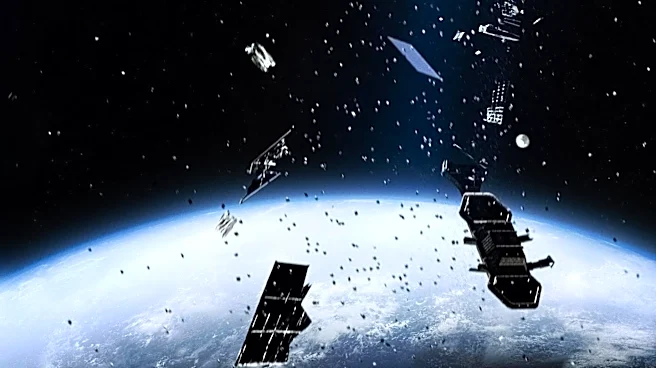
But because the January lunar lander mission required more thrust than missions closer to Earth, the rocket's second stage remained in space, floating aimlessly among thousands of other pieces of space junk that active satellites must steer clear of.
It was not until earlier this year that astronomers determined that the rocket stage, which had dumped its remaining fuel and could not be controlled, was on an orbital trajectory ending at the moon.
"What has happened is essentially a mixture of solar activity and gravity forces have put it on a path toward the moon," Julianna Scheiman, SpaceX director of NASA science and Dragon programs, told reporters on Monday.
"This may be of some — probably minor — scientific interest, and we may learn some things from it," said Bill Gray, creator of widely used astronomy software Project Pluto, who appeared first to calculate and publish a report predicting the stage's impact in April.
"By January, I was pretty sure it would hit, though with only a vague idea as to where it would do so. By April, I was confident enough to post an announcement," Gray said.
Gray said that the impact presents no danger to anyone, "though it does highlight a certain carelessness about how leftover space hardware (space junk) is disposed of."
Space junk impacts on the moon are rare. A Chinese rocket stage crashed into the moon in March 2022 after completing a lunar test mission. In 2009, NASA intentionally crashed a rocket stage into the moon to study the plume of lunar material kicked up by the impact, leading to a key discovery that lunar dirt contains traces of water ice.
Several spacecraft intending to softly land on the moon in recent years have crashed instead. Russia's nuclear-powered Luna-25 mission spun out of control and crashed in 2023. Its small power source of plutonium-238 likely remains harmlessly on the lunar surface.
India's Chandrayaan-2 lander mission crashed in 2019. Israel's Beresheet lander crashed that same year. Among the Israeli lander's payloads were tiny tardigrades, microscopic animals known for surviving radiation and other harsh environments and which may still be on the surface.
NASA intentionally crashed stages from its Saturn V moon rocket into the moon in the 1970s to study the impacts' seismic effects.
NASA and SpaceX are discussing ways to prevent future lunar impacts, Scheiman said. The U.S. space agency plans to build a lunar base and send routine astronaut missions to the lunar surface beginning later this decade under its multibillion-dollar Artemis program. It would not want errant pieces of space junk impacting those assets.
(Reporting by Joey RouletteEditing by Rod Nickel, Alex Richardson and Alistair Bell)