
By Niket Nishant and Avinash P
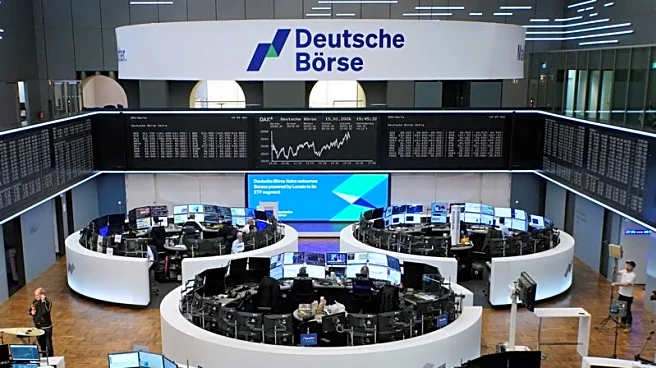
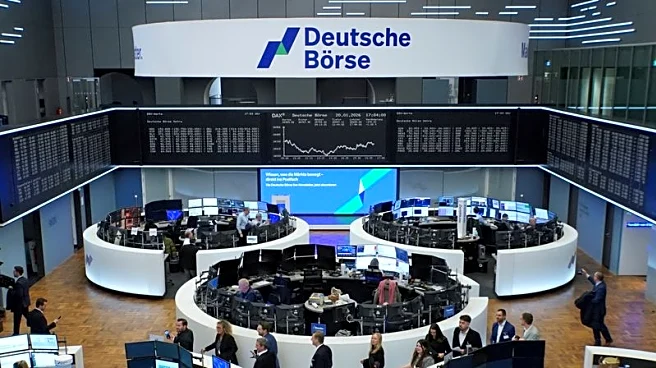
Jan 28 (Reuters) - European shares were on track to snap a two-day rally on Wednesday, after LVMH's cautious tone pressured luxury stocks and eclipsed gains in ASML.
The pan-European STOXX 600 index slipped 0.5% as of 0927 GMT. Luxury shares slid 3.2%, marking their fourth consecutive day of losses, while tech stocks rose 1.6% to their highest in more than 25 years.
The declines highlight the dispersion across sectors even as investors rely on corporate earnings for direction,
with geopolitical and trade strains blurring the macroeconomic picture.
LUXURY SLIDE OVERSHADOWS TECH STRENGTH
Shares of LVMH, the owner of Louis Vuitton and Tiffany, dropped 7.3% after CEO Bernard Arnault said he was cautious about the year ahead.
"Given the cautious commentary from the company and mixed macroeconomic data, the recovery in demand may be somewhat delayed," Morningstar's senior equity analyst Jelena Sokolova said.
Shares of Gucci owner Kering, Moncler and Hermes also dropped between 2% and 4%.
On the other hand, ASML reported stronger-than-expected bookings for the fourth quarter, highlighting resilient AI demand. Shares of the world's largest supplier of computer chip equipment hit a record high and were last up 4.3%.
"While the stock's valuation multiples are high even with the 2026 guidance, the order strength and positive industry news flow is likely to provide further medium-term upside," analysts at Jefferies said.
The company's earnings are widely viewed as a barometer of AI demand.
"European semiconductor companies haven't really benefited too much over the last few years in this whole AI hype. But now we're seeing a bit of an upcycle," said Ciaran Callaghan, head of European equity research at Amundi.
Investors are now awaiting the U.S. Federal Reserve's policy decision later in the day. The central bank is widely expected to hold interest rates steady, but the focus will be on the threats to its independence.
Auto stocks were flat. Earlier this week, India and the European Union struck a long-delayed trade deal, under which tariffs on car imports from the EU would fall to 10% over the years.
"Although the agreement could present a significant opportunity for European car manufacturers, given the market's potential, we anticipate that any benefits will take some time to materialise," economists at ING said.
(Reporting by Niket Nishant and Avinash P in Bengaluru; Editing by Sonia Cheema and Shilpi Majumdar)