




By Scott DiSavino
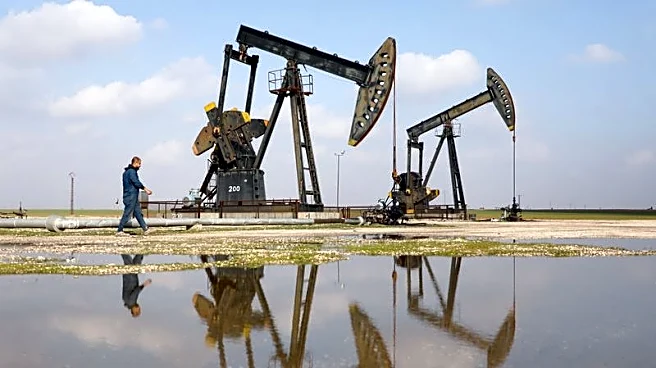
NEW YORK, Aug 3 (Reuters) - Oil prices fell about 5% to a three-week low on Monday after U.S. President Donald Trump held off on a fresh attack on Iran in the hope of sealing a quick deal that could boost oil supplies from the Gulf.
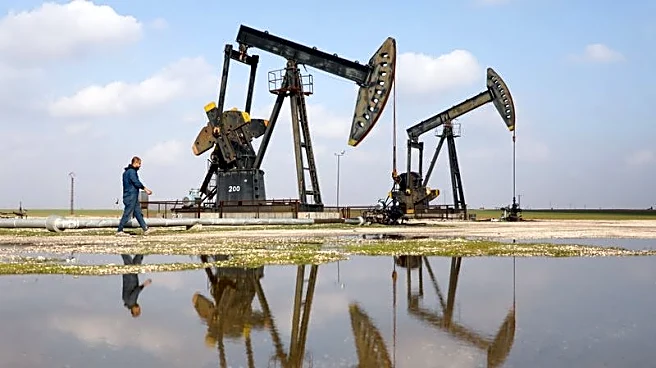
Brent futures fell $4.41, or 5.0%, to $83.52 a barrel at 10:39 a.m. EDT (1439 GMT), while U.S. West Texas Intermediate (WTI) crude fell $5.18, or 6.1%, to $79.49.
That put Brent on track for its lowest close since July 13.
Iran said on Monday there were
no talks under way with the United States and no plans for any meetings, contradicting Trump who had cited talks he said would take place that afternoon as justification for calling off attacks.
Over the weekend, Trump repeated a pattern that has emerged throughout the past five months: announcing plans for "massive attacks" on Iran, only to cancel them at the last minute.
"Would I rather make a deal? I'm not looking to kill people," Trump said aboard Air Force One on Sunday. "Now what we're doing is talking to them, in the form of a negotiation. It begins tomorrow afternoon," he said, without identifying a venue or participants for such talks.
Iran's Foreign Ministry spokesman Esmail Baghaei rejected the claim, saying no negotiations with the United States were taking place and no meetings were scheduled. Iran had no plans to host foreign delegations or send negotiators abroad in the coming days, he said.
In the U.S., meanwhile, Trump again called on oil companies to lower gasoline prices for American consumers on Monday, chiding Chevron Chief Executive Mike Wirth for not crediting his administration's efforts to help the oil industry.
SHIPS CHANGE COURSE
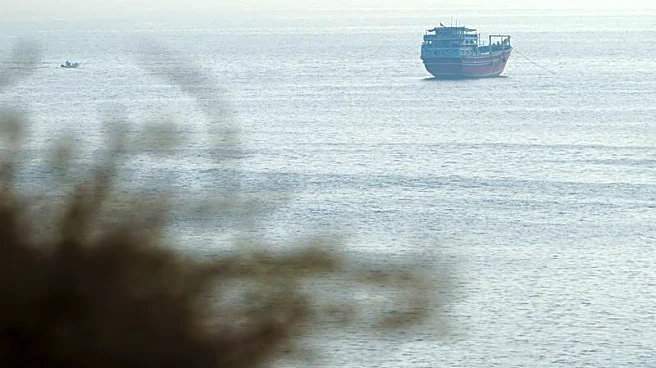
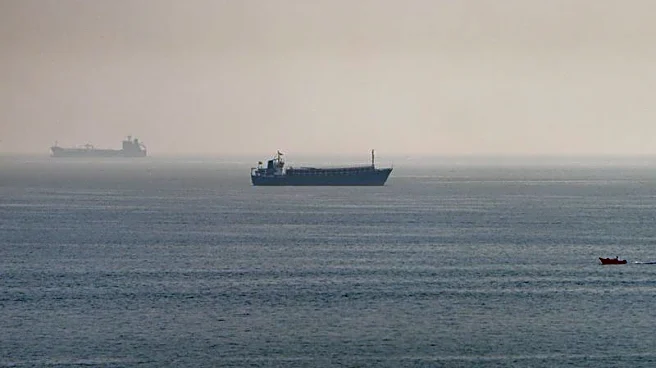
Six Saudi-flagged supertankers have changed course in the Gulf of Aden in recent days and are heading to southern Africa following threats by the Iran-backed Houthi movement in Yemen to target Saudi shipping, tracking data showed on Monday.
Over the weekend, however, two tankers laden with Saudi oil crossed the Bab el-Mandeb Strait between the Red Sea and the Gulf of Aden, while traffic in the Strait of Hormuz between Iran and Oman slowed following reports of vessel attacks, shipping data showed on Monday.
About a fifth of the world's oil and liquefied natural gas supplies passed through the Strait of Hormuz before the U.S. and Israel started bombing Iran on February 28.
Elsewhere in the Middle East, Iraq's state oil marketer SOMO has offered steep discounts on its August-loading Basrah crude to entice buyers to lift cargoes from inside the Strait of Hormuz, a document reviewed by Reuters showed.
RUSSIAN ENERGY ON THE MOVE
A Panama-flagged tanker carrying Russian naphtha attempted to pass through the Bab-el-Mandeb in the last week of July before changing course to sail around Africa instead, trade sources said and shipping data from LSEG showed.
Russia said on Monday it was stepping up protection of ships in the Azov-Black Sea basin while also developing alternative cargo routes, in a move that follows a sharp escalation of attacks at sea by both sides in the war in Ukraine.
The Russian transport ministry said that in response to "the tense situation in the Sea of Azov stemming from hostile drone attacks on maritime vessels," it had set up a task force to find new routes and switch cargo flows to other modes of transport.
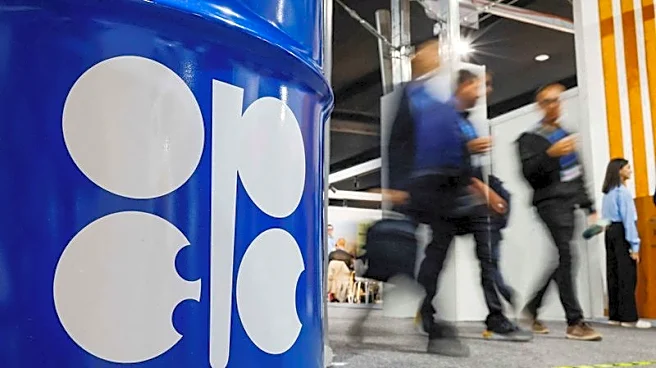
Russia was the world's third-biggest crude oil producer behind the U.S. and Saudi Arabia in 2025, according to U.S. energy data, and is a member of the OPEC+ group of countries, which includes the Organization of the Petroleum Exporting Countries (OPEC) and allies.
Export disruptions from the Gulf, Russia and Kazakhstan, caused by the Iran and Ukraine wars, have meant successive monthly OPEC+ hikes over most of this year have not translated into extra oil on the market.
On Sunday, OPEC+ approved an oil production quota increase of around 188,000 barrels per day from September.
(Reporting by Scott DiSavino in New York and Shadia Nasralla in London; Additional reporting by Anushree Mukherjee in Bengaluru, Florence Tan and Sam Li. Editing by David Holmes, Mark Potter and Sharon Singleton)