



By David Milliken
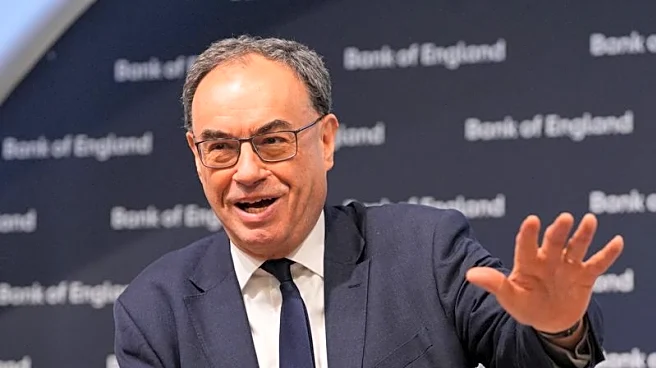
LONDON, Dec 11 (Reuters) - Bank of England Governor Andrew Bailey said he wants to remove as much interest rate risk as possible from the BoE's balance sheet, suggesting he will seek to largely eliminate its remaining 553 billion pounds ($740 billion) of gilt holdings.
The BoE bought 875 billion pounds of British government bonds with newly created money to boost the economy between 2009 and 2021. Since 2022 it has offloaded more than 300 billion pounds of this, reducing surplus cash
in the financial system.
In September, the BoE's Monetary Policy Committee voted to slow the annual pace of unwinding QE, known as quantitative tightening, to 70 billion pounds a year from 100 billion.
The central bank is now closing in on what it calls the preferred minimum range of reserves, the level where banks hold just enough cash at the BoE and which some economists see as a potential stopping point for QT.
But Bailey, in a pre-recorded interview broadcast at an event hosted by the Financial Times on Thursday, made clear that he wants to see balance sheet reduction continue.
"The question when we get to the equilibrium level of reserves - and I can't tell you when that is going to happen, it may happen in the next year or so ... - is how quickly do you want to move then?," Bailey said.
As well as selling gilts, the BoE is reducing the size of its gilts stockpile by not replacing bonds that mature.
FEDERAL RESERVE ENDED QT THIS MONTH
Bailey's approach would contrast with that of the U.S. Federal Reserve, which halted its balance sheet reduction on December 1.
Some investors have called on the BoE to halt sales of gilts, in order to defer - and possibly reduce - future losses that get booked when the gilts are sold.
But halting sales would mean the BoE would have to keep paying more in ongoing interest to holders of its reserves than it receives from holding gilts.
The BoE has faced heavy criticism from some politicians for the losses of up to 120 billion pounds facing taxpayers due to interest rates rising sharply before the BoE could unwind its QE purchases.
Bailey said he wanted profits and losses at the central bank to be less dependent on moves in interest rates. That means replacing reserves created by past gilt purchases with repo facilities that allow banks to temporarily obtain BoE reserves using their own gilt holdings as collateral.
"A repo-backed stock of reserves puts the interest rate risk into the private sector, which is where it should be," Bailey said. "From the point of view of the public balance sheets in this country, we should not have interest rate risk on our balance sheet."
The FT said it recorded the interview with Bailey on November 24.
($1 = 0.7469 pounds)
(Additional reporting by Andy Bruce, Editing by William Maclean)