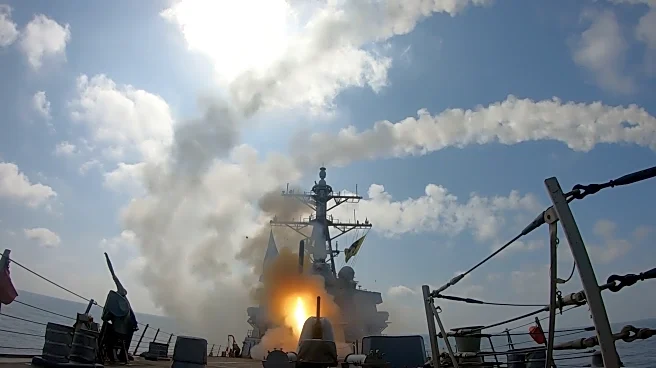


FRANKFURT, March 2 (Reuters) - The U.S.-Israeli military assault on Iran threatens to push up inflation and make a dent in Europe's already meagre economic growth.
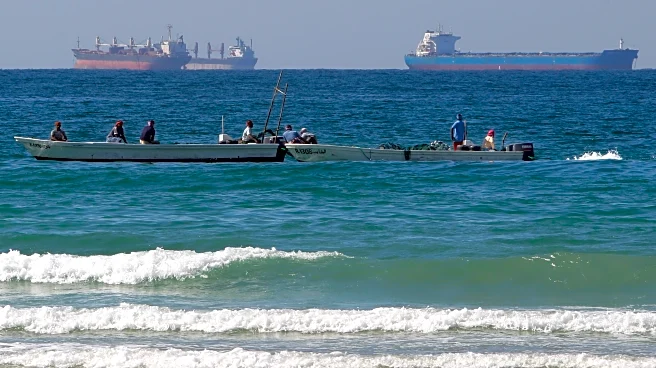
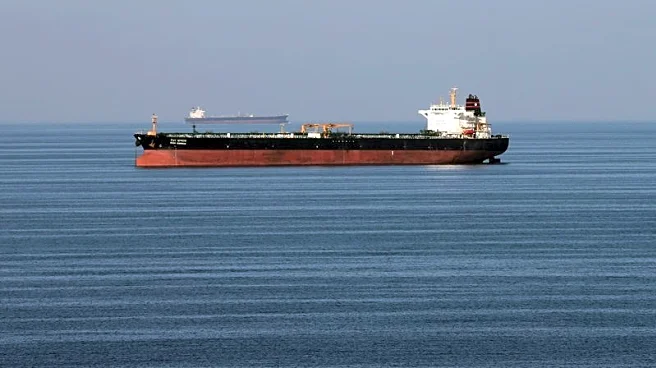
The attacks have disrupted commercial shipping in the Gulf, a key source of fuel and petroleum products for Europe. The interruption immediately pushed up the prices of these energy supplies on financial markets.
This is likely to raise the cost of fuel and cloud the outlook for the European Central Bank and the Bank of England, potentially
forcing the latter to put off any further rate cuts until the fog of war clears.
Here is what you need to know about the economic impact of the Iran conflict on Europe:
CHOKE-POINT FOR OIL, GAS AND OTHER PRODUCTS
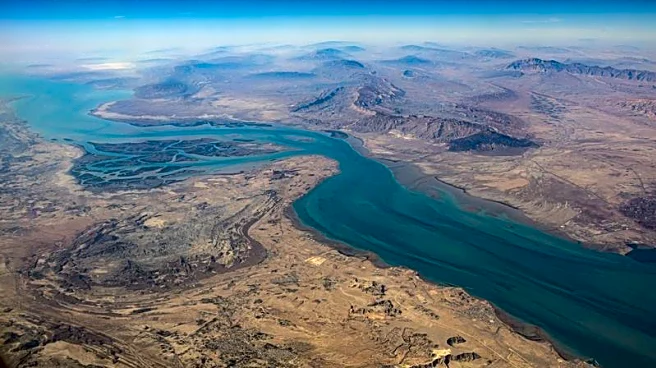
The Strait of Hormuz, located between Oman and Iran, is a key gateway for exports from Gulf states, such as oil, gas and chemicals.
Some 20% of global oil, including from producers Saudi Arabia, the United Arab Emirates, Iraq, Kuwait and Iran, passes through Hormuz, along with large volumes of liquefied natural gas (LNG) from Qatar.
Having shifted away from Russian energy since its invasion of Ukraine, Europe now relies more heavily on imports from the Gulf region.
Among European countries, Britain, Italy, Belgium and Poland are the most reliant on LNG imports that pass via the Strait of Hormuz, according to data from the U.S. Energy Information Administration.
The Gulf is also a major exporter of propane, butane and ethane, which are used for heating, fuel and in agriculture, according to data from broker Kpler.
HIGHER FUEL COSTS FOR EUROPEANS?
More than 200 vessels including oil and liquefied gas tankers have dropped anchor around the Strait of Hormuz and surrounding waters as a result of the Iran conflict, shipping data shows.
This has immediately pushed up oil and gas prices. Brent futures were up nearly 8% to $78 a barrel while natural gas on the Dutch market was trading up by 19% at 38 euros per megawatt-hour (MWh).
In its December projection the ECB was assuming a natural gas price of 29.6 euros/MWh and a crude price of $62.5 this year.
The ECB is due to publish new macroeconomic projections on March 19, with a cut-off date for energy prices and other market indicators three weeks prior -- that is this coming Wednesday.
This would imply an upgrade to its energy inflation projections. The ECB may, however, choose to produce several scenarios, like it did at the time of Russia's invasion of Ukraine in 2022.
UniCredit argued on Monday that the oil price is likely to be capped at around $80 given plentiful supply, and major escalation, like damage to Saudi oil infrastructure, would be needed for the price to rise towards $100.
WHAT ELSE IS AFFECTED BEYOND ENERGY SUPPLIES?
The vast flow of commercial goods between Europe and Asia has long gone through the Suez Canal.
Many vessels on that route were rerouted around Africa in late 2023 following attacks in the Red Sea by Yemen's Houthi rebels but, prior to the outbreak of the Iran conflict, shipping companies had been weighing increased use of the critical Asia-Europe trade corridor.
Shipping companies on Sunday again began rerouting vessels around Africa, away from the Suez Canal, potentially boosting freight rates and lifting the cost on imported goods.
WHAT IS THE IMPACT ON GROWTH AND INFLATION?
The ECB's own projections show that the inflation impact of the oil price spike is far greater than the hit to growth.
Its sensitivity analysis published in December argues that a permanent, 14% jump in the oil and gas price would lower growth by just 0.1% this year and raise inflation up to 0.5%.
These impacts would be on a similar magnitude next year, then start to fade.
The euro zone and UK economies were seen growing at 1.2% and 1% respectively this year, and 1.4% each next year, according to Reuters polls. This is a modest pace in comparison to the United States, where output is seen increasing by 2.5% and 2.0% in 2026-27.
But the hit would be tiny compared to the shock of 2022, when Russia's attack on Ukraine pushed up energy costs. That lowered growth by 1 percentage point and lifted inflation by 2 percentage points, according to a European Commission study.
A relatively strong euro would also likely dampen the hit, since energy is priced in dollars.
The growth hit is also likely to temporary as the economy can adjust, so there is no lasting impact on potential output, the ECB argued in a separate study.
HOW WILL THE CENTRAL BANKS REACT?
Investors trimmed their bets on the Bank of England cutting its benchmark Bank Rate by a quarter of a percentage point later this month with pricing suggesting a 69% probability, down from 78% on Friday.
Do not expect any quick action from the ECB, which was already seen keeping its rates steady for the remainder of this year.
The euro zone's central bank does not react to short term market volatility and also ignores transitory energy price spikes.
So any reaction will depend on how long the conflict lasts and how far it widens. U.S. President Donald Trump said on Sunday the Iran operation could last four weeks.
Economists at Commerzbank saw no significant impact if the war lasted only a few weeks.
But if it were to drag on for several months, they estimated inflation in the euro zone would probably rise by at least 1 percentage point and economic growth would be a few tenths of a percentage point lower.
Moreover, euro zone inflation, now at 1.7%, is below target, so a modest rise would not jeopardize its objective.
The ECB normally gets worried if a one-off inflation shock starts impacting longer-term price expectations and seeps into broader wage and price setting trends via so-called second round impacts.
This would take many months to materialise, so expect the ECB for now to say that it looks through temporary volatility but remains alert to developments.
Markets-based expectations for longer term inflation are broadly unchanged, likely reinforcing the bank's wait-and-see message.
Markets are on the same page. No interest rate change is priced at all for this year.
(Reporting by Francesco Canepa and Balazs Koranyi; Editing by Toby Chopra)