




By Francesco Canepa
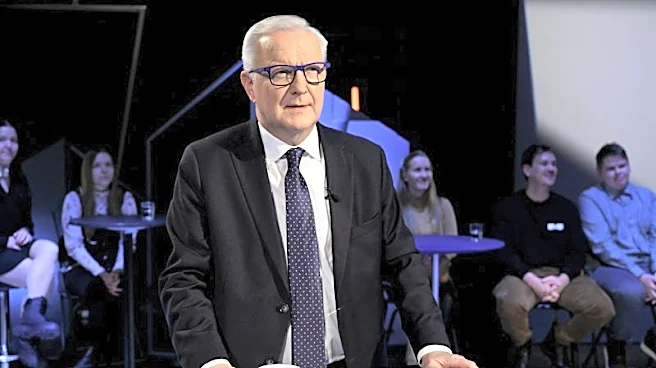
FRANKFURT, May 21 (Reuters) - The European Central Bank may raise interest rates to preserve credibility in the face of a war-driven rise in fuel costs but there is little to suggest yet that high inflation is taking root in the euro area, ECB policymaker Olli Rehn said in an interview.
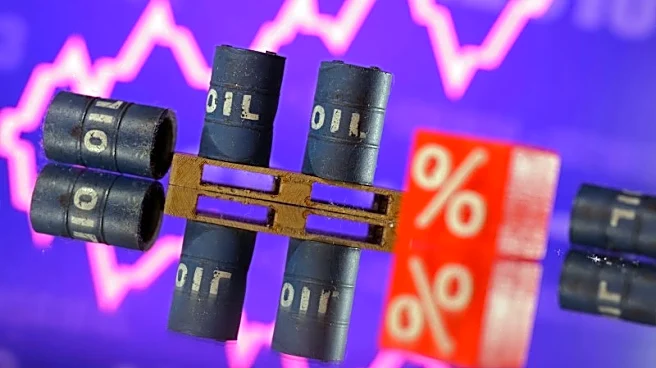
The ECB is all but certain to increase borrowing costs at its next meeting on June 11 after disruptions to the Strait of Hormuz caused a spike in oil prices and pushed inflation in the euro area
well above the bank's 2% target.
Rehn, Finland's central bank governor, echoed several of his colleagues in saying the euro area was sliding towards the ECB's "adverse scenario" of slower growth and higher inflation, which may force it to raise rates "for the sake of credibility".
But he said that the price of gas had not risen as much, wage growth was still moderating and longer-term inflation expectations were still anchored at 2% despite a rise at a shorter horizon.
"From the standpoint of medium-term orientation, the critical thing is whether we see evident signs of second-round effects, and/or de-anchoring of inflation expectations," he said in an interview.
"If you look at those two things, we see some vibration in the short-term inflation expectations, but no significant deviation in medium- to long-term inflation expectations."
He said the decision in June will also be informed by the ECB's new economic projections and any new development about a possible ceasefire between the United States and Iran.
Sources told Reuters that the case for a June hike was nearly sealed but that the bank was unlikely to commit to future rises.
Financial markets expect one or two further moves in the following 12 months, leaving the rate the ECB pays on bank deposits at 2.50%-2.75%.
Rehn argued the situation in Iran would either morph into a prolonged conflict that would further hamper energy supply to the euro zone, or de-escalate in a ceasefire in which the Strait of Hormuz is reopened.
"If I had to put odds on those, I think it's better that we prepare ourselves for a prolonged conflict, regrettably, and think about how to adjust and mitigate its effects, including maintaining our work on the green energy transition," he said.
Rehn added this meant coming up with a "Plan B," led by the European Commission, for sourcing jet fuel and other products that currently come via the Gulf while the economy adjusts.
Governments, in the meantime, should avoid stimulating demand for fuel with overly generous subsidies, not least because the fiscal space to do so is limited, he argued.
He noted Northern European countries, France and the Iberian Peninsula would be partly shielded from the energy shock by a greater reliance on nuclear and renewable energy, with Germany, Italy and Central Europe hit harder.
"You have obviously quite different impacts of the energy price shock because of that," he said. "And that has an effect on monetary policy."
(Reporting by Francesco Canepa in Frankfurt; Editing by Matthew Lewis)